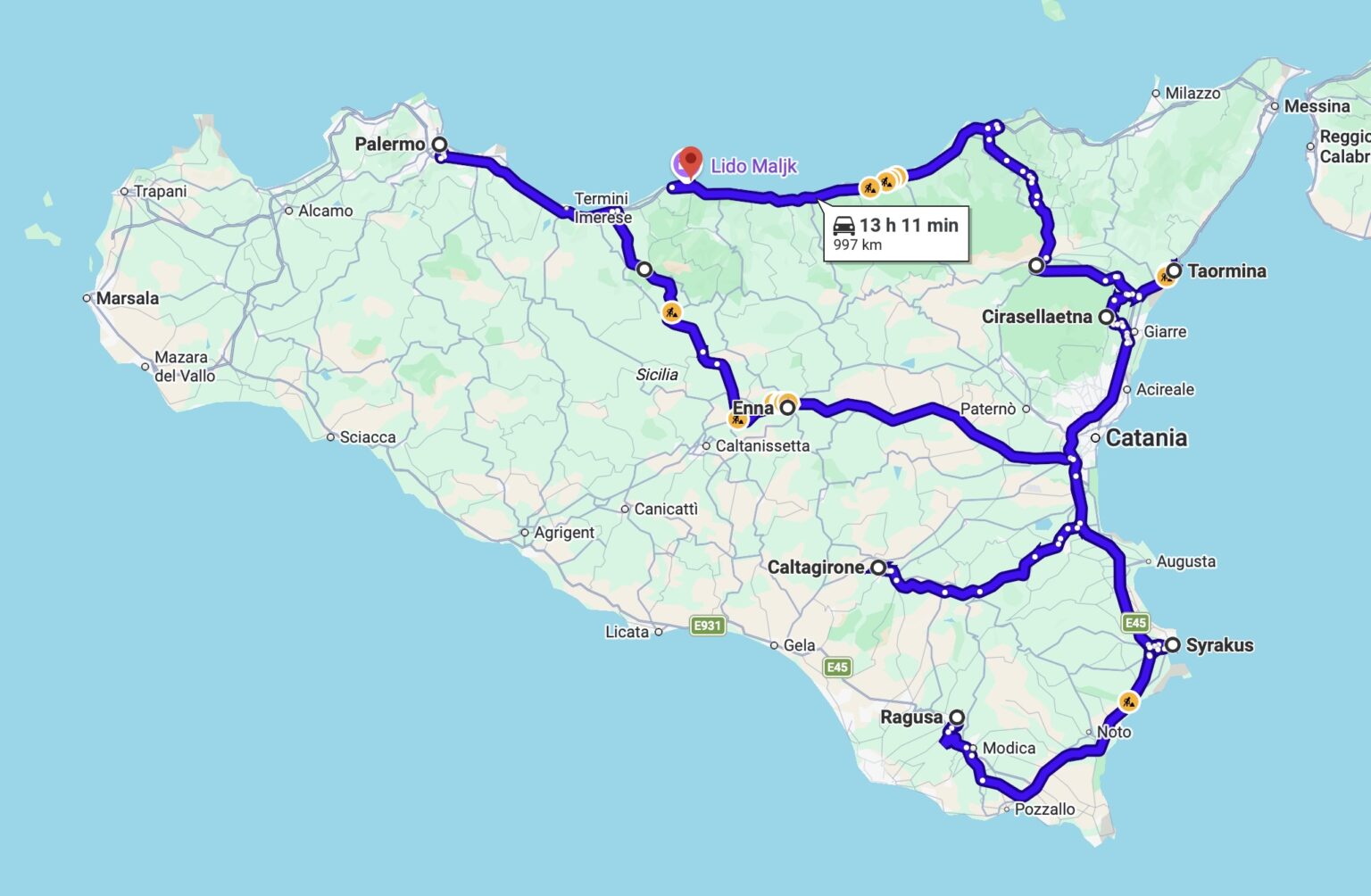
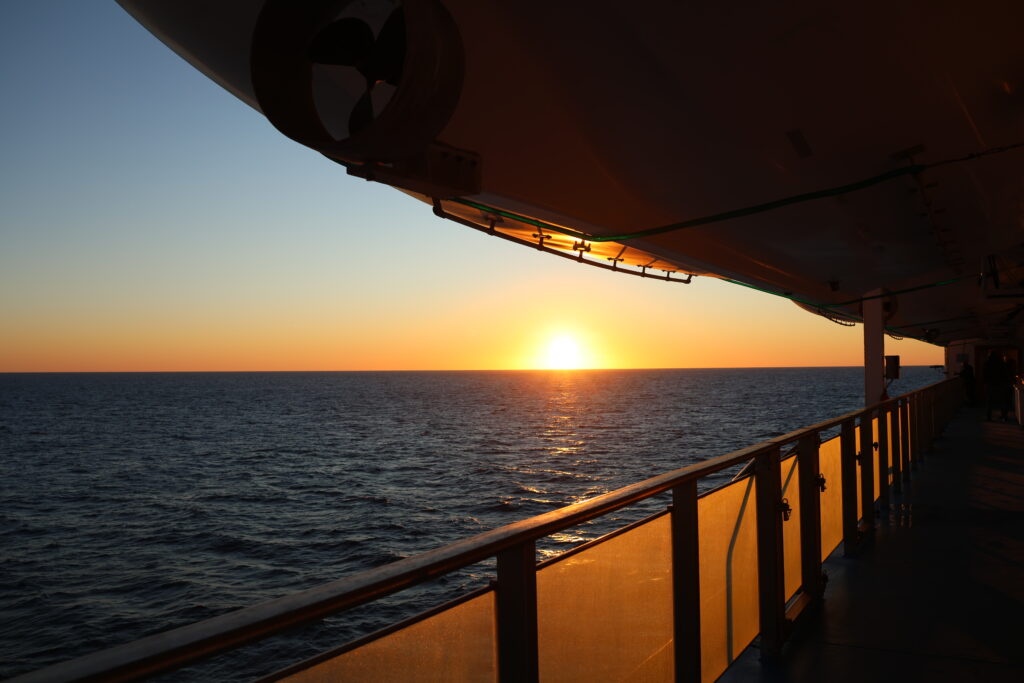
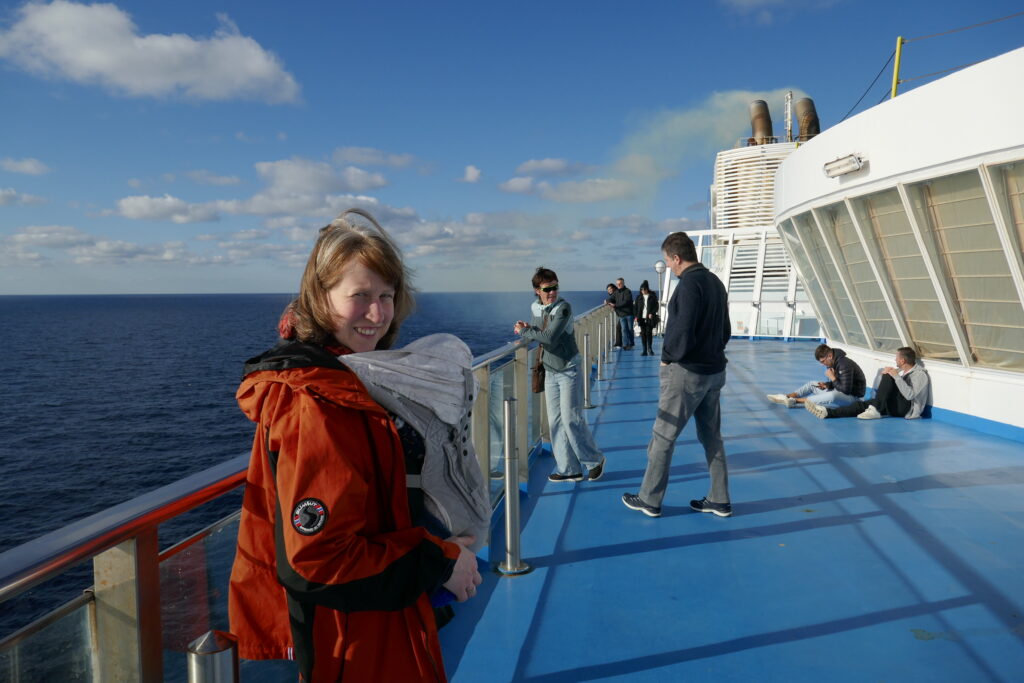
Our first trip as a small family is coming up. After a lovely Christmas in Genoa with the Italian part of the family, we set off on the ferry at 10.00pm. The destination was Sicily. The crossing was very relaxed with a flat sea and lots of sunshine. After 20 hours at sea, we arrived in Palermo the next evening at 6.00pm.
Palermo
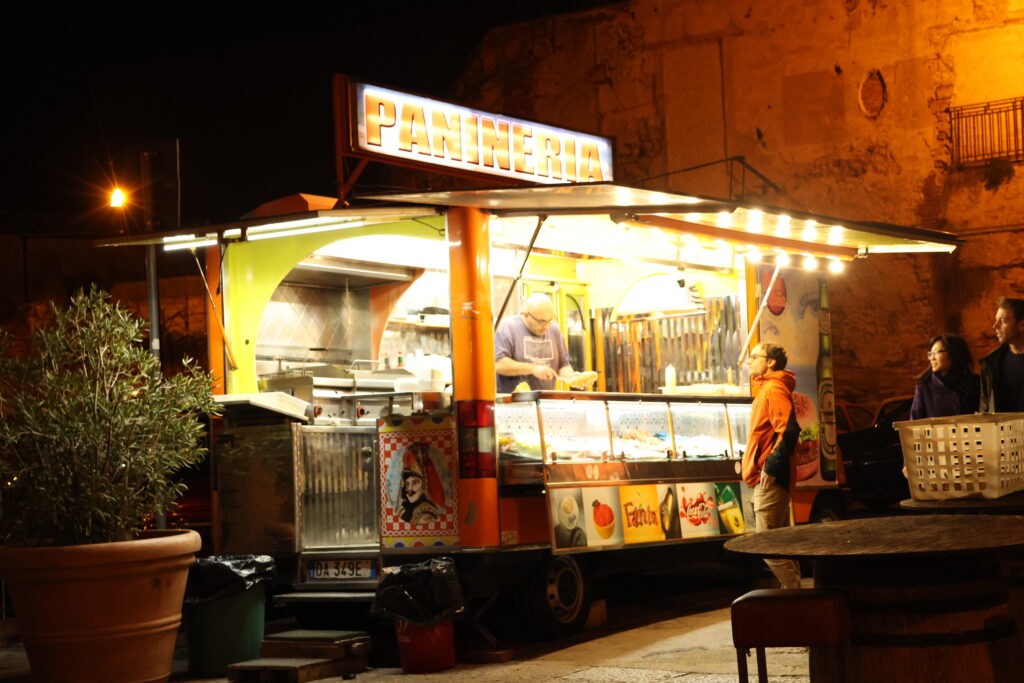
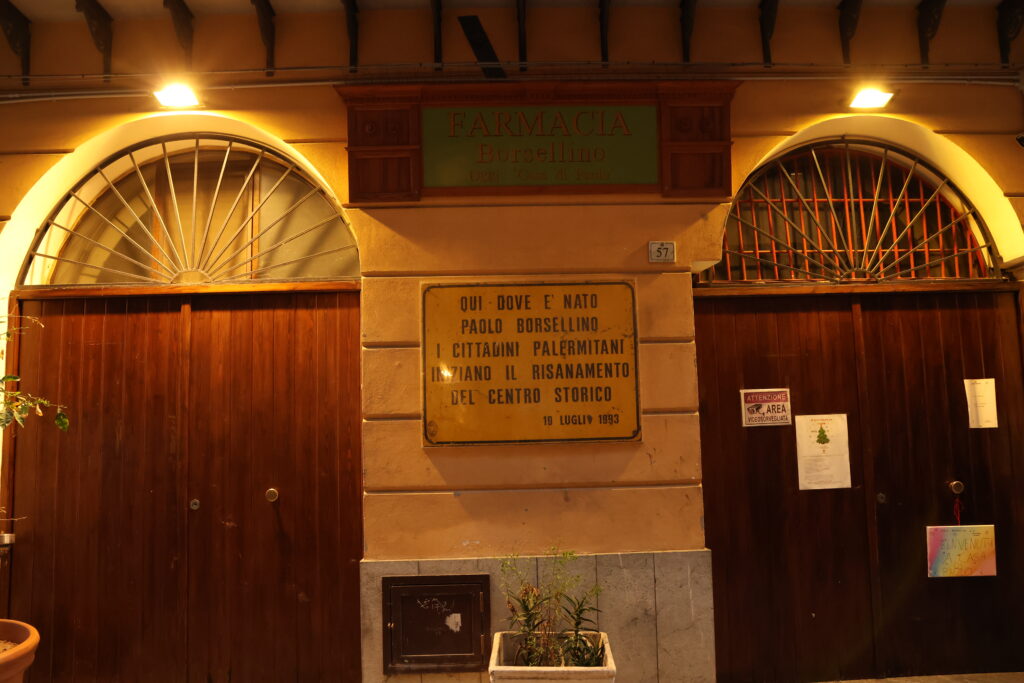
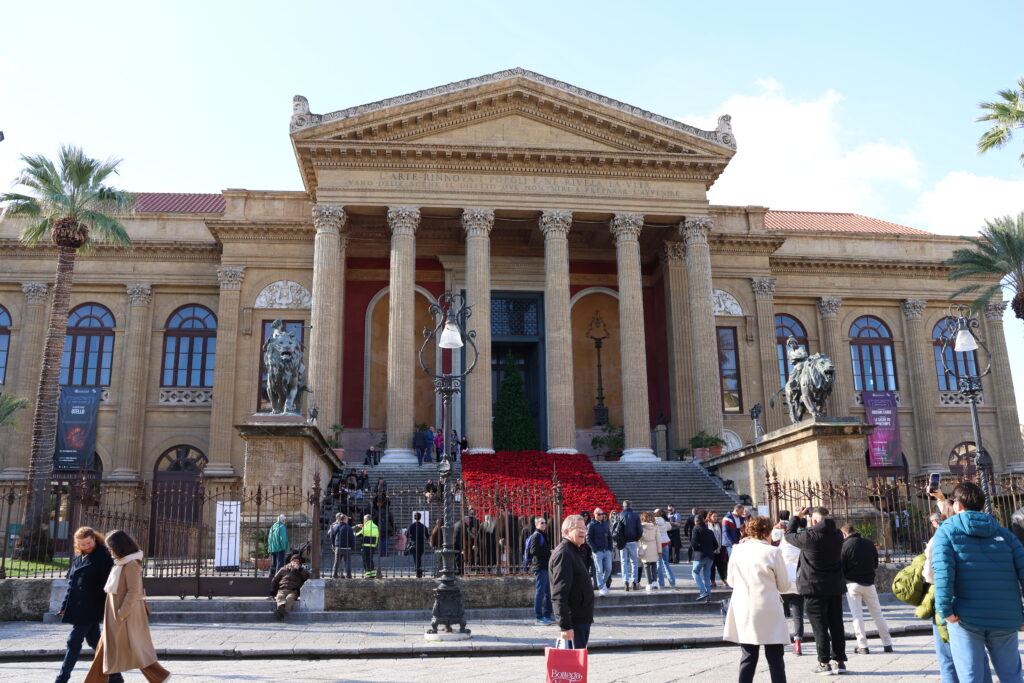
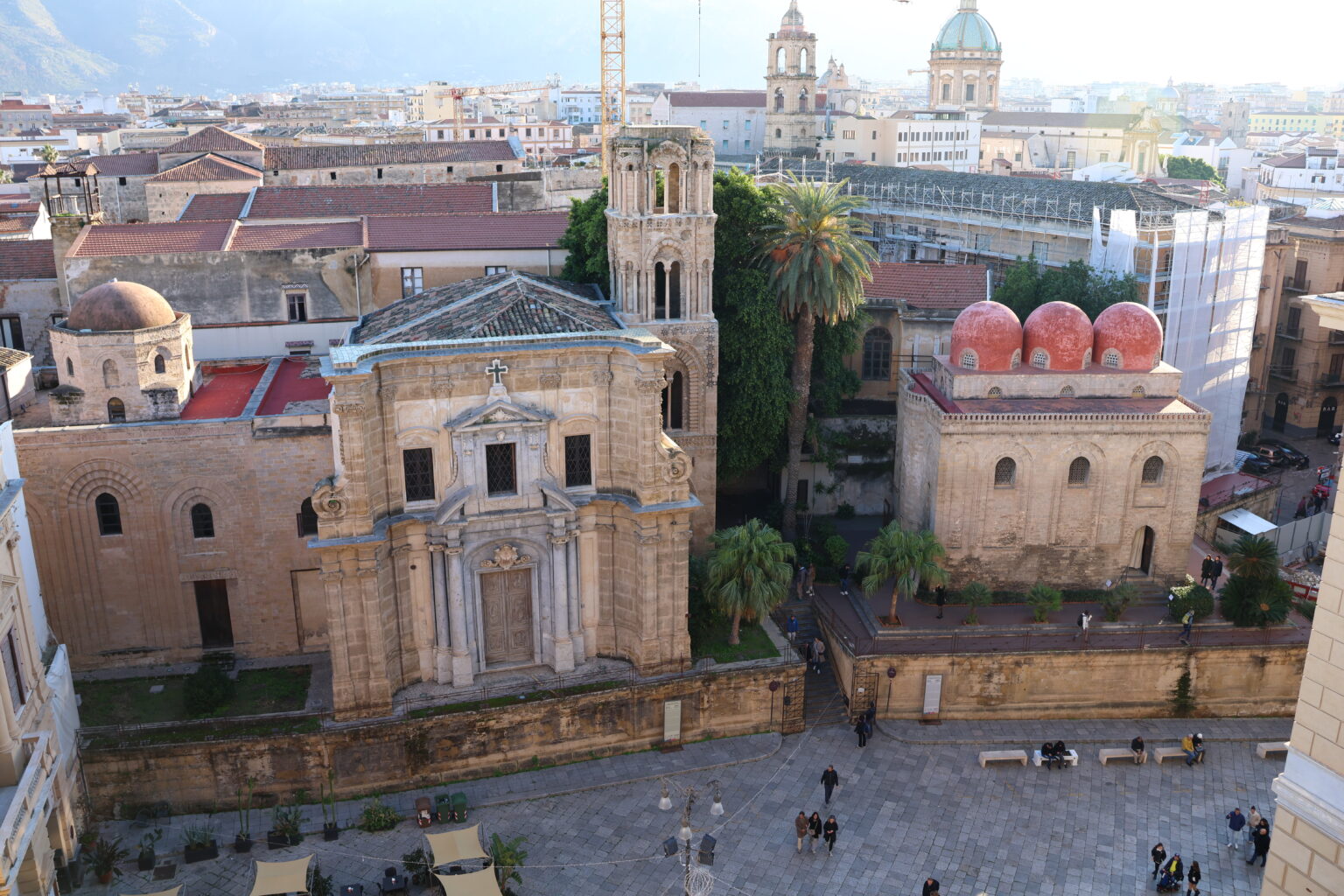
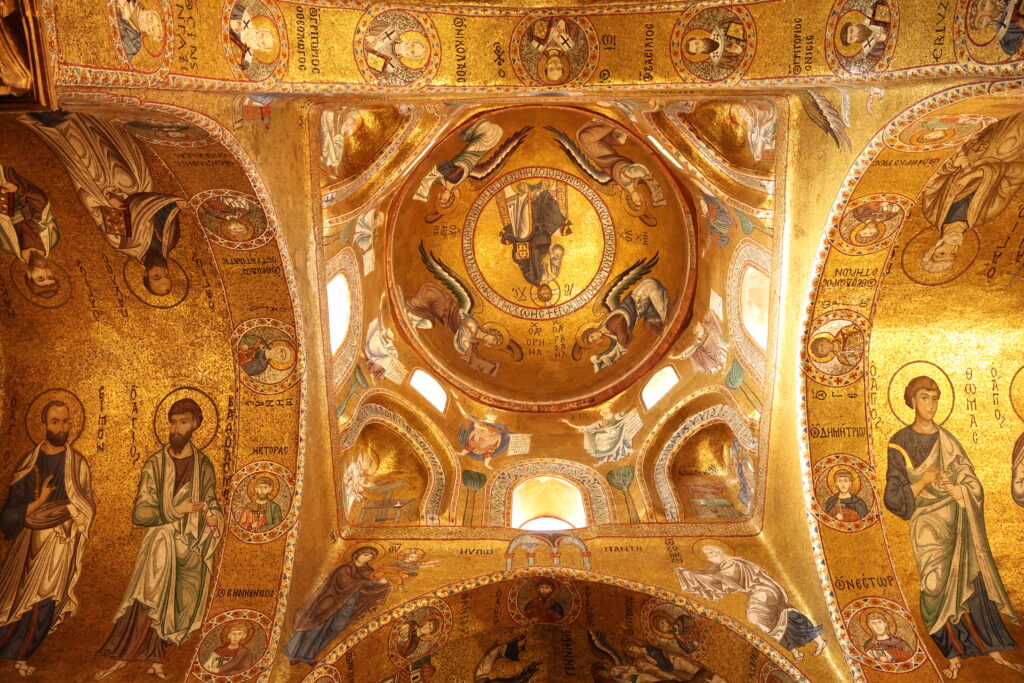
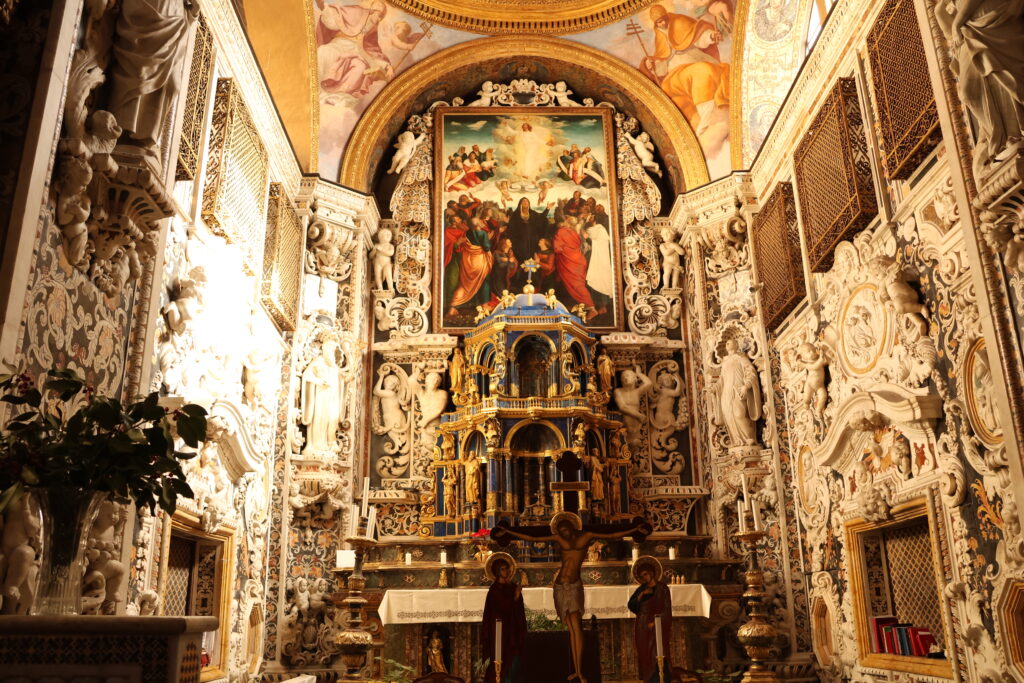
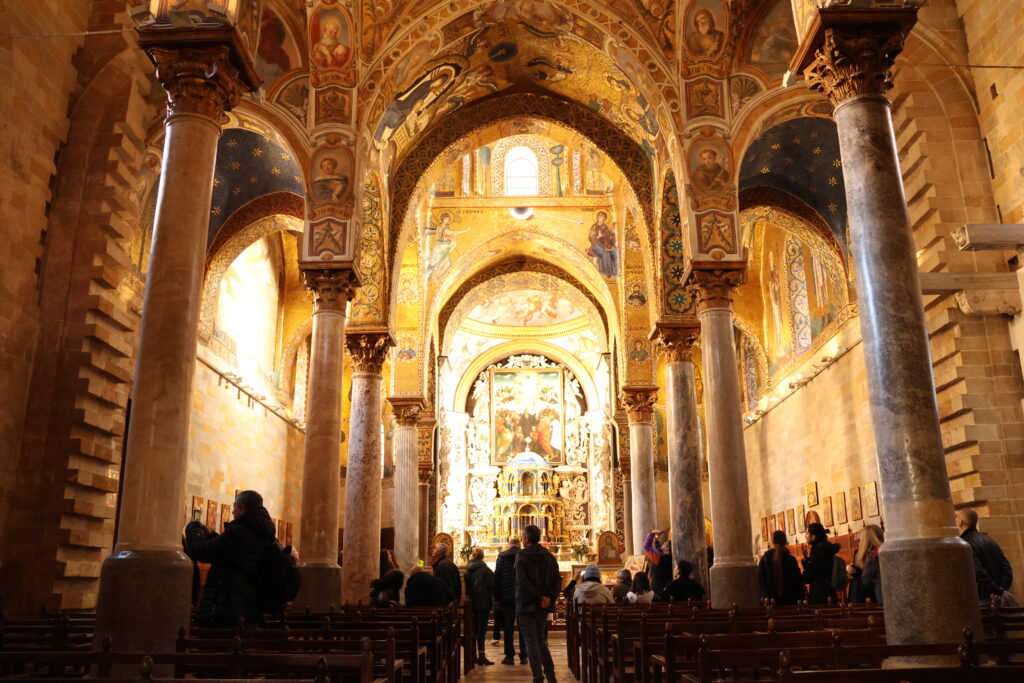
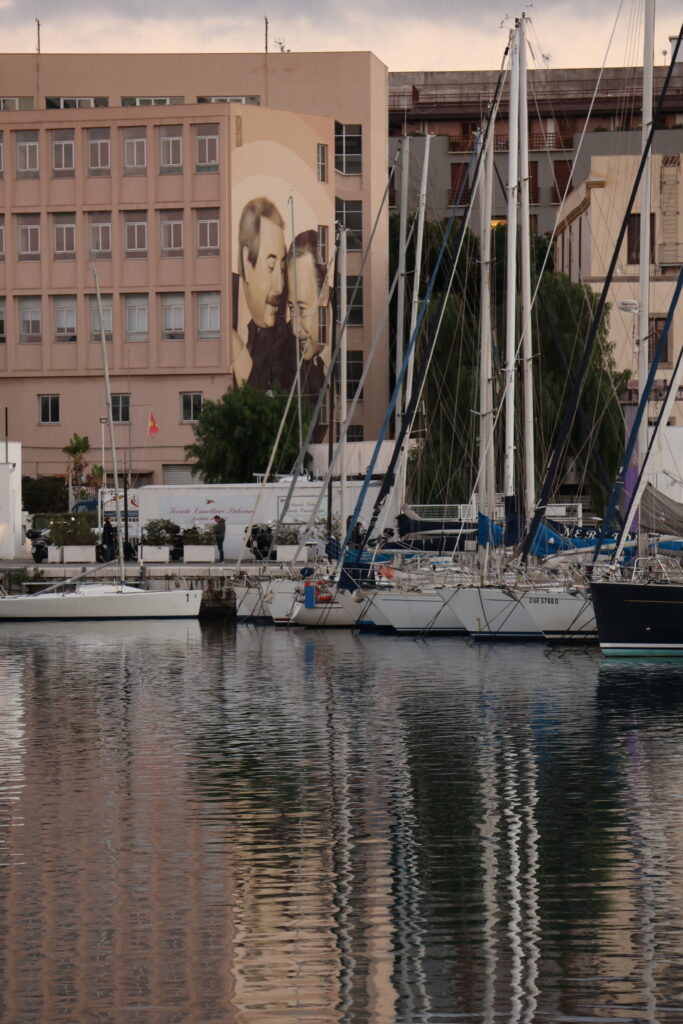
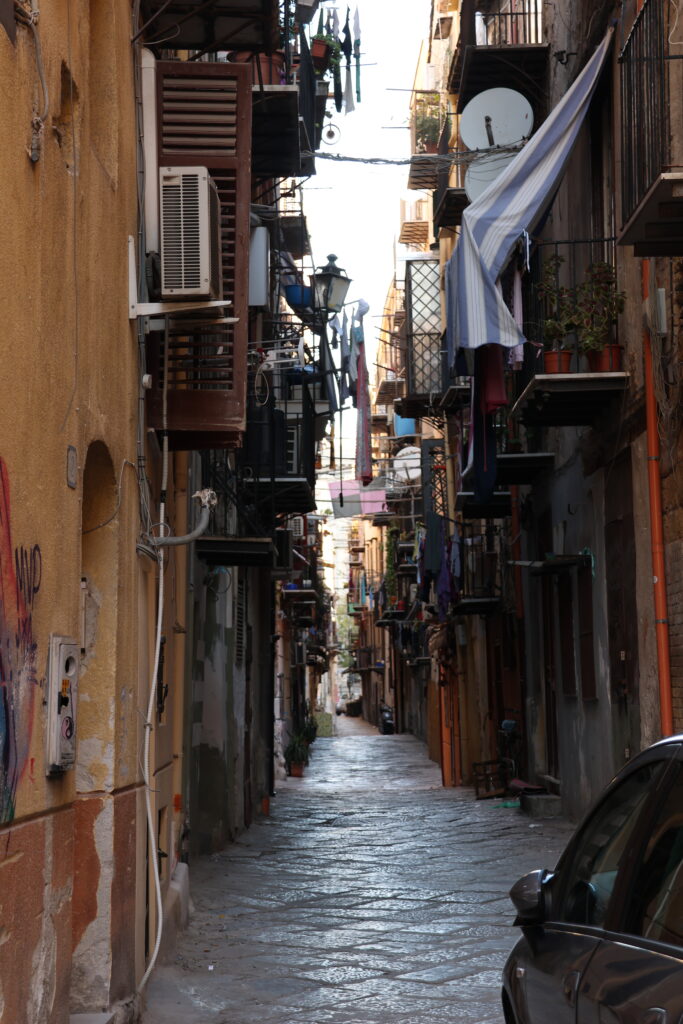
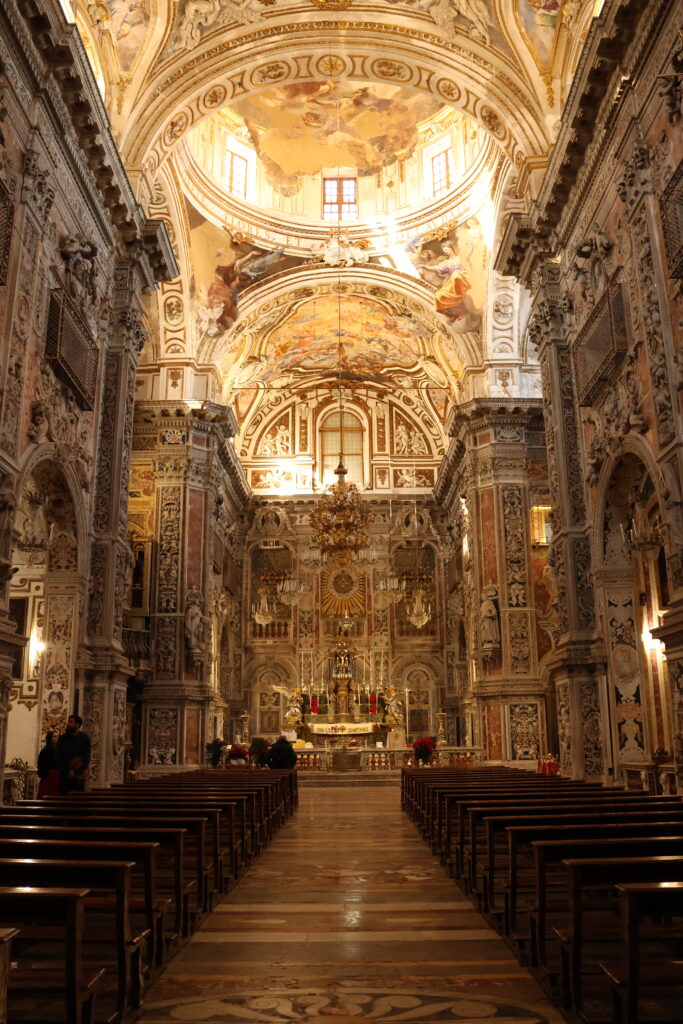
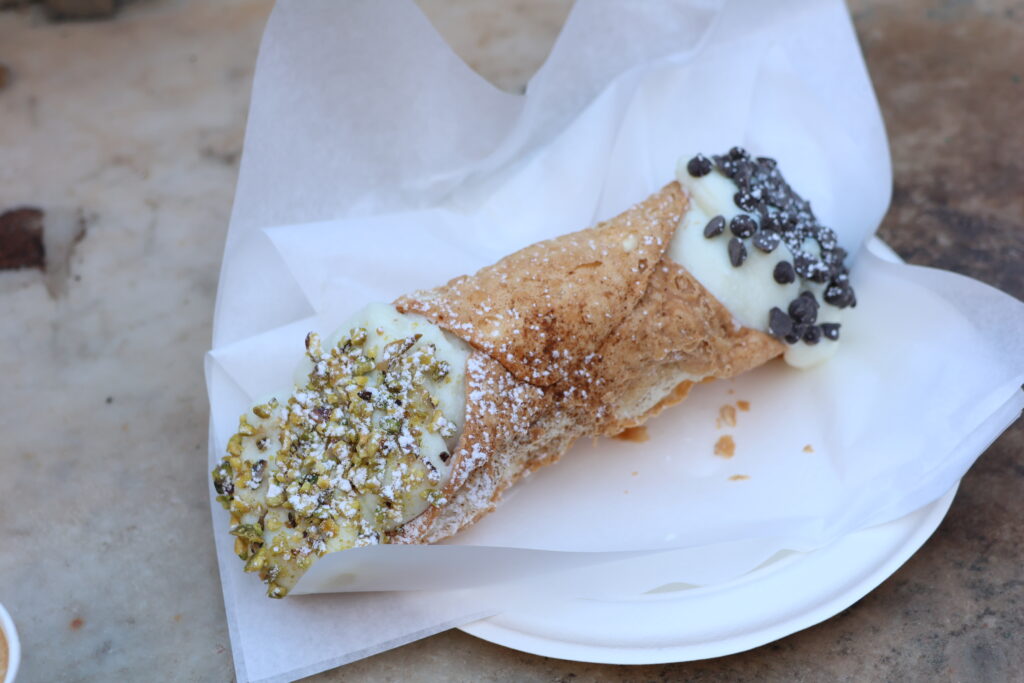
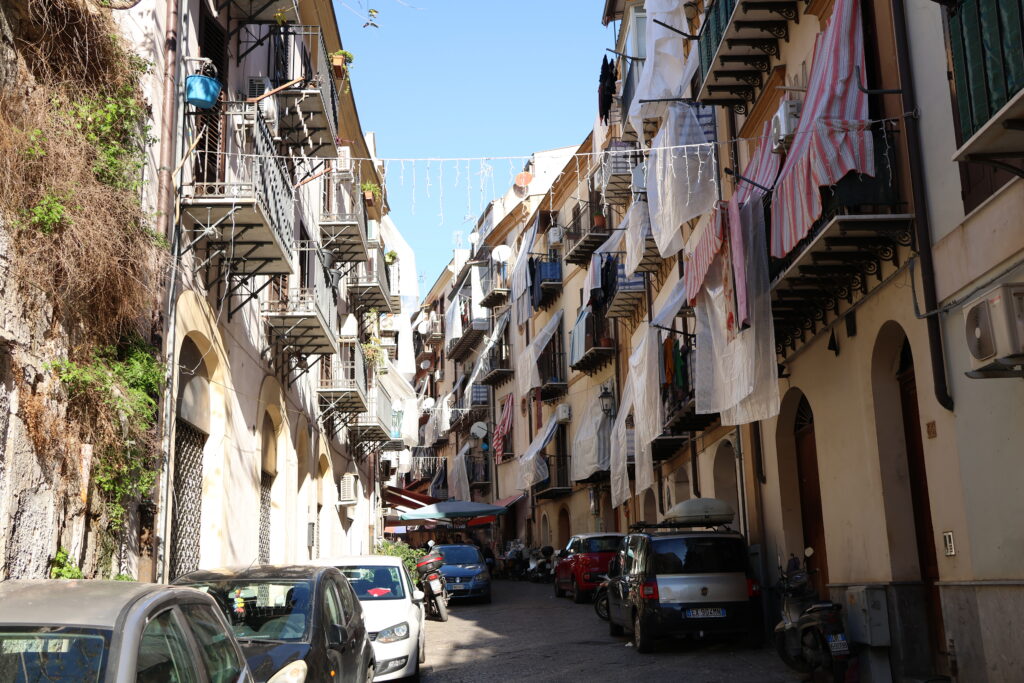
We travelled by car to our accommodation in the Kalsa district. The first short drive to our accommodation in Palermo was exciting. Sicilian car traffic is something else. On our first short evening walk around the Kalsa neighbourhood, we discovered that the house where Paolo Borselino was born is in the same street as our accommodation. For breakfast, we enjoyed a cappuccino and a cannolo in the bars in Palermo. We took part in a free walking tour to get an initial overview of the city. The tour took us past the Massimo Theatre, the Quattro Canti, the Fontana Pretoria, the Chiesa Santa Maria dell’Ammiraglio and the Chiesa di San Cataldo. The Chiesa Santa Maria dell’Ammiraglio is characterised by a multiplicity of styles that meet, since, through the succession of centuries, it was enriched by various tastes in art, architecture and culture. The church is renowned for its 12th century mosaics executed by craftsmen working in the Byzantine style. The ceiling mosaic as well as the floor and wall mosaics are beautiful. It was hard to know where to look first.
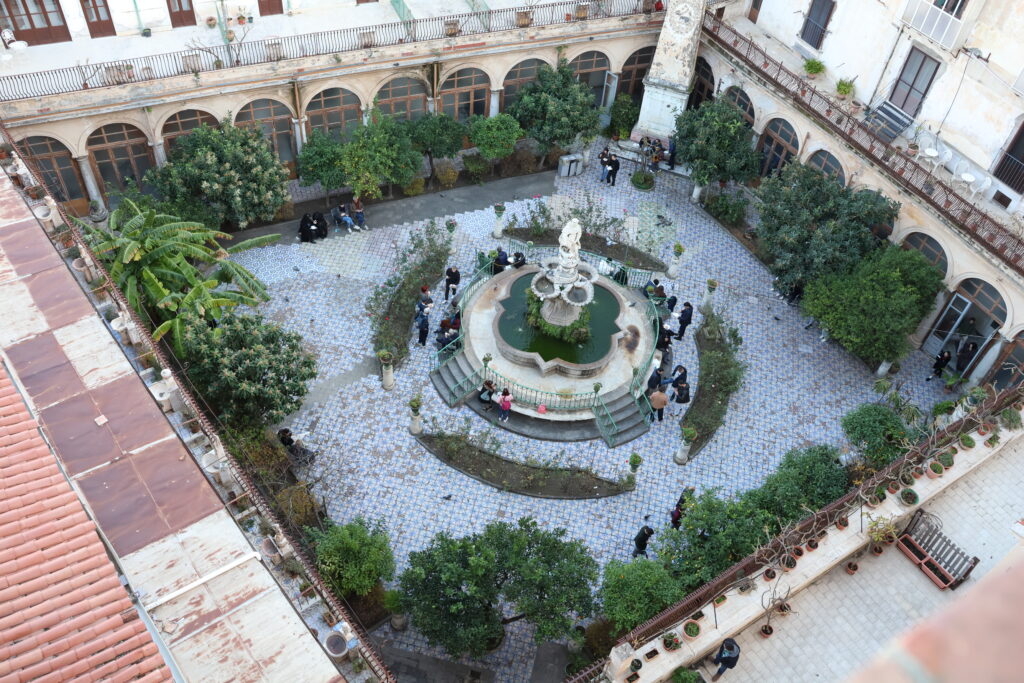
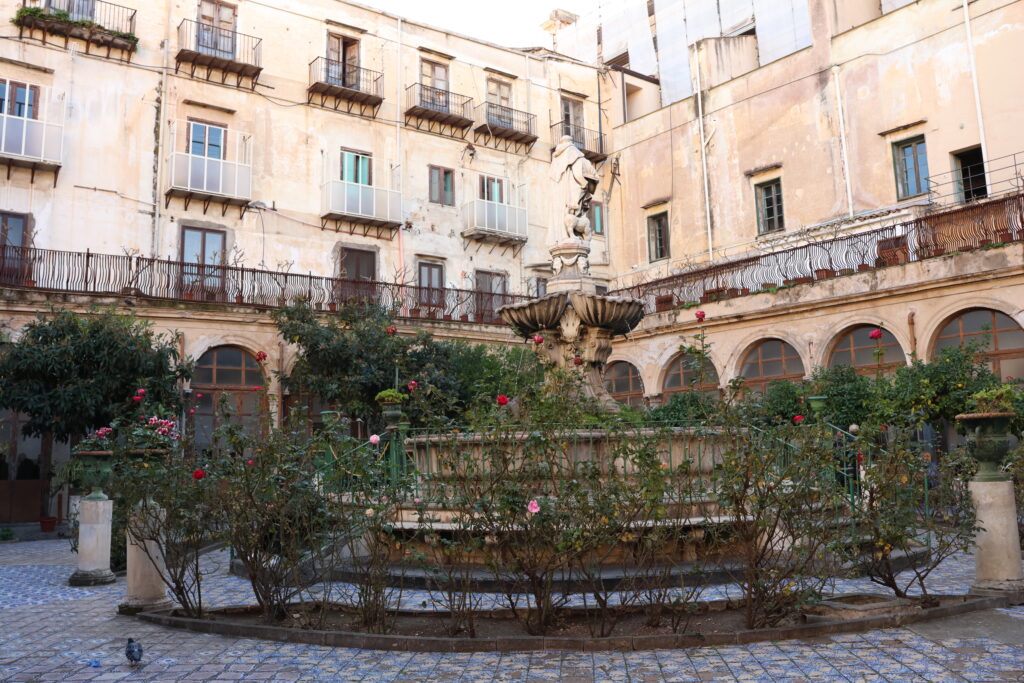
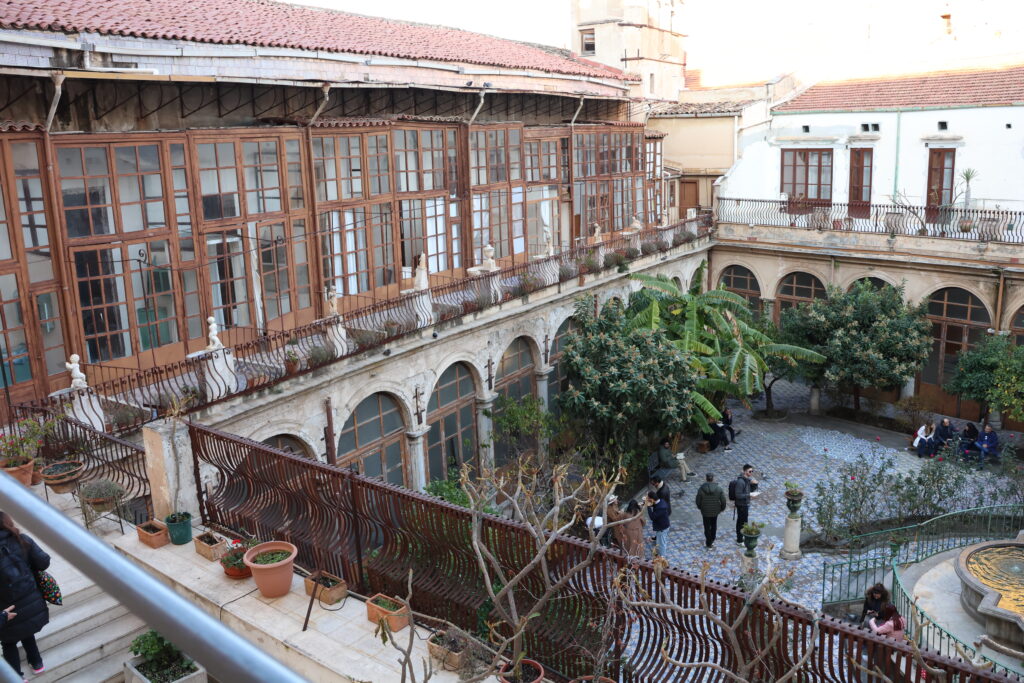
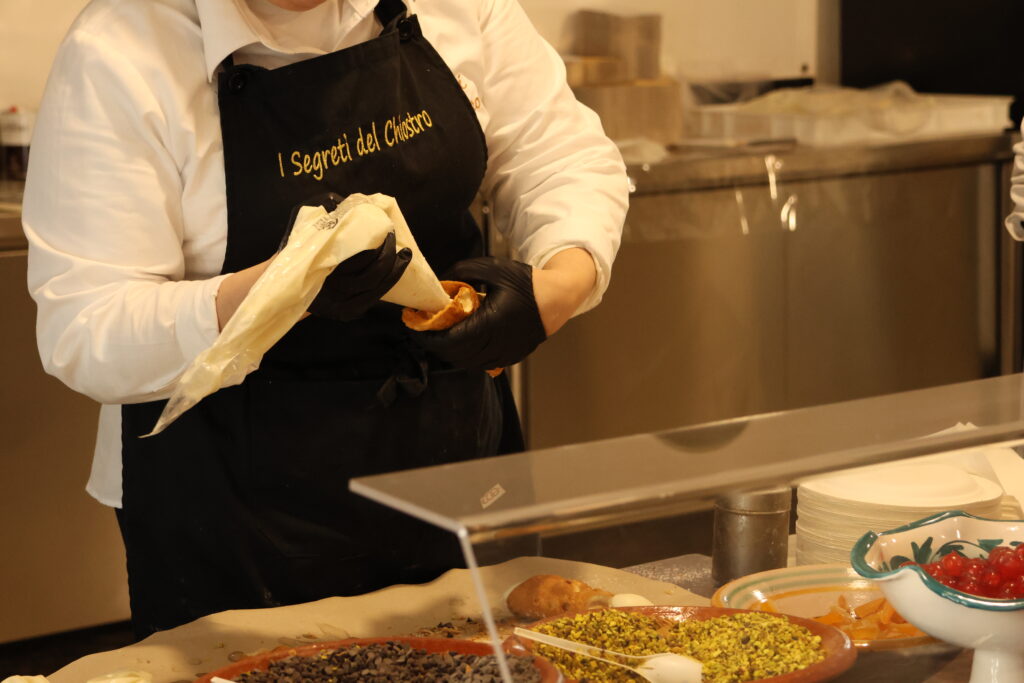
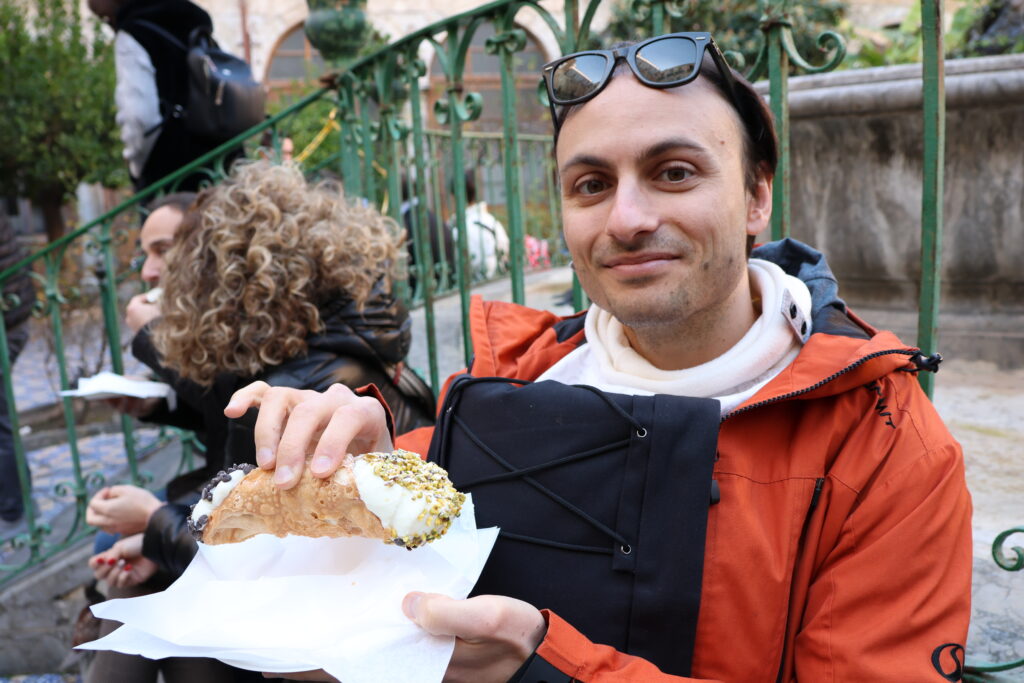
Opposite the Chiesa Santa Maria dell’Ammiraglio is the Chiesa e Monastero di Santa Caterina d’Alessandria. We also took a look at this church and the associated monastery. The convent was founded in 1310 as a Dominican nunnery as a result of a donation from the noblewoman Bevenuta Mastrangelo Santafiori. The convent was extended in the 16th century and the current church building was erected between 1566 and 1596. The first daughter was allowed to stay with her family, while subsequent daughters of wealthy families were sent to the convent. Some of the daughters were brought to the convent at the age of 6. Dominican nuns lived in the convent until 2014. We looked round the various rooms of the convent. The nuns’ bedrooms were very spartanly furnished. From the roof, we had a beautiful view of the convent courtyard, the small balconies of the rooms and Palermo. The convent has only been open to the public since 2017. One part now houses a patisserie. Of course, we treated ourselves to a freshly filled cannolo and a slice of cassata. Both tasted delicious.
Teatro Massimo
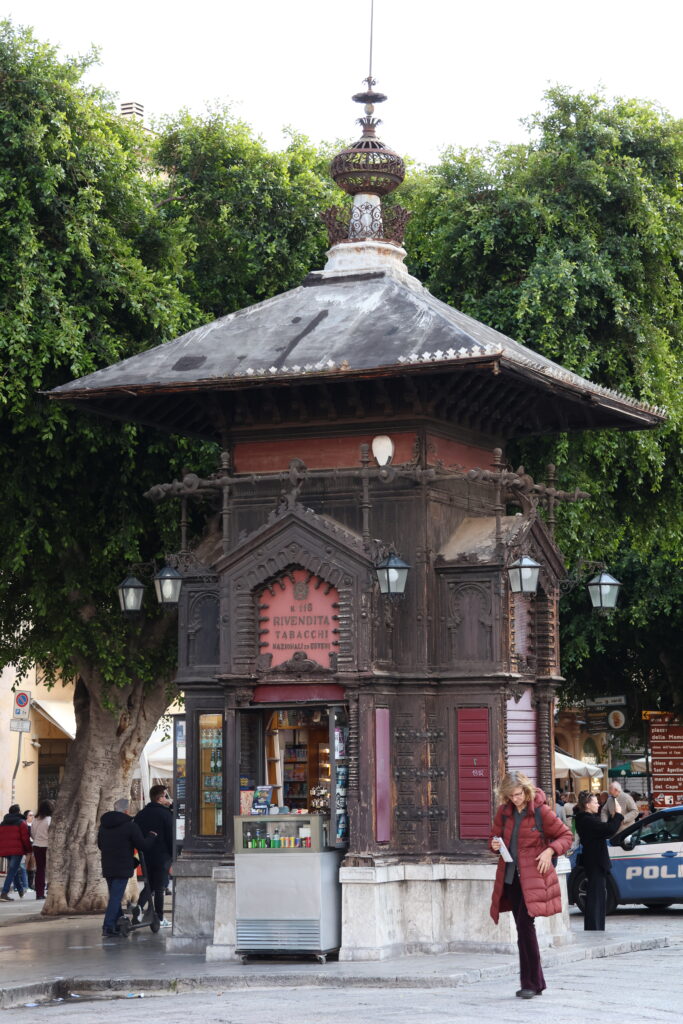
The old ticket kiosk
La Chiesa Santa Maria dell’Ammiraglio e la Chiesa di San Cataldo
The interior of Chiesa Santa Maria dell’Ammiraglio
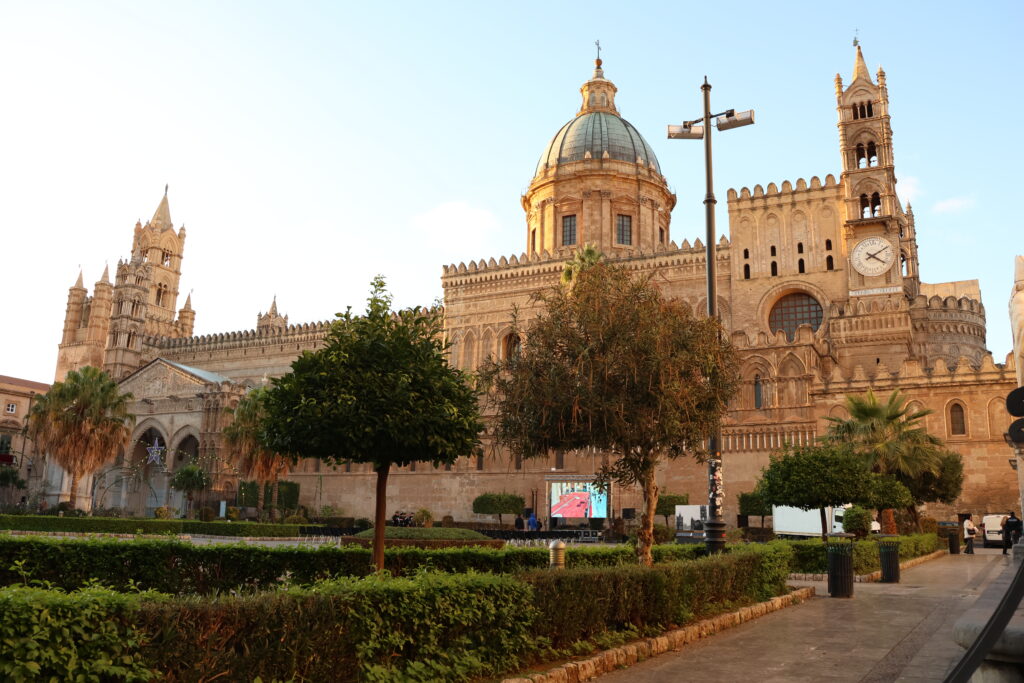
Palermo Cathedral
Chiesa e Monastero di Santa Caterina d’Alessandria
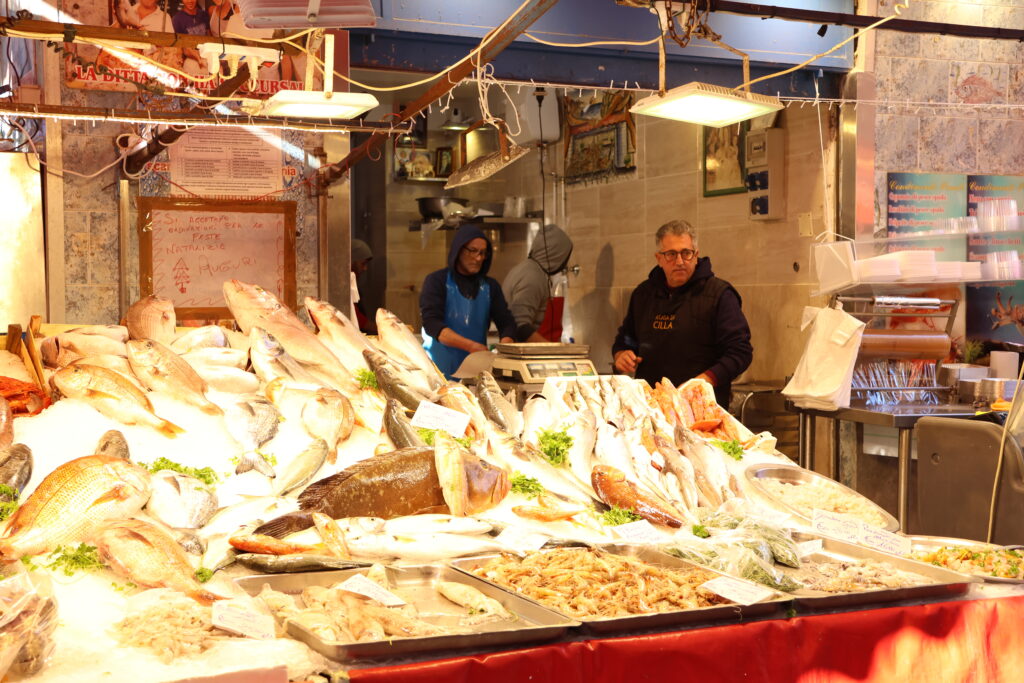
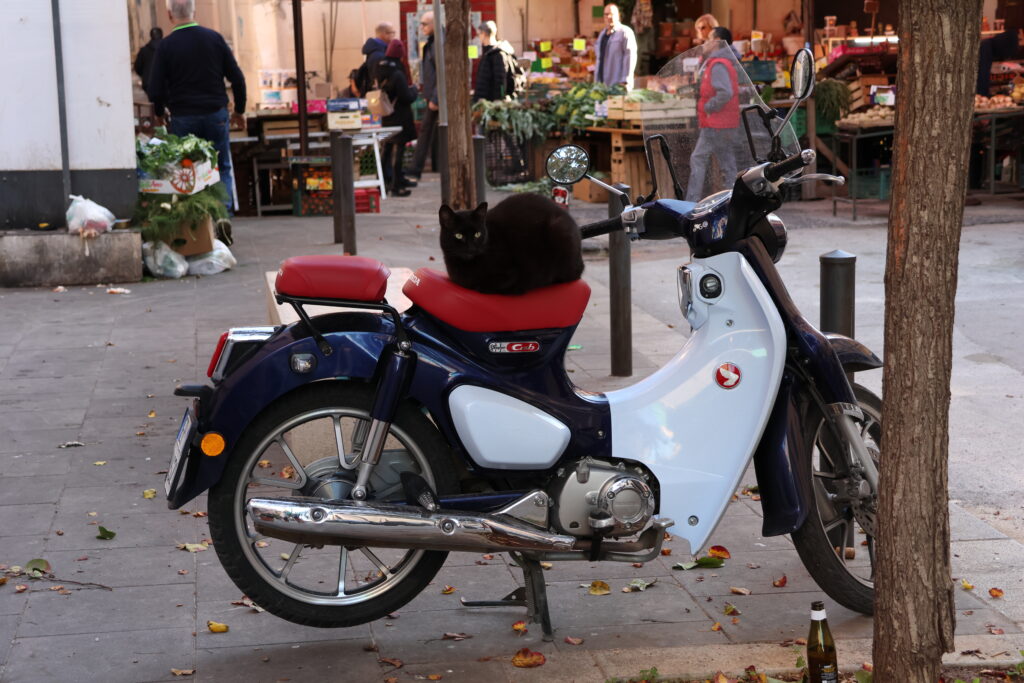
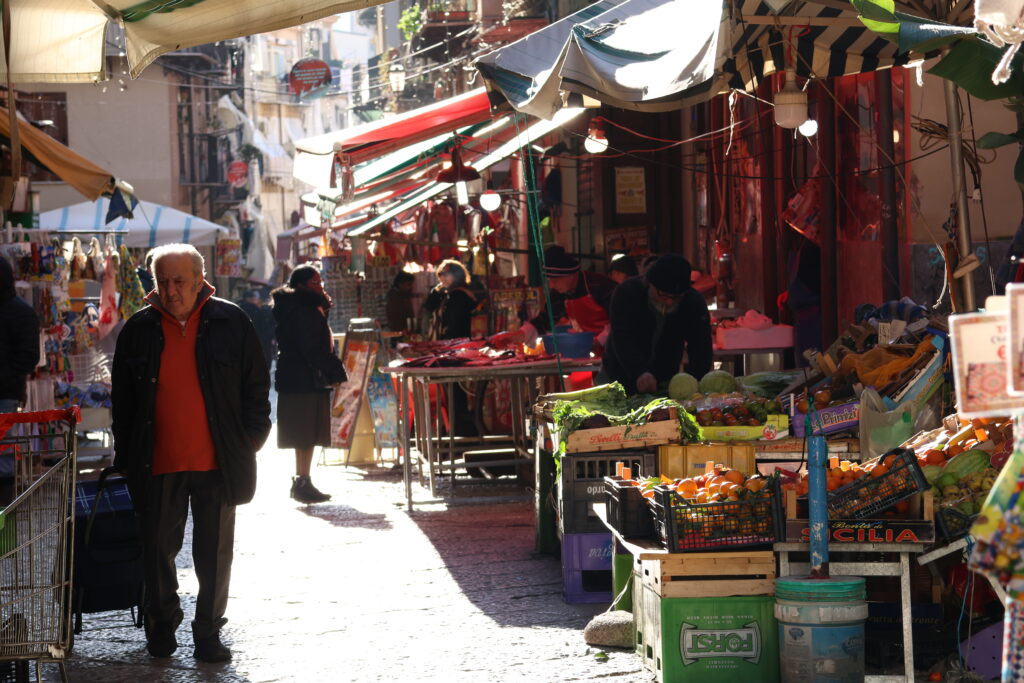
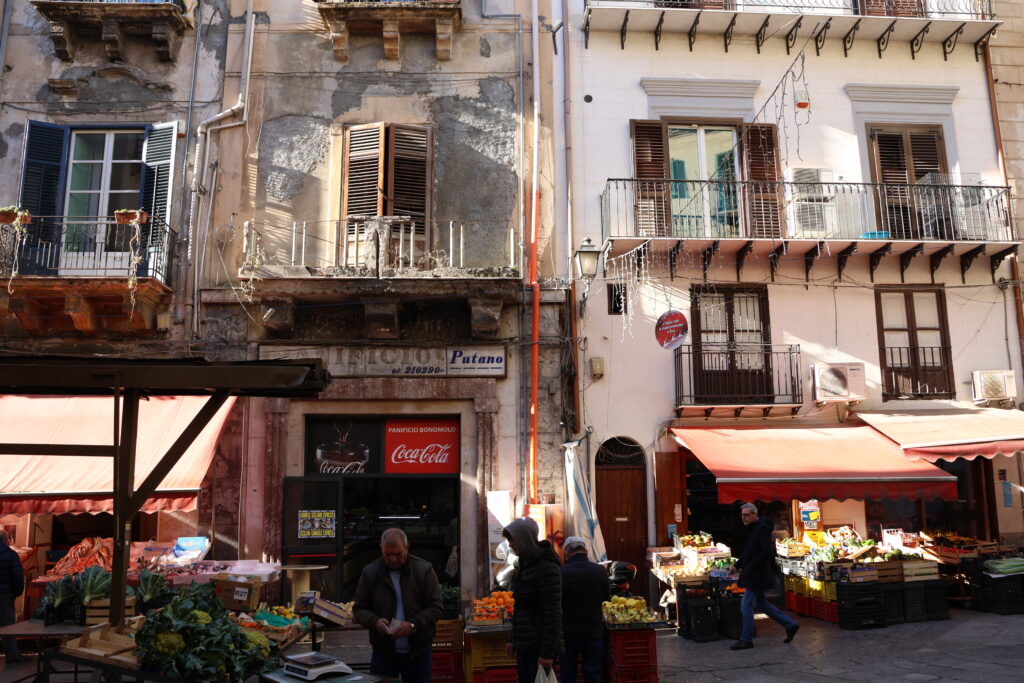
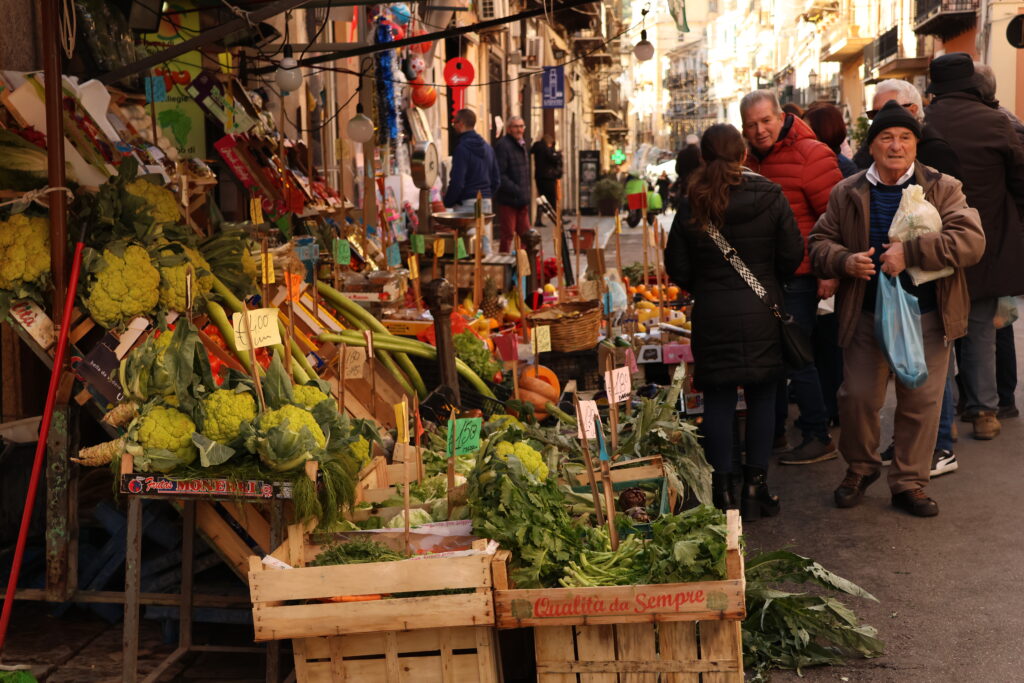
We spent a morning strolling around the Mercato del Capo, as it is much less touristy than the well-known Mercato di Ballaro. We passed lavishly stocked fish, vegetable and fruit stalls. We would both have liked to have done some real shopping there. We treated ourselves to a freshly squeezed pomegranate juice and Marco ate an insalata di polpo.
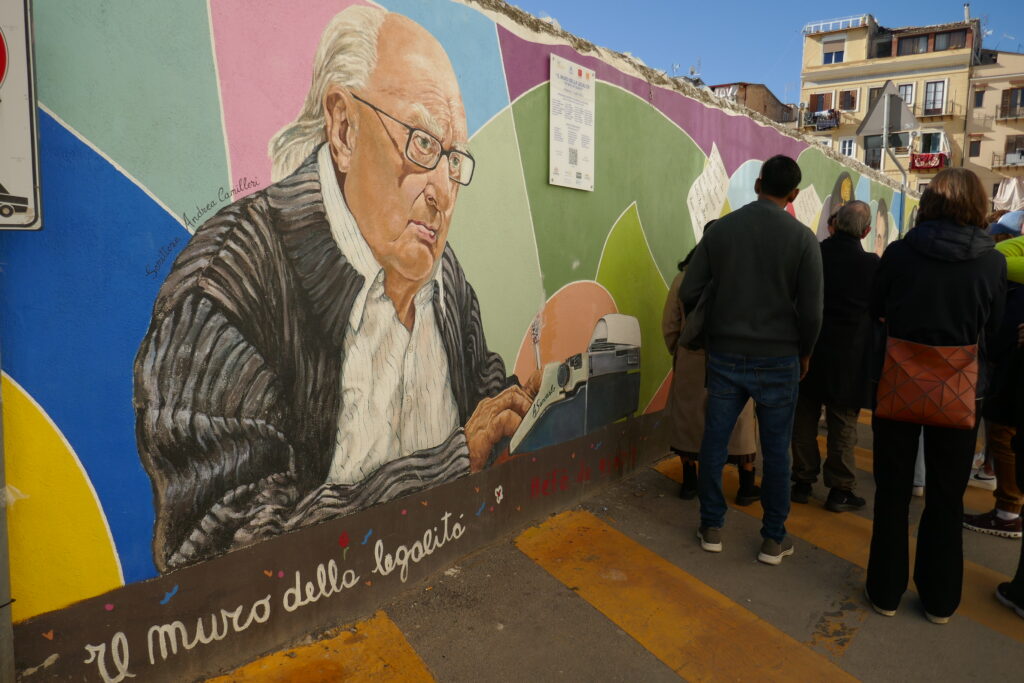
Well-known writers: Andrea Camilleri
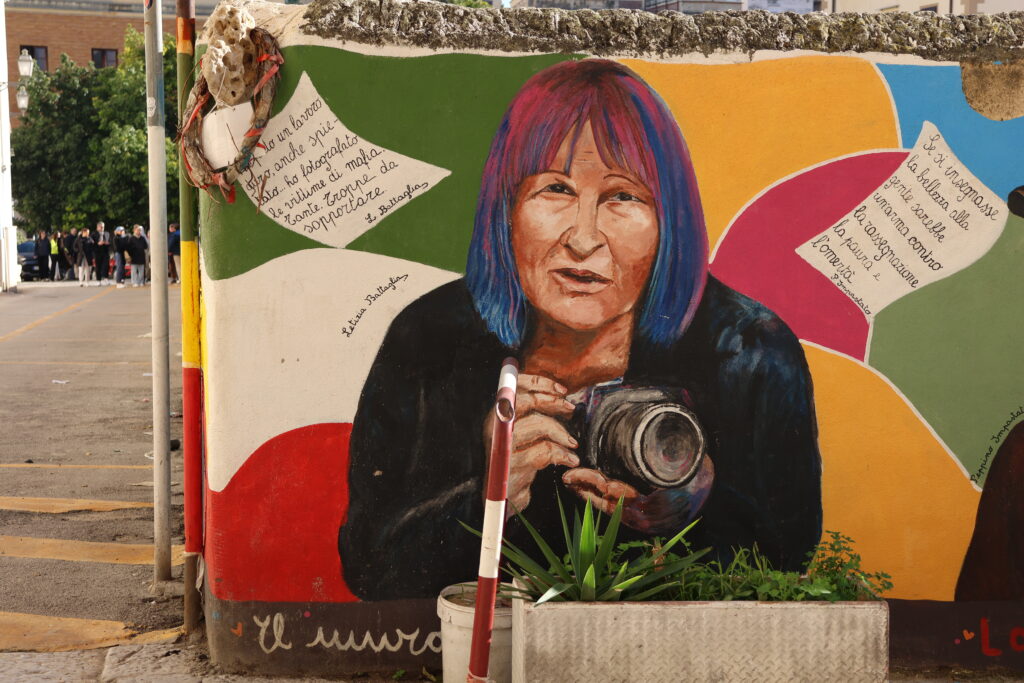
Italian photographer and photojournalist, born in Palermo :
Letizia Battaglia
Monreale & Enna
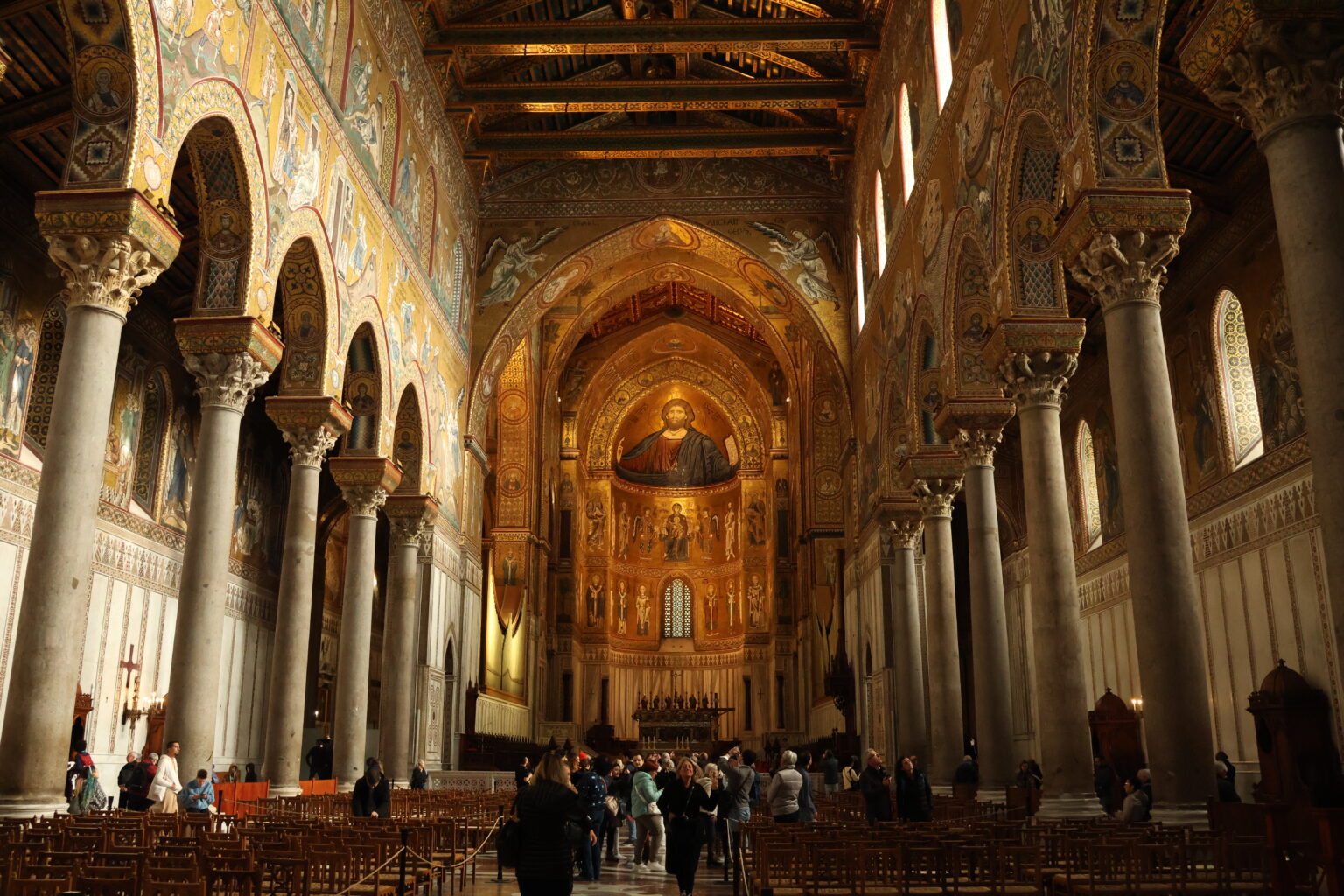
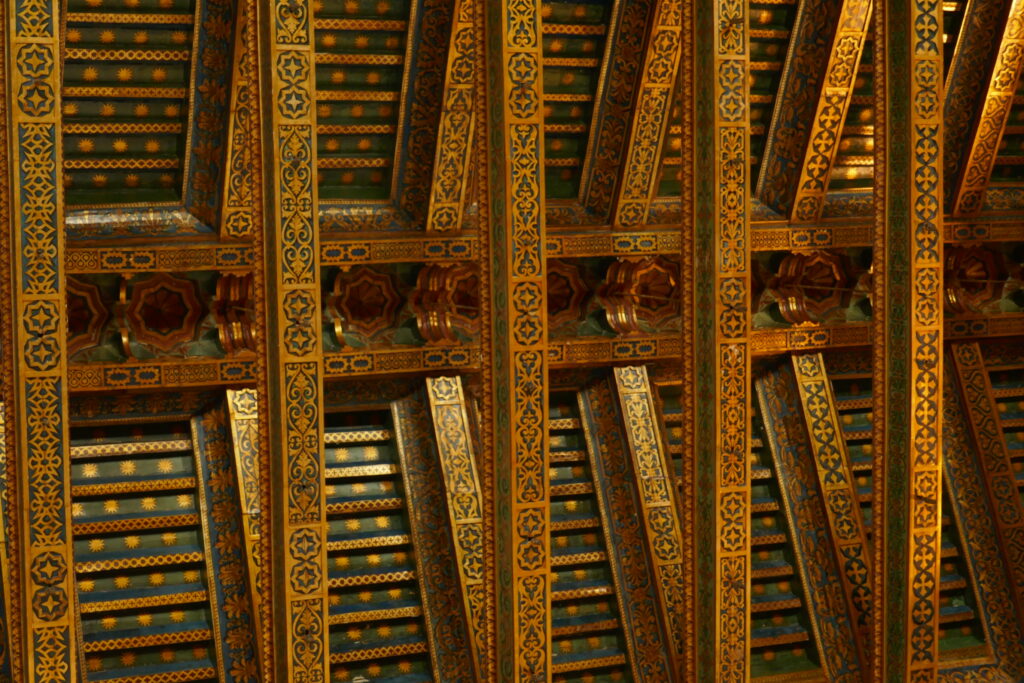
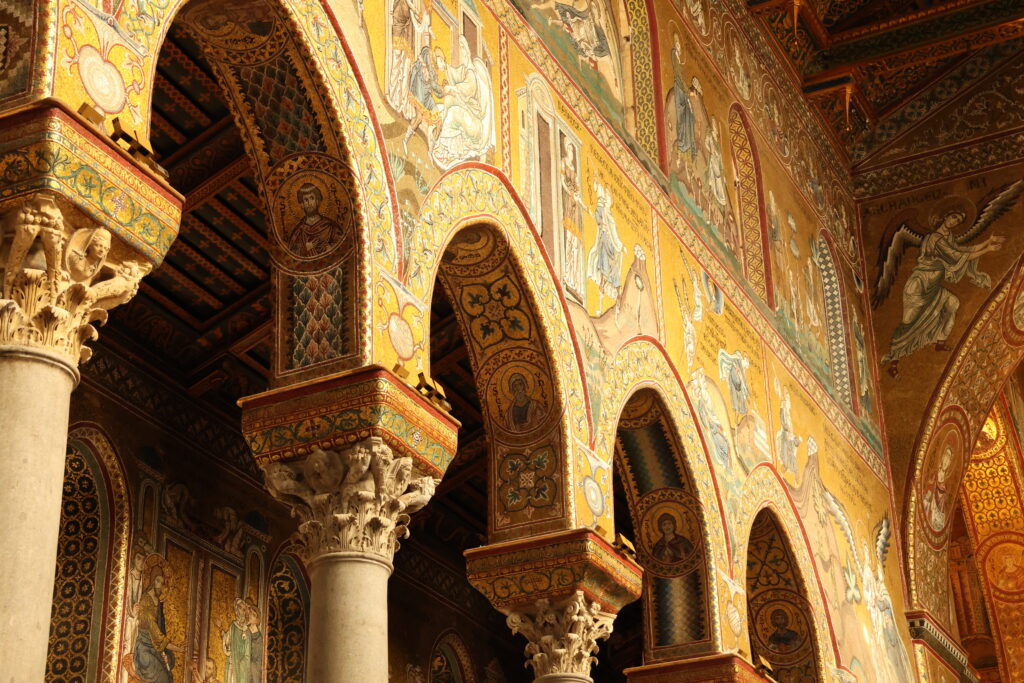
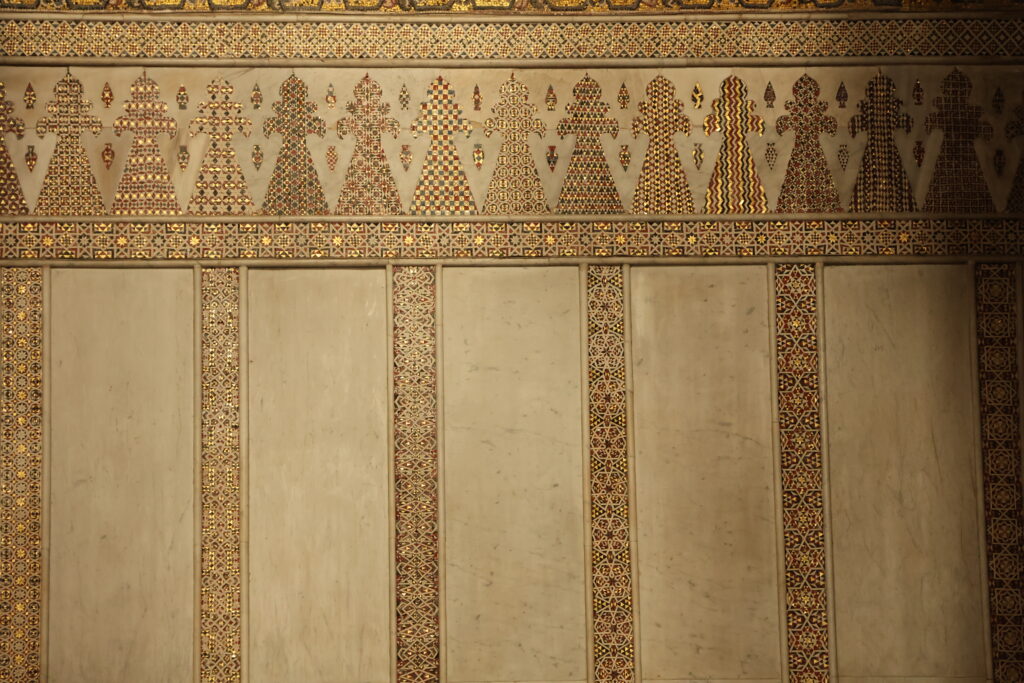
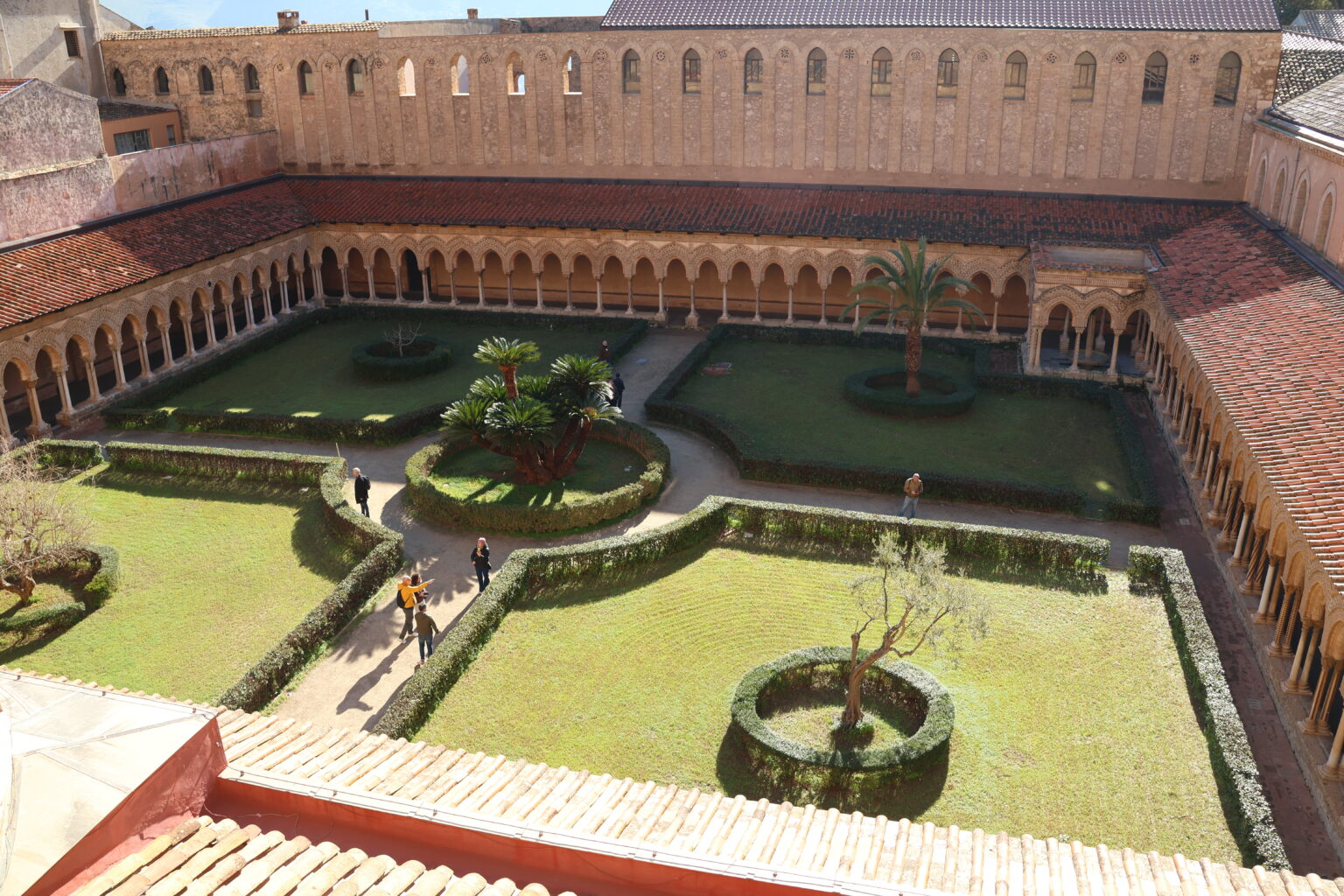
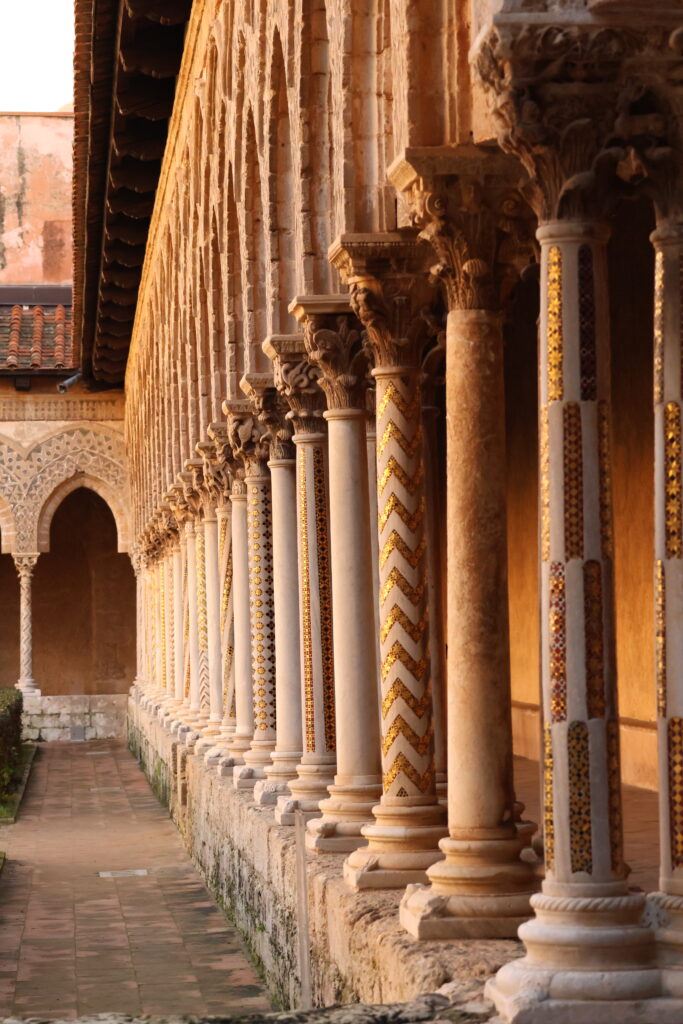
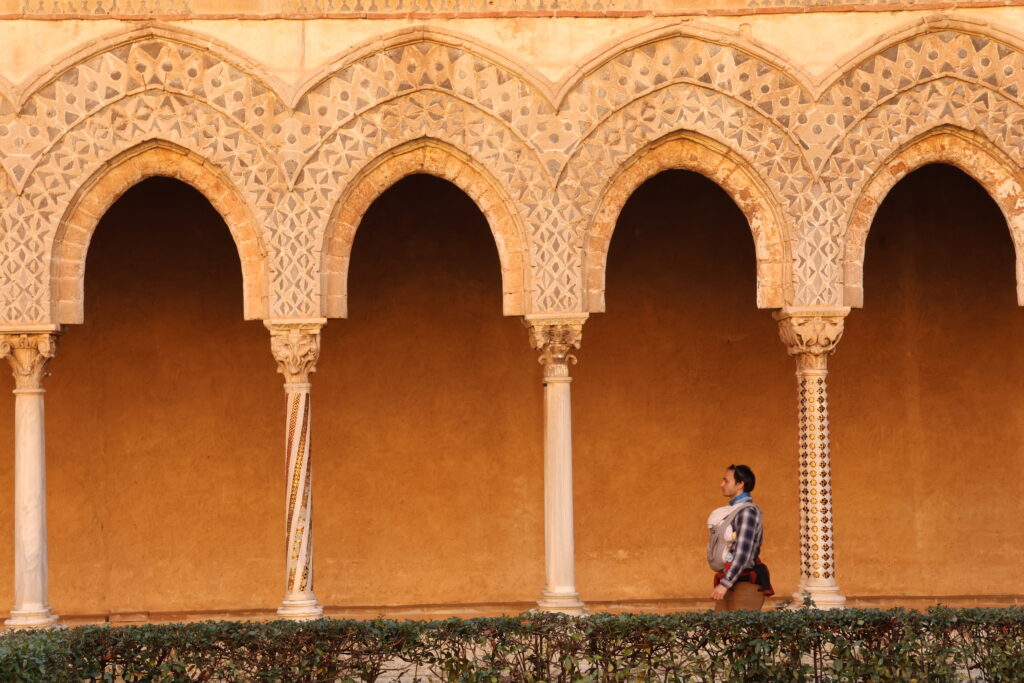
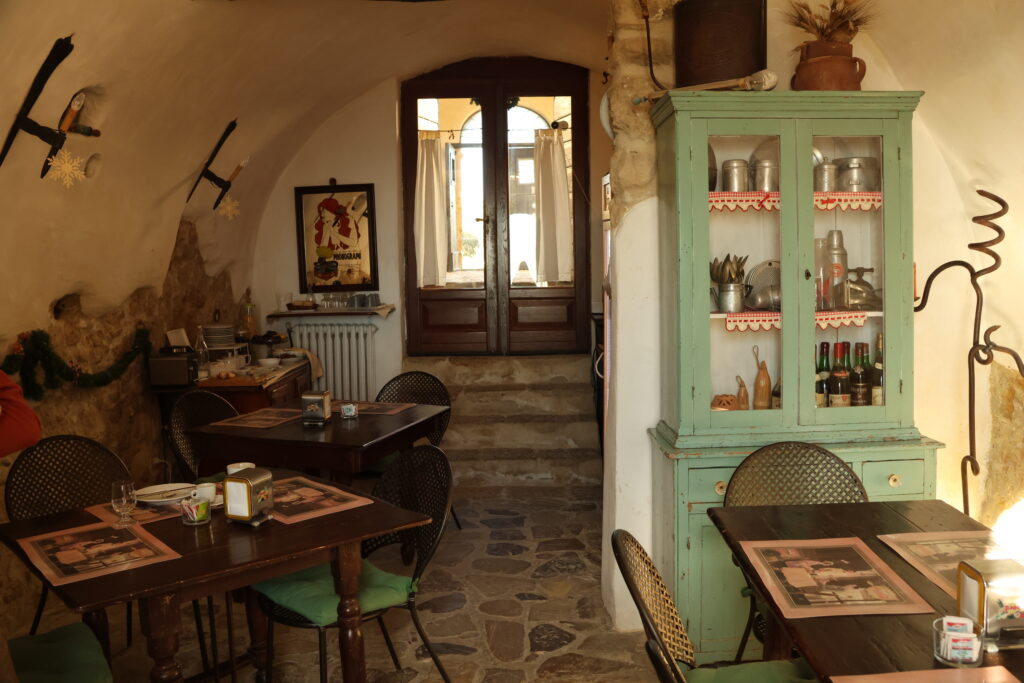
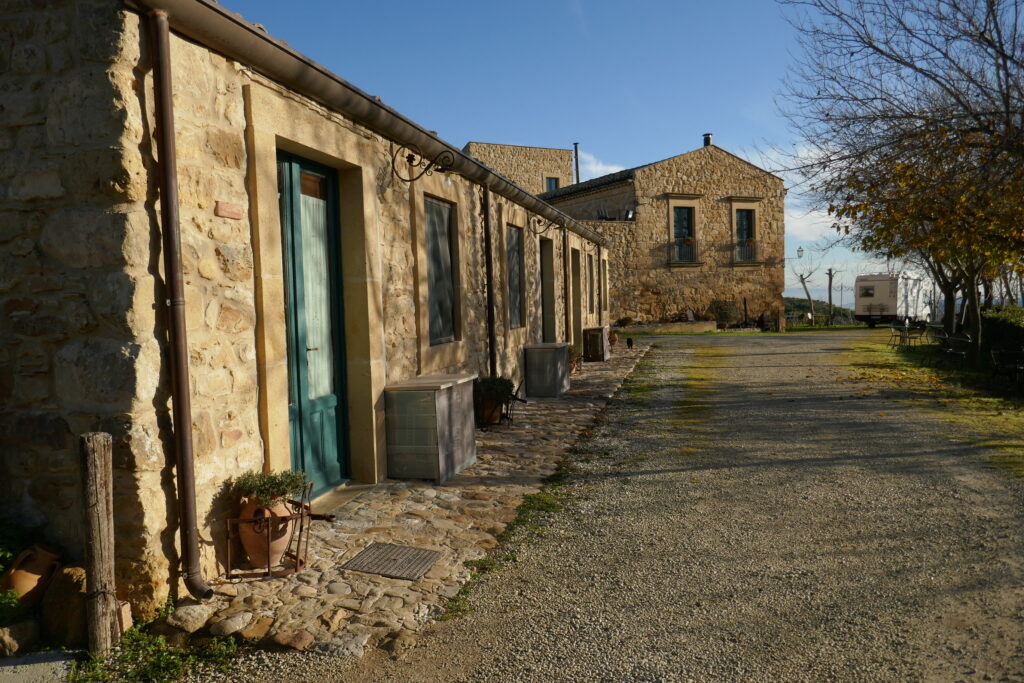
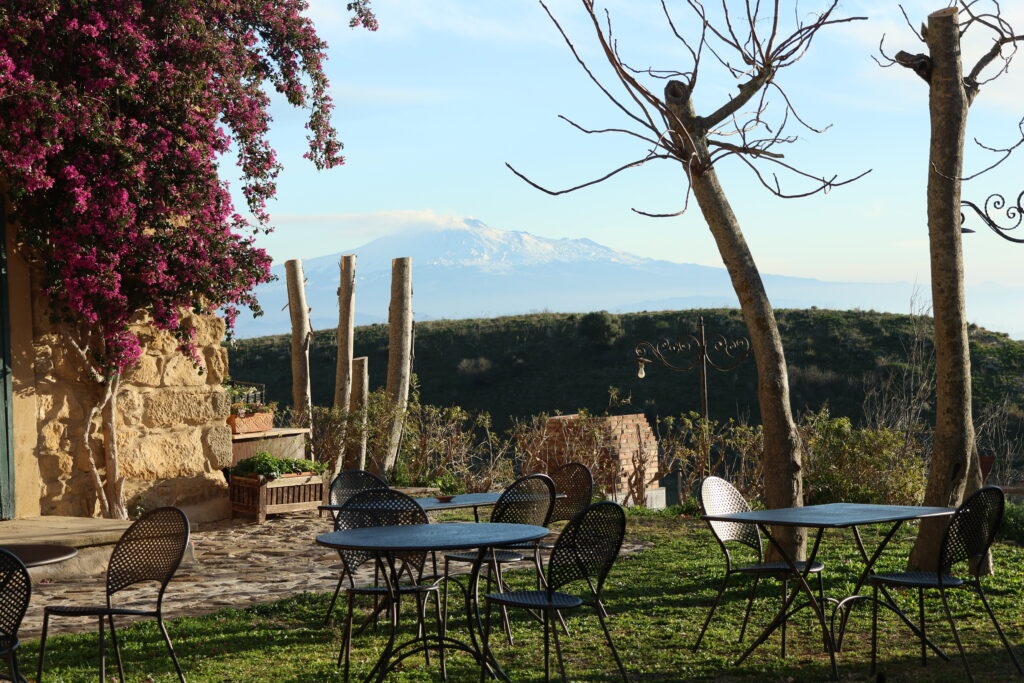
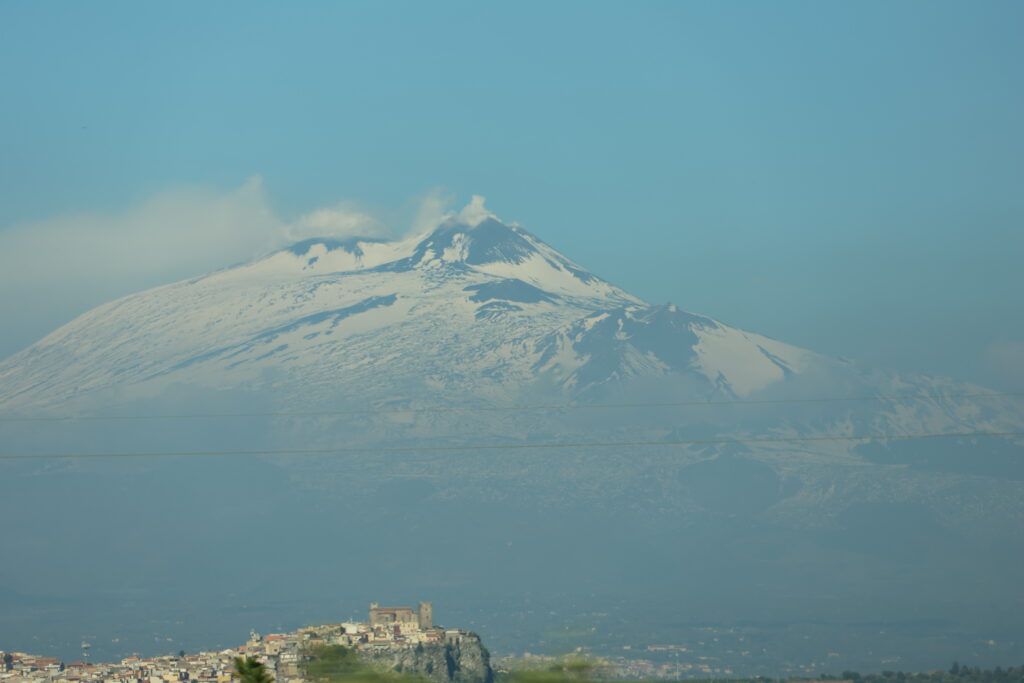
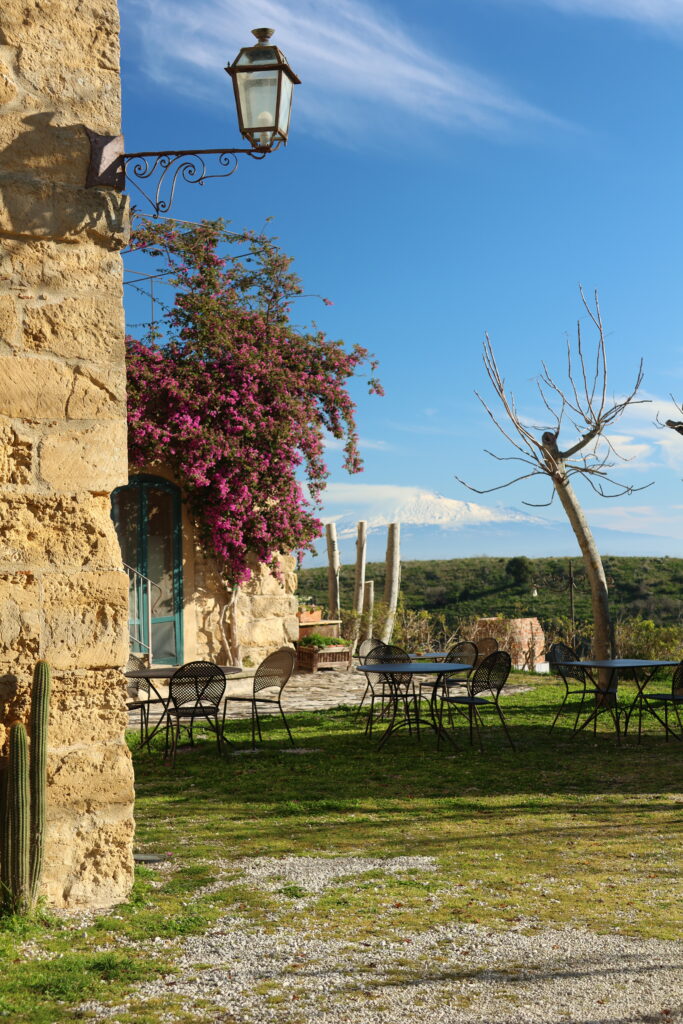
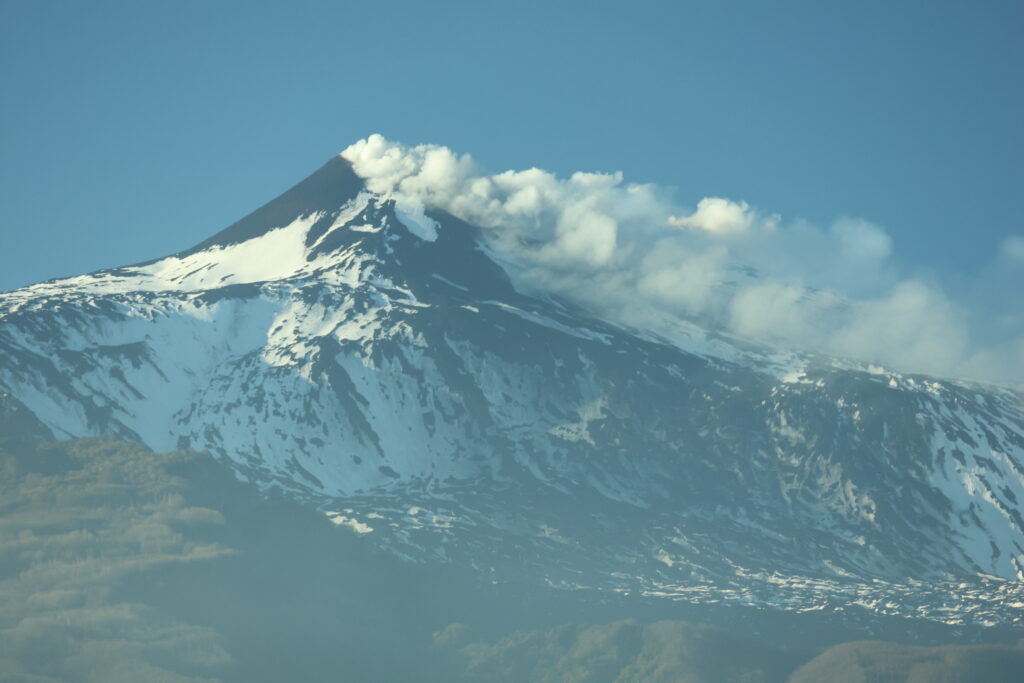
We wanted to celebrate New Year’s Eve a little more quietly with our little caterpillar. So after 3 days we left Palermo in the direction of Enna. On the way there, we made a stop in Monreale. There is a cathedral there with Italy’s largest medieval mosaic. The mosaic dates back to the 12th century, covers an area of 6400 square metres and contains around 2.2 kg of solid gold. It was breathtaking to see this mosaic. Again, not only the ceiling but also the walls were covered with beautiful mosaics. We had bought a ticket to visit the roof and the neighbouring cloister of the former Benedictine monastery. On the way up to the roof, we came very close to the ceiling mosaics. It was great to be able to marvel at them up close. The journey to Enna took us through beautiful mountainous countryside. Every now and then we stopped to take photos. There was even some snow on the slightly higher mountain peaks. We arrived in Enna just after sunset. We took a quick stroll through the town, bought something for dinner and then headed to our agriturismo. This was just 15 minutes from Enna, surrounded by olive trees. On 1 January we woke up to glorious sunshine and a cold 3 degrees. The ground was even frozen. Before breakfast, we went for a little New Year’s walk in the grounds of the agriturismo and realised that you can see the steaming, snow-covered Mount Etna from there.
Our Agriturismo in Enna
Syracusa & Day Trips
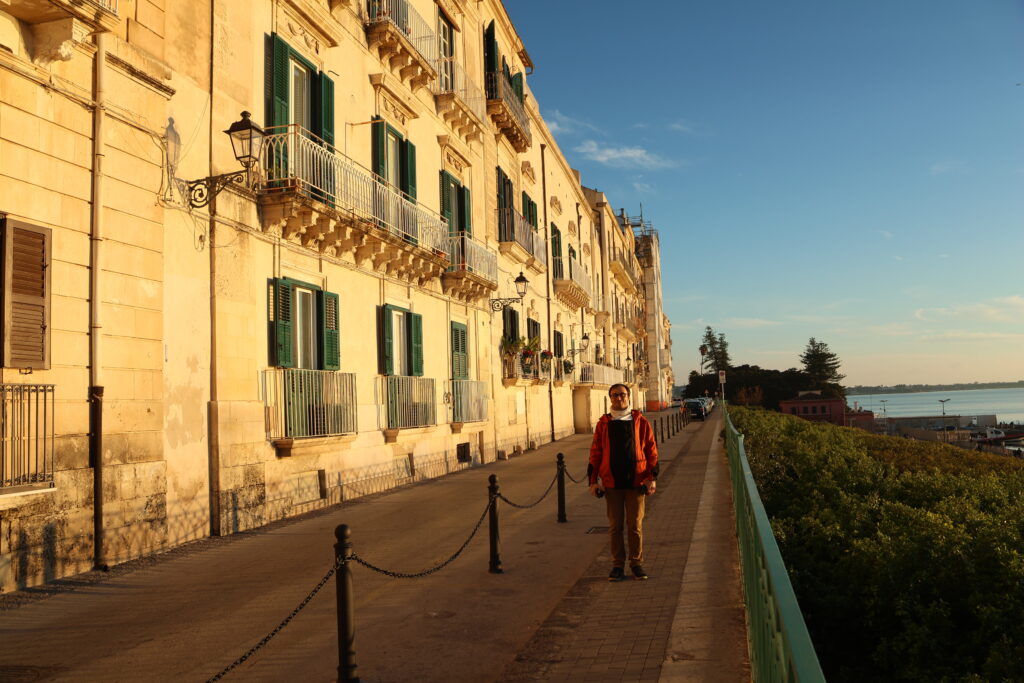
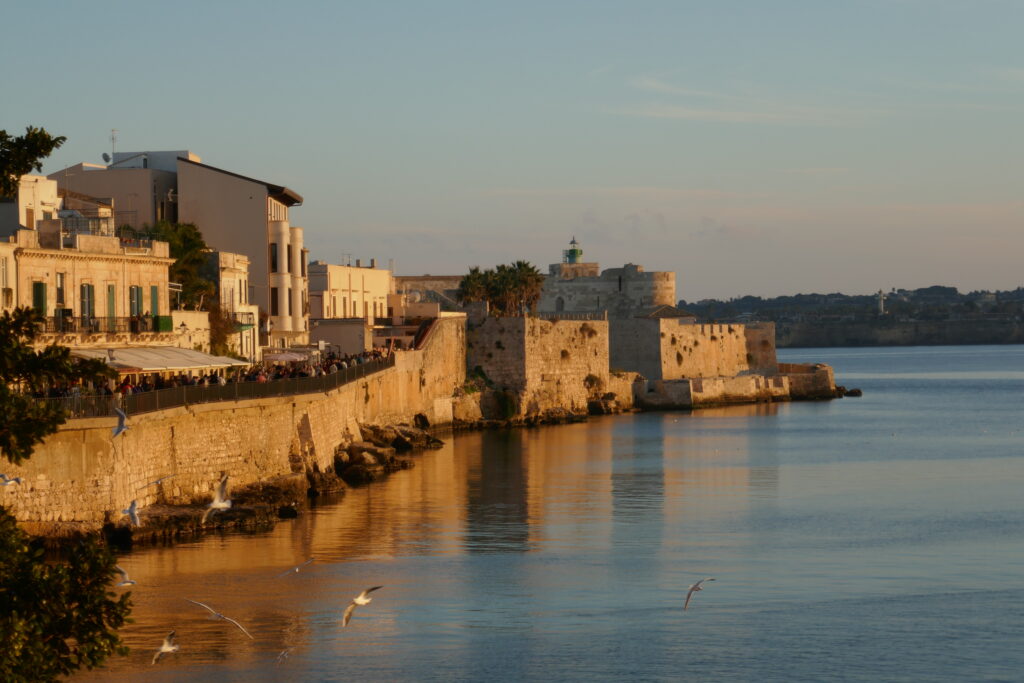
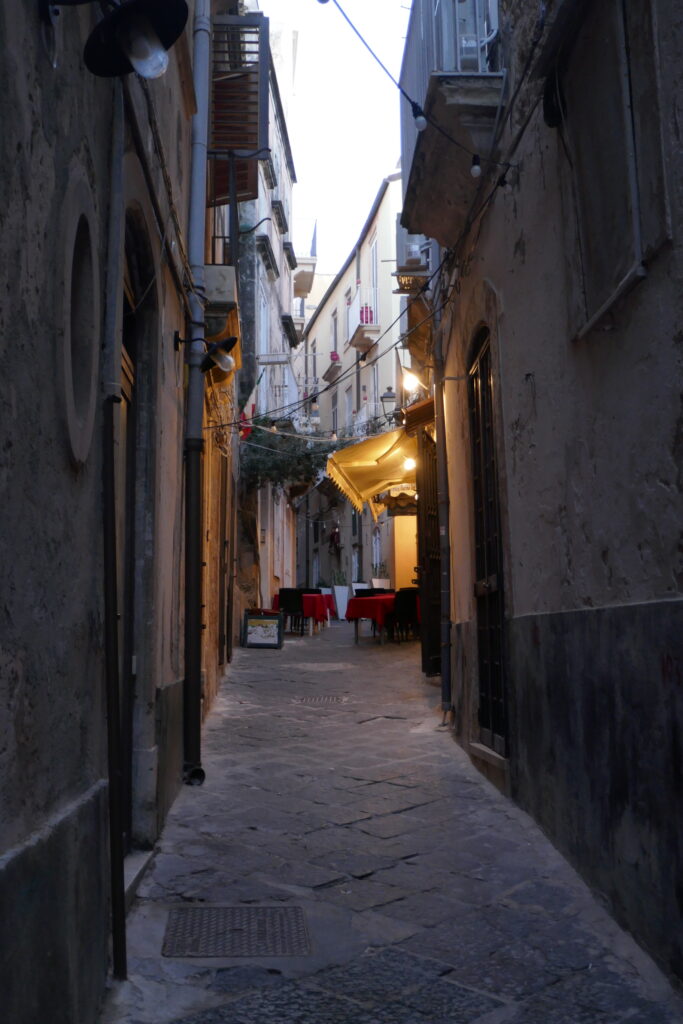
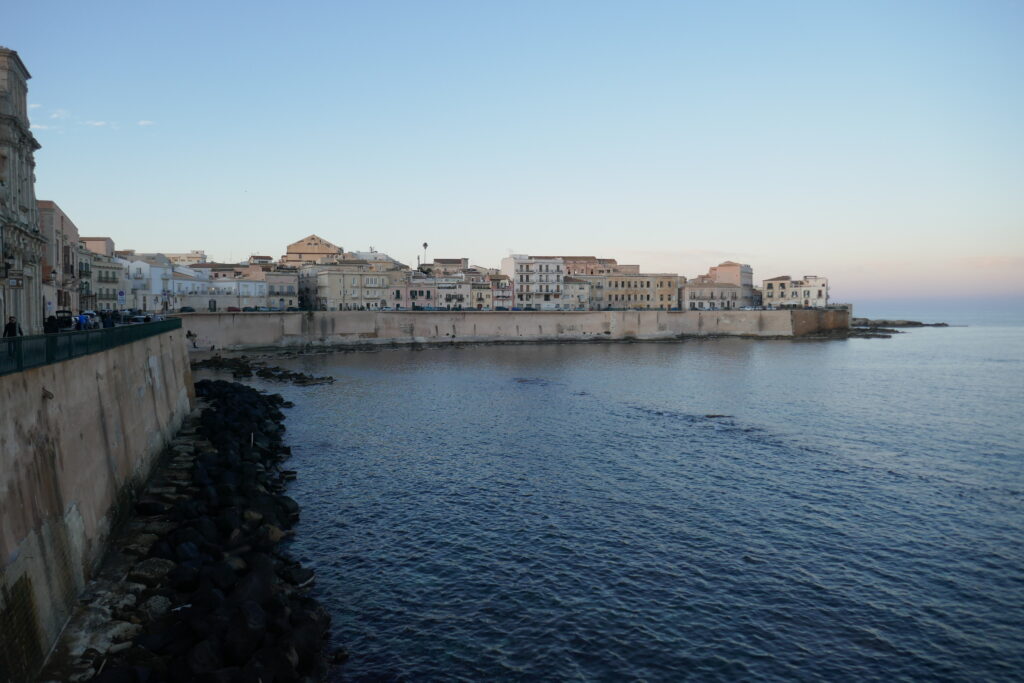
From Enna, we took the motorway to Catania, always with a view of Mount Etna. From there we travelled along the coast to Syracuse. On arrival in the evening, we took a stroll through the old town centre on the island of Ortigia just off the coast. There were a lot of people out and about, especially on the side from which you could see the sunset. We really like Ortigia. One evening we ate fish in a very good restaurant. The owner’s cousin goes out to sea every day to fish and she serves the fresh fish to the guests.
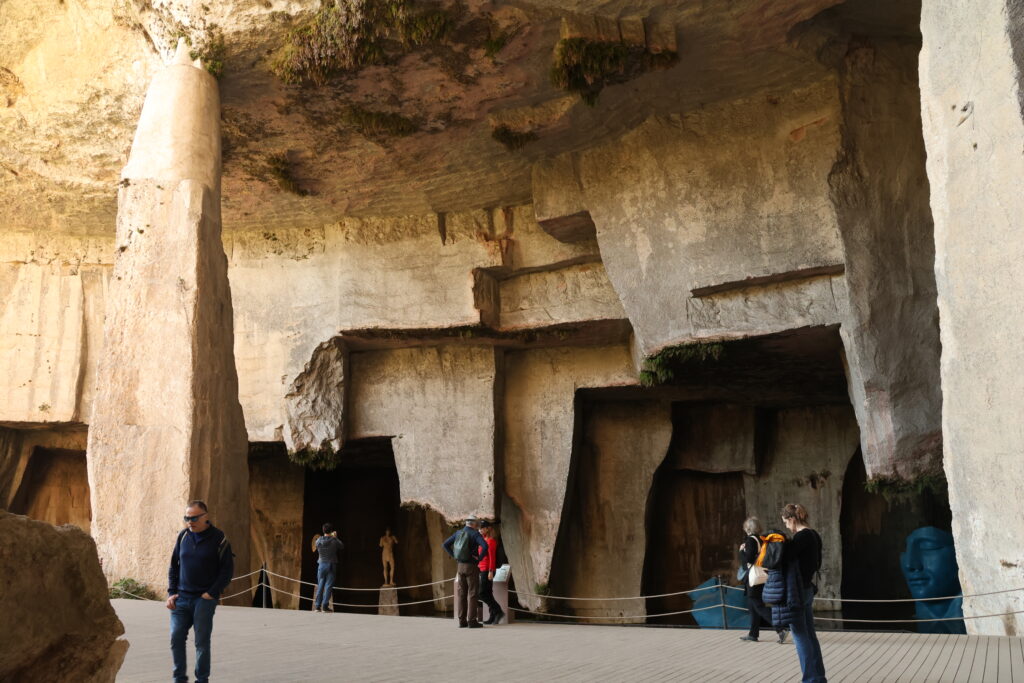
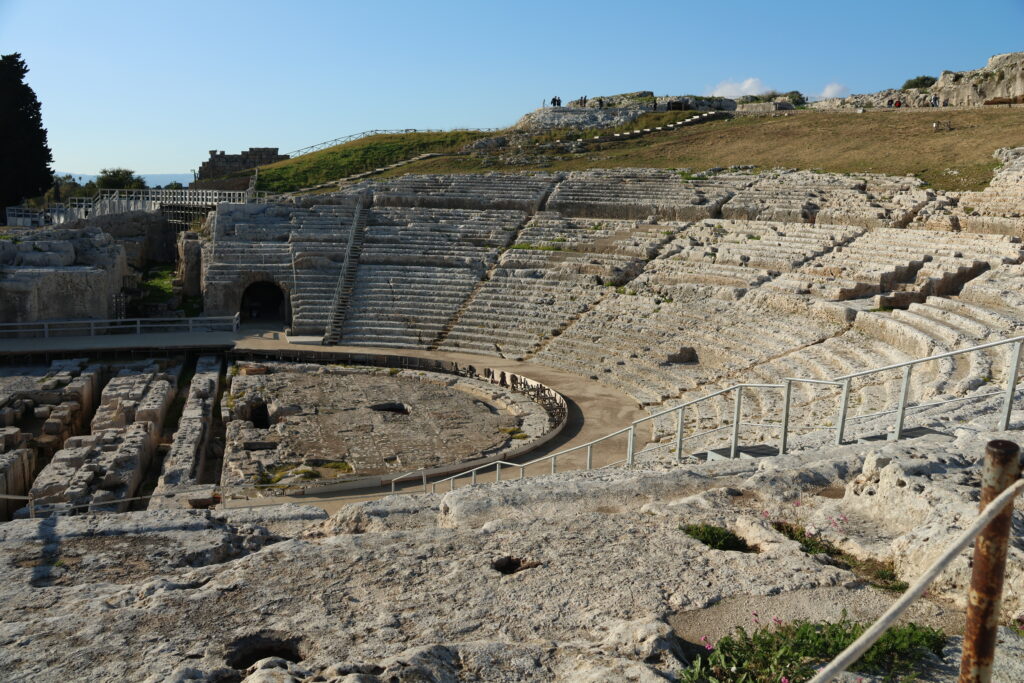
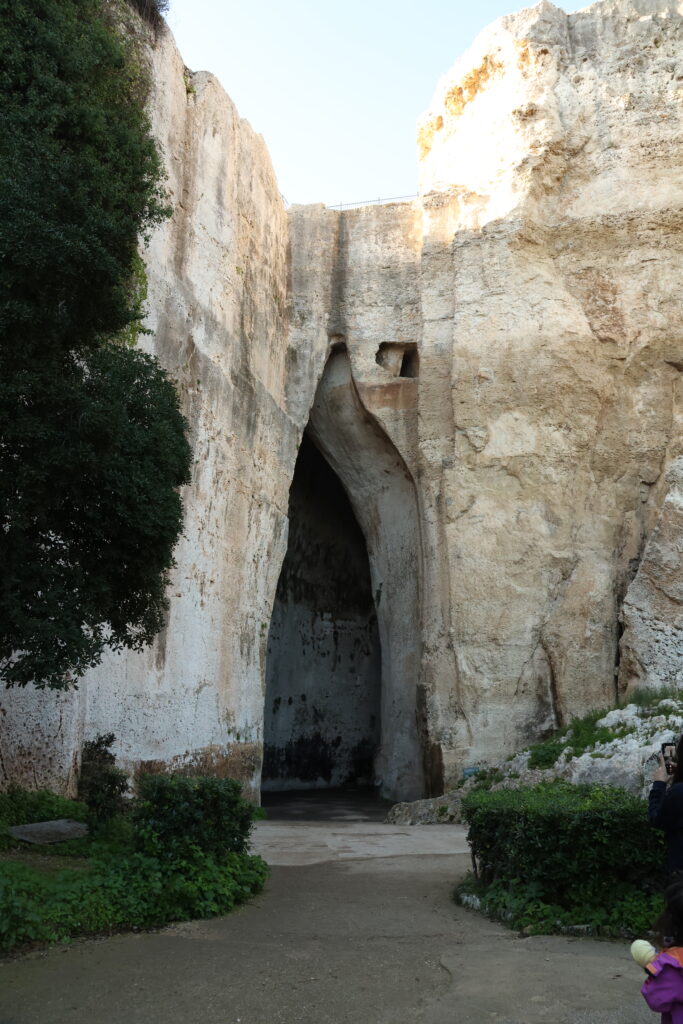
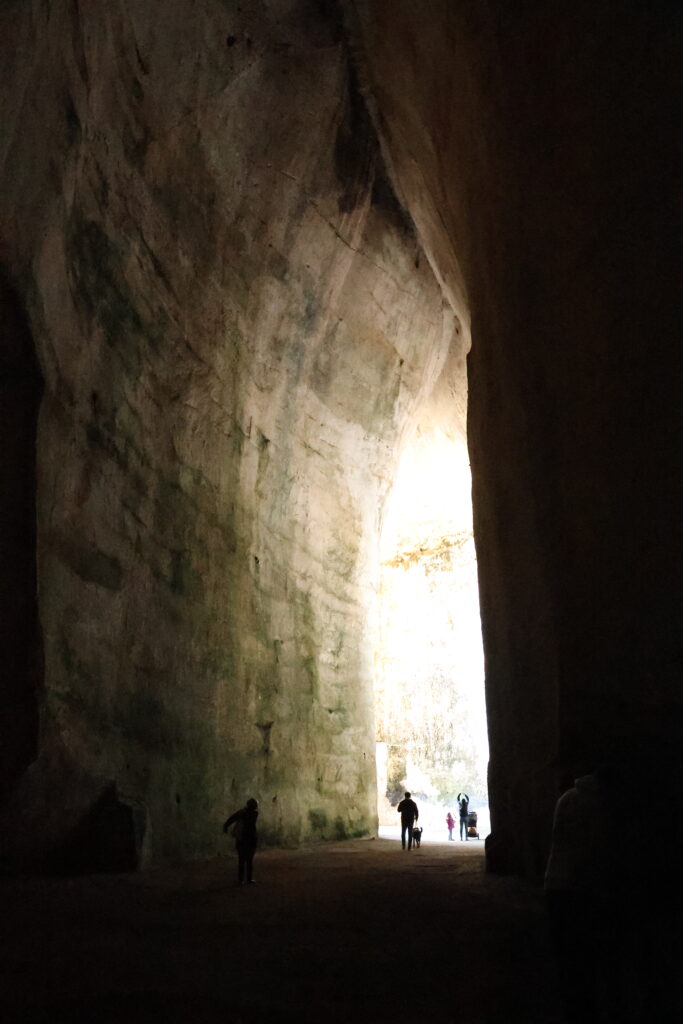
In ancient times, Syracuse was the largest and most powerful city in Sicily and its cultural centre for several centuries. Around 730 BC, Greek settlers from Corinth founded the city of Syrákusai on the island of Ortygia, which quickly expanded to the mainland and developed into the largest and most powerful city in ancient Sicily. In the 5th century BC, the city expanded from Ortigia to the mainland and had five large neighbourhoods. The Parco Archeologico della Neapolis was built in the 1950s on the site of the ancient Neapolis (New Town) district. We visited it for an afternoon. We were particularly impressed by the well-preserved Greek amphitheatre, which is still in use today. The Romans also built a theatre next to it, but it is not so well preserved. You can also visit various quarries from which limestone was extracted for the ancient city. The Ear of Dionysius is an artificial cave carved into the rock. It is about 64 metres long, over 20 metres high and up to 11 metres wide and its acoustics are remarkable
Sunset in Ortigia
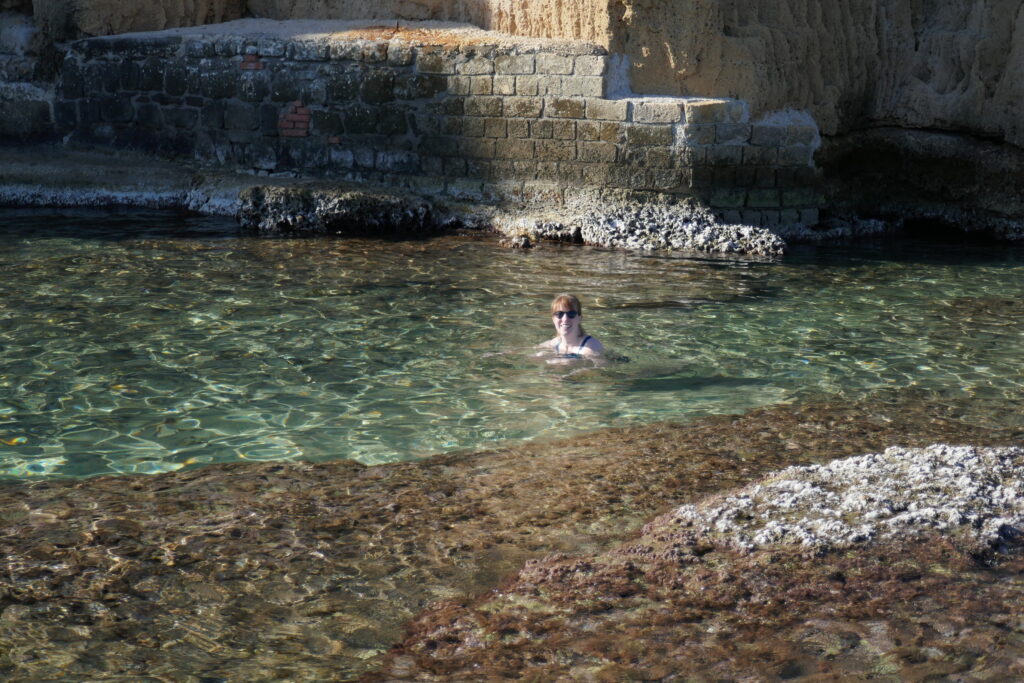
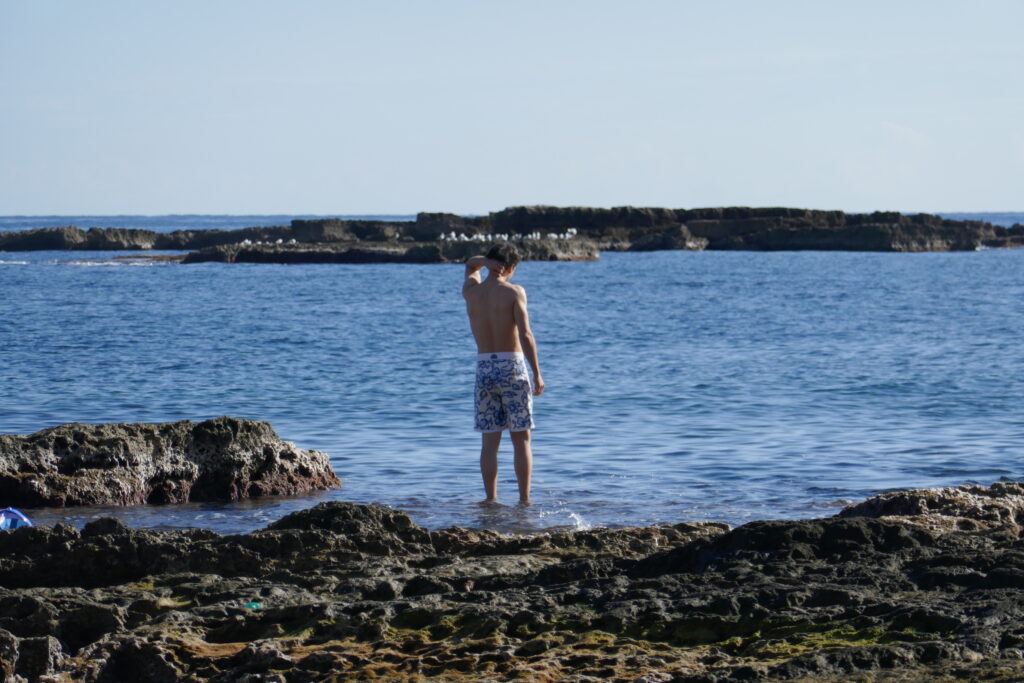
New Year’s Day swim
The limestone quarries
The Greek amphitheatre
The Ear of Dionysius
Ragus & Modica
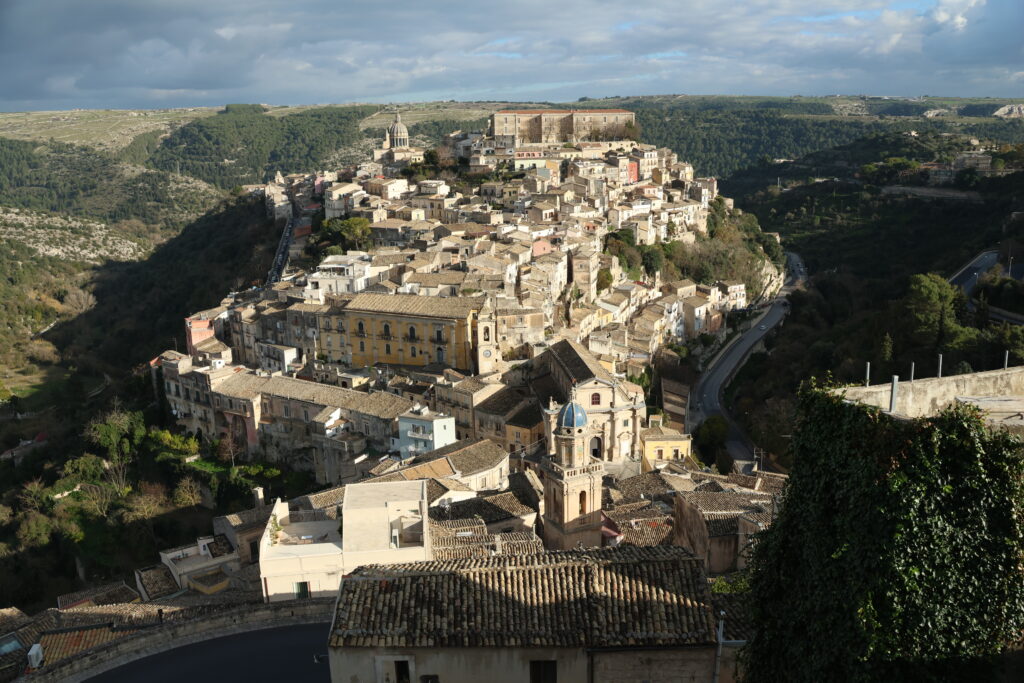
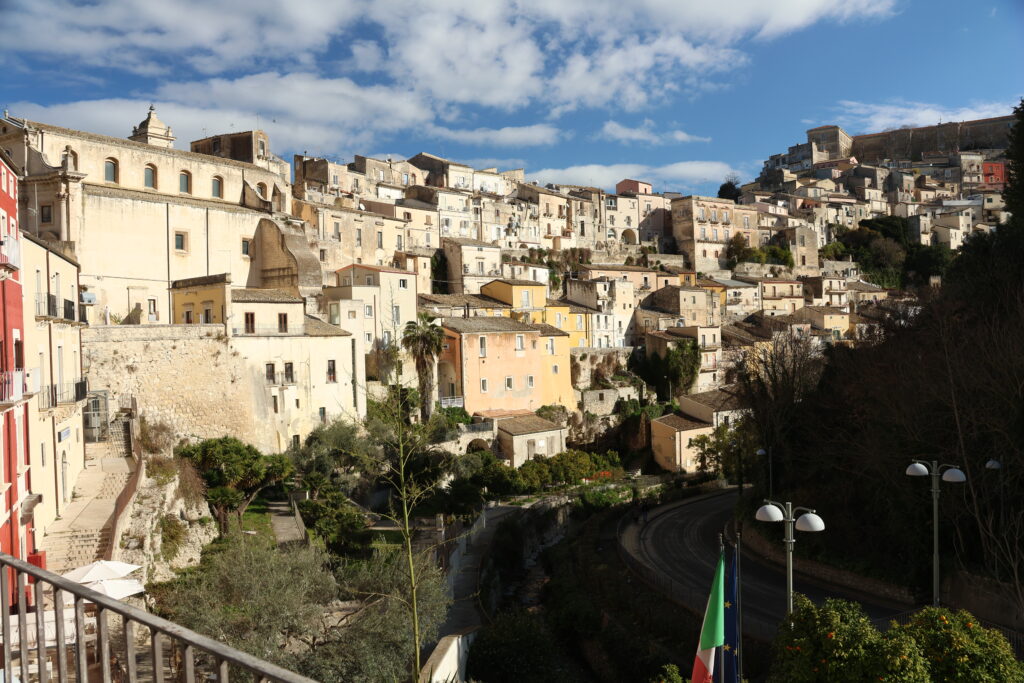
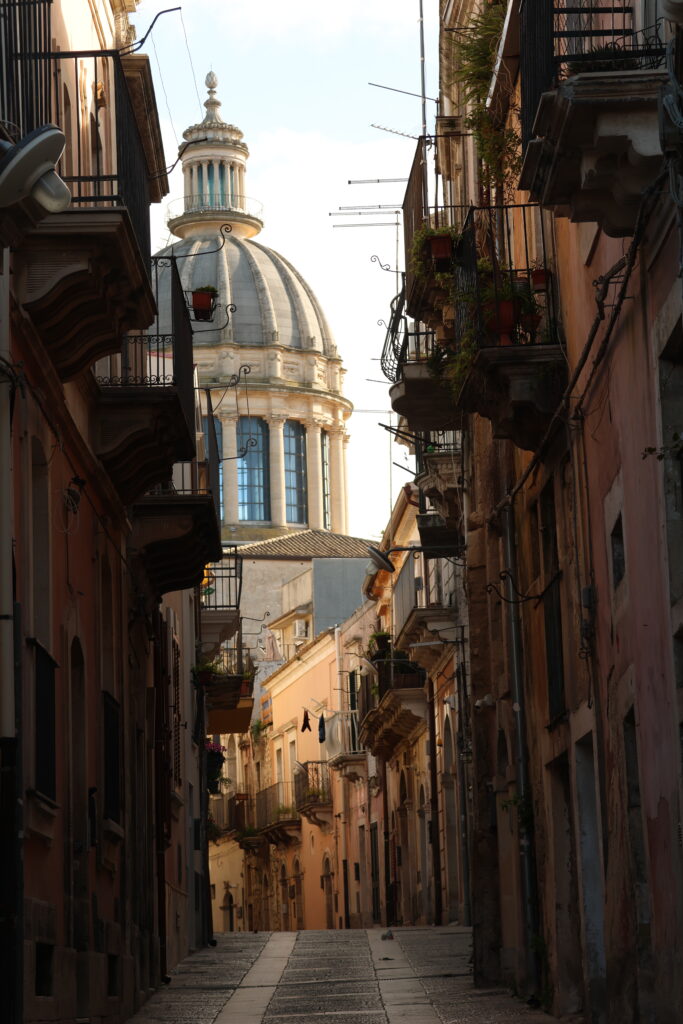
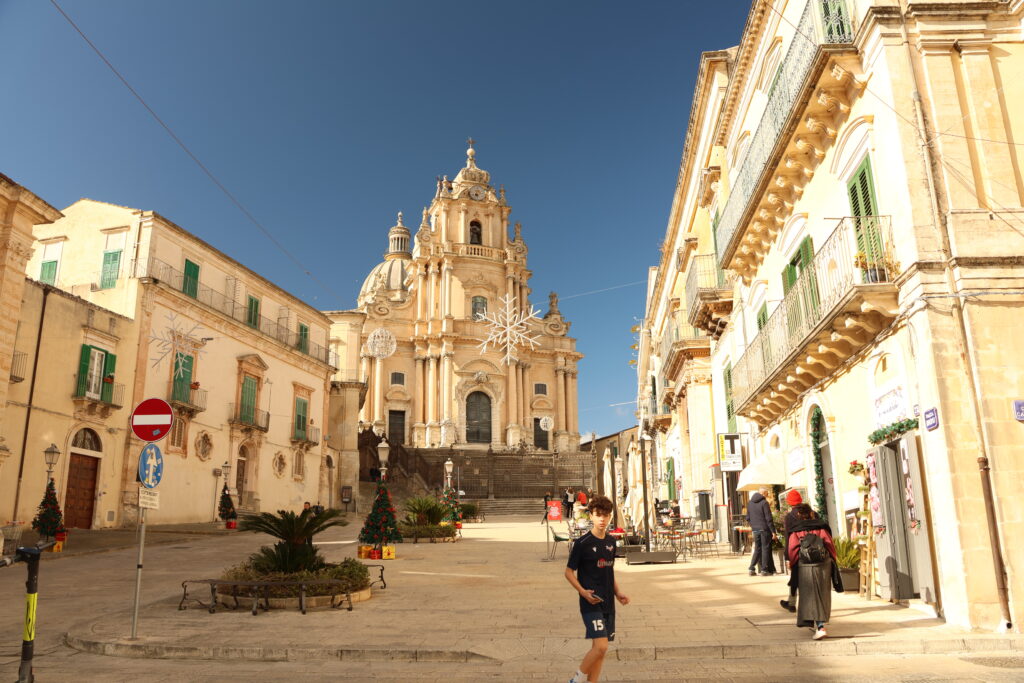
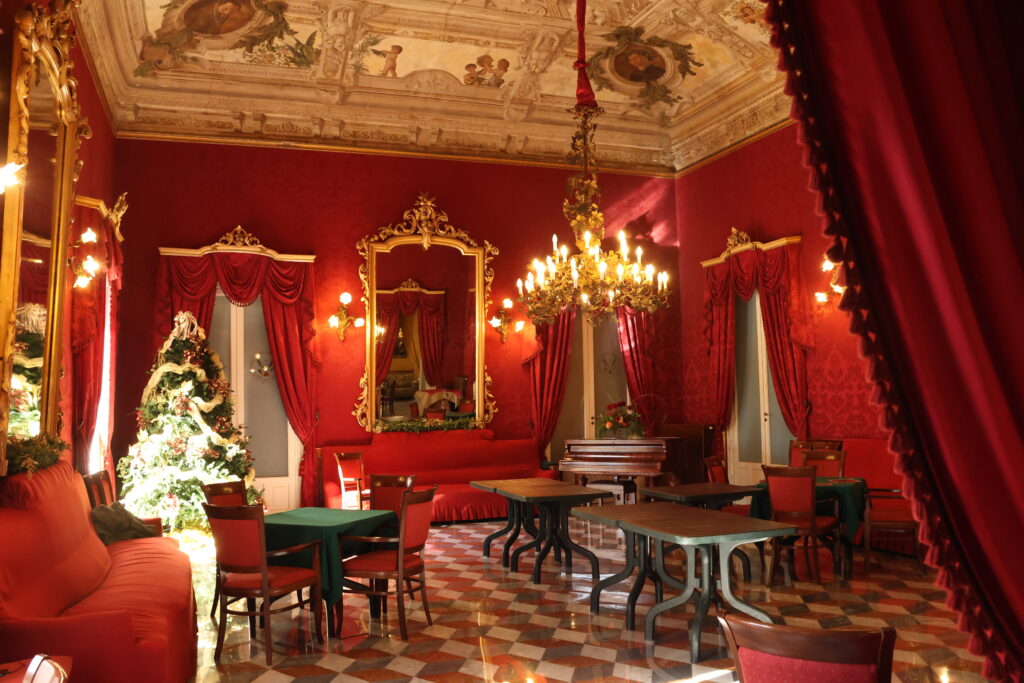
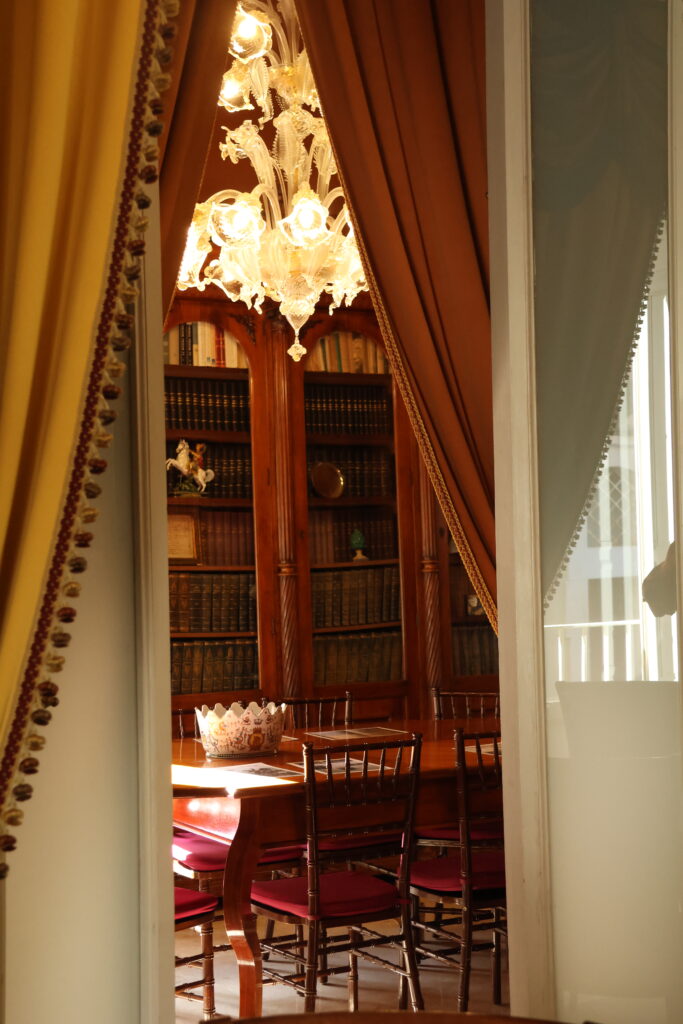
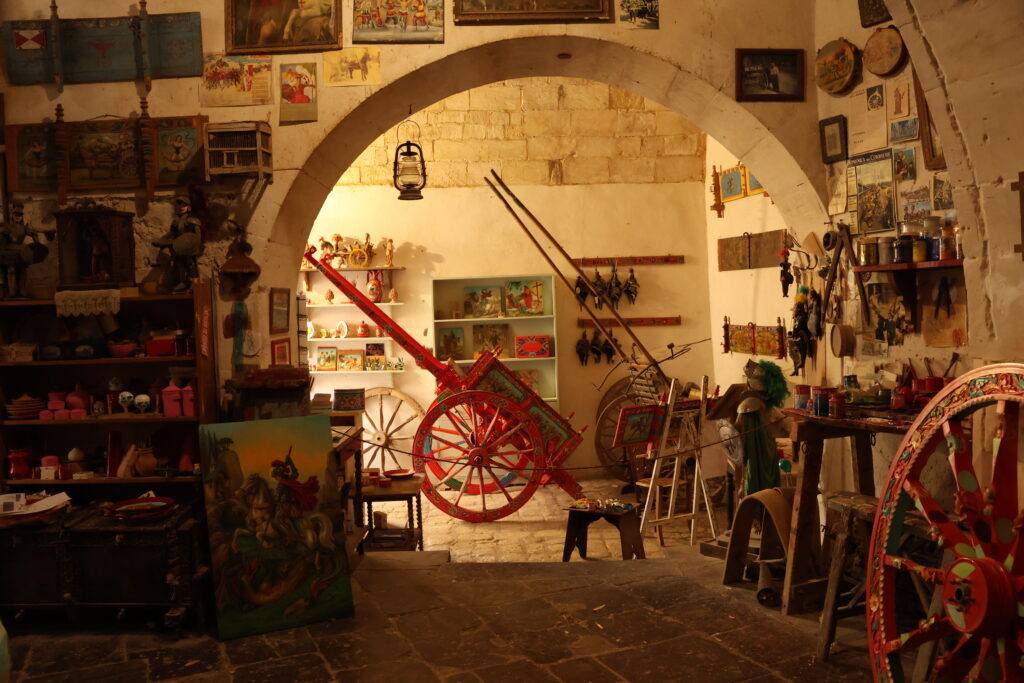
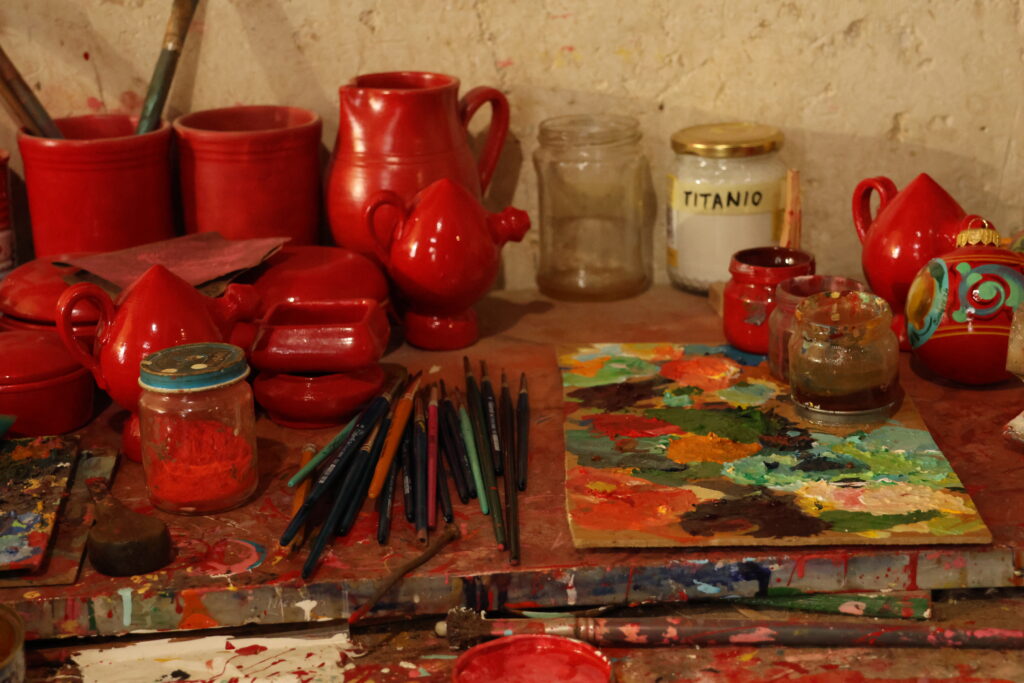
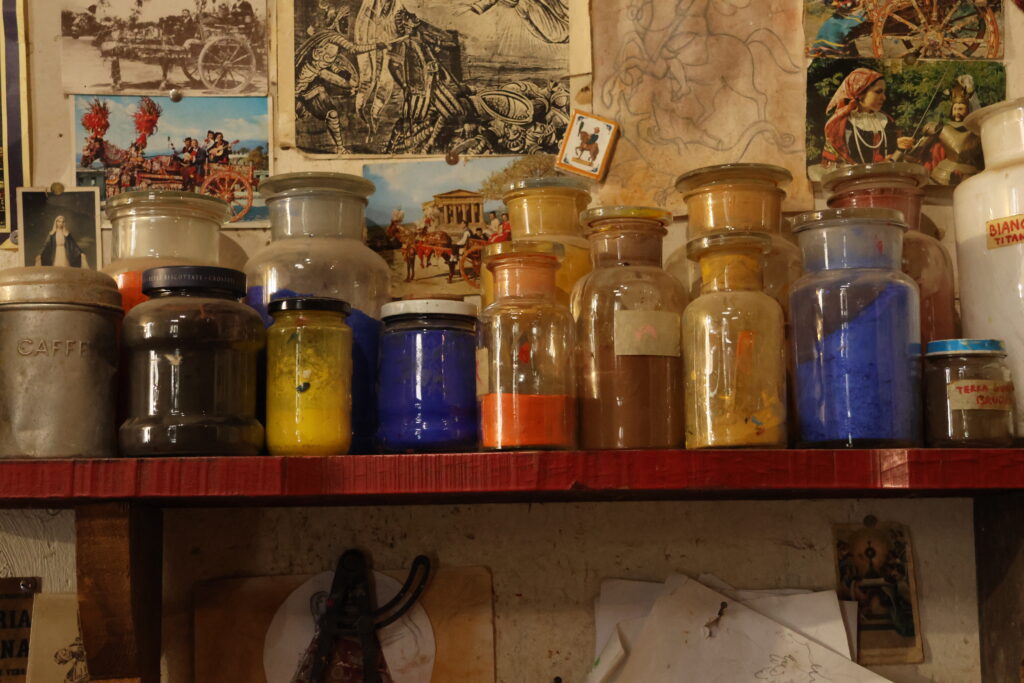
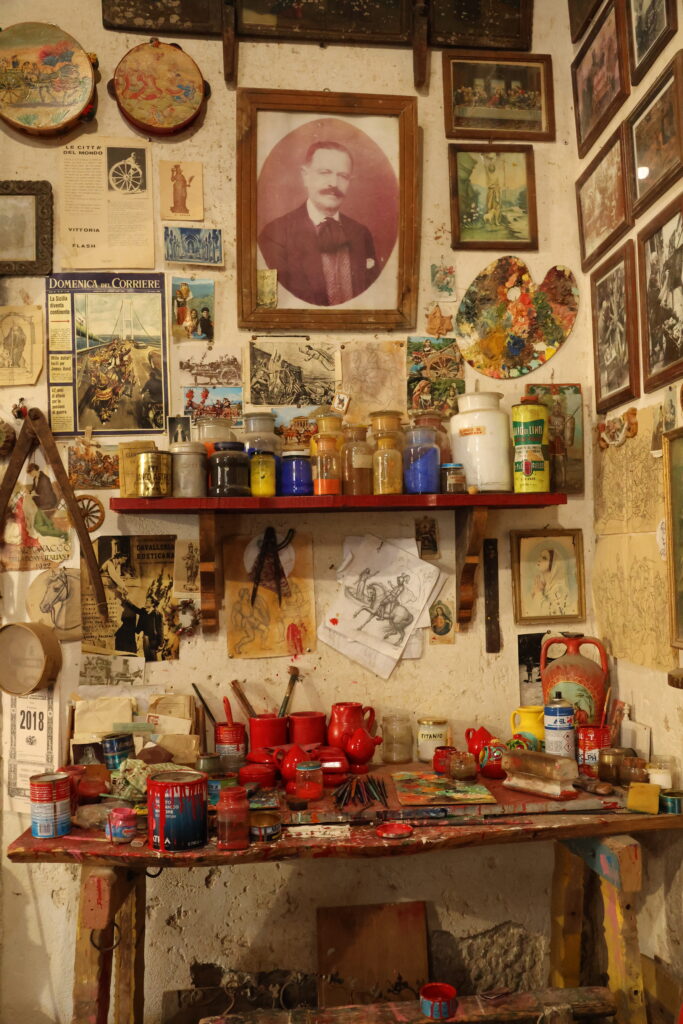
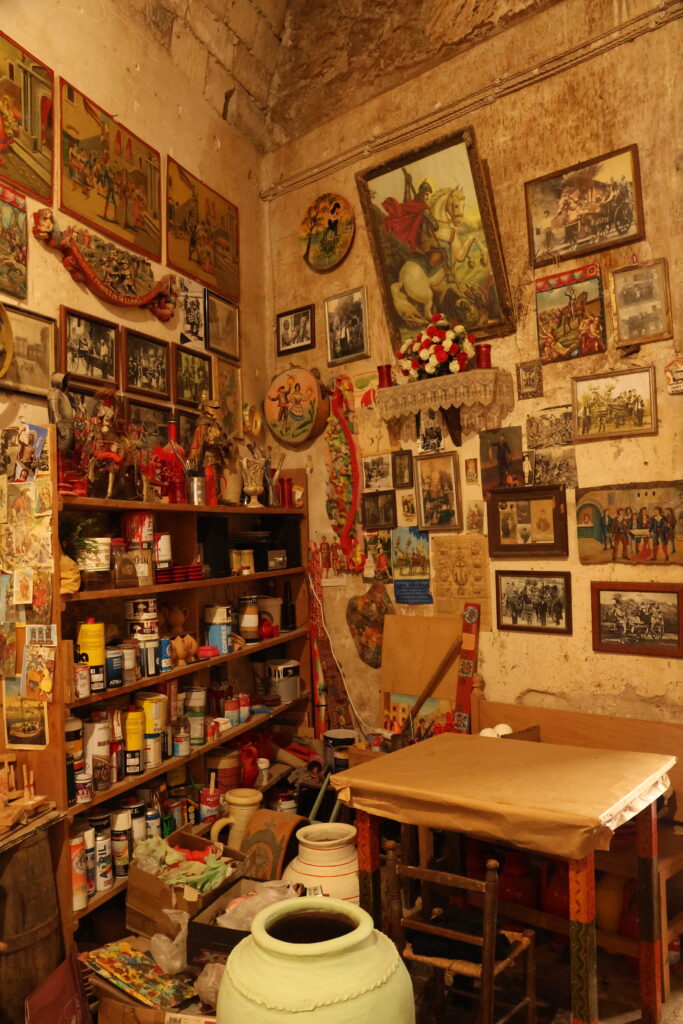
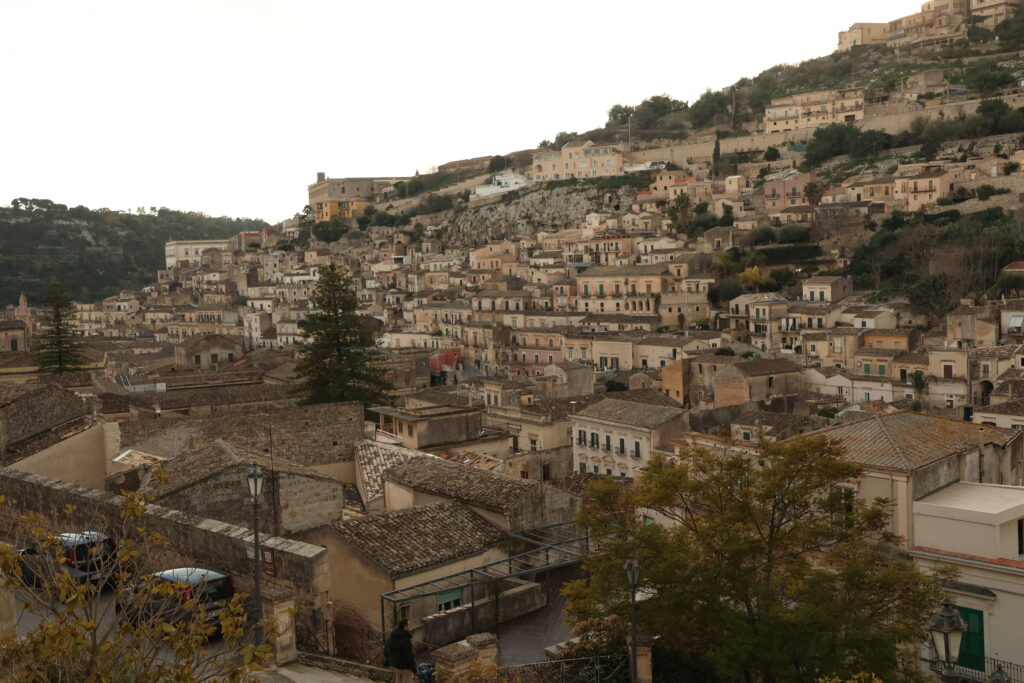
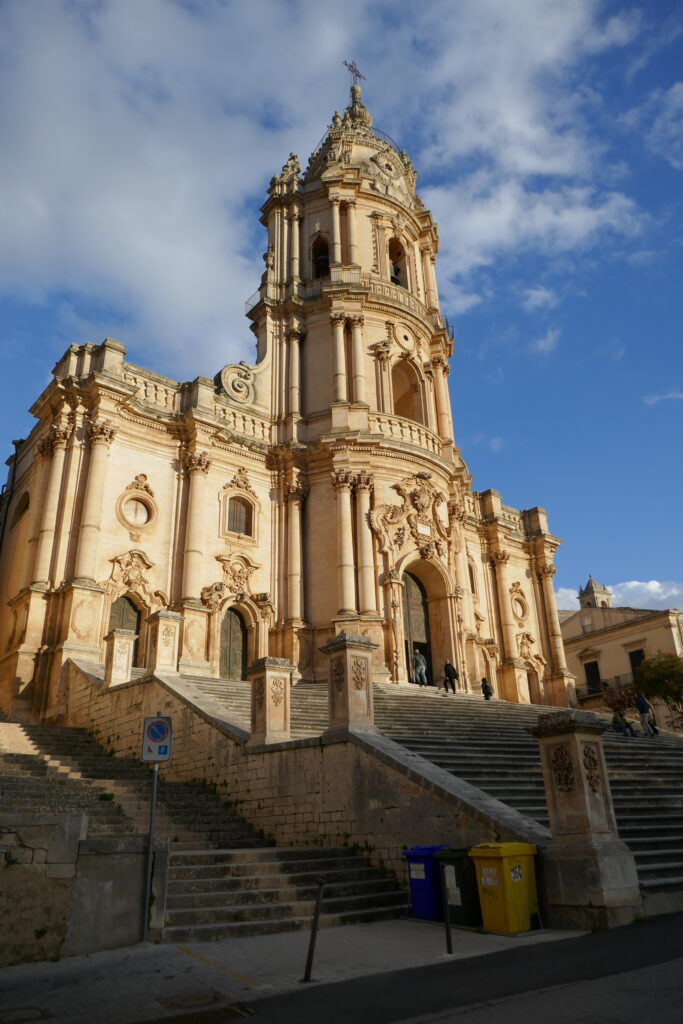
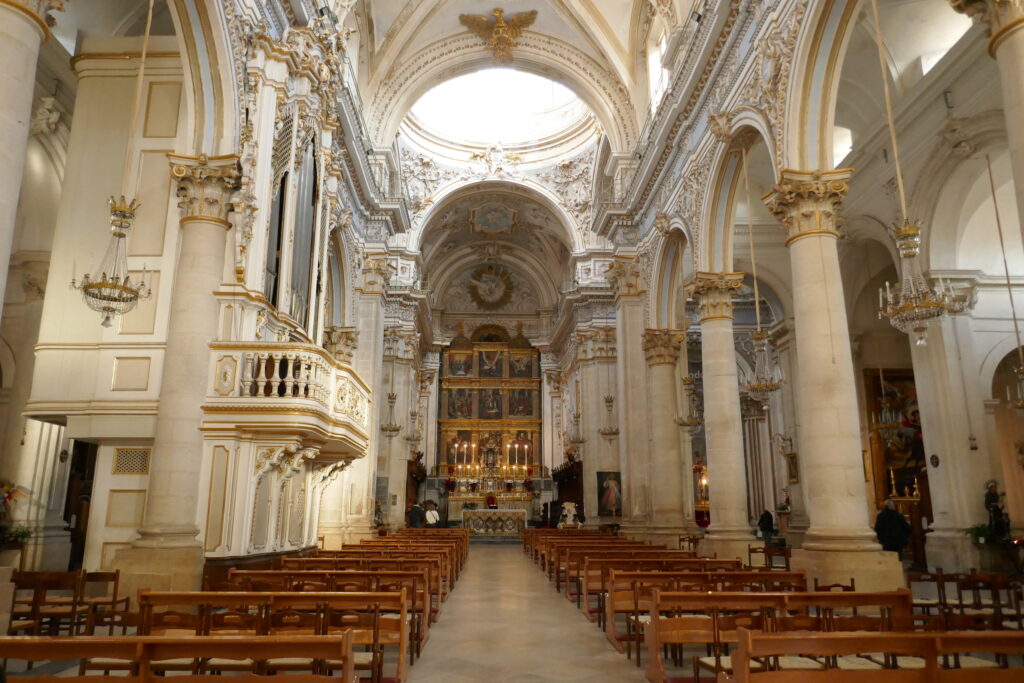
A day trip took us to Ragusa and Modica. Ragusa is one of the late Baroque towns of the Val di Noto. The area was already inhabited in the 3rd millennium BC. Ragus is divided into the districts of Ragus Ilba and Ragus Superiore. We walked through the older district of Ilba, which is home to magnificent Sicilian Baroque buildings from the 18th century. We immediately liked it very much, no crowds of tourists, nice little alleyways and great views of the hilly surrounding countryside. We paid a visit to the church of San Giorgio and took a short tour of two noble houses and a typical workshop. It was very interesting to see how the noble families used to live. The descendants of the important noble families still live in one of the houses. But the workshop was the best visit. This is where the typical Sicilian carts, i carrettieri, are restored. The Bottega Cinabro is a wonderful workshop with so much to discover. There are only three artists left who can restore these carrettieri. The well-known photographer Steve McCurry photographed the artist in his workshop (Fiat ‘Bambino,’ Ragusa, Sicily, Italy, 2017). The workshop just looks a little different in the photo than it does now. Finally, we climbed a few stairs towards Ragus Superiore. There were always great views of Ilba between the houses.
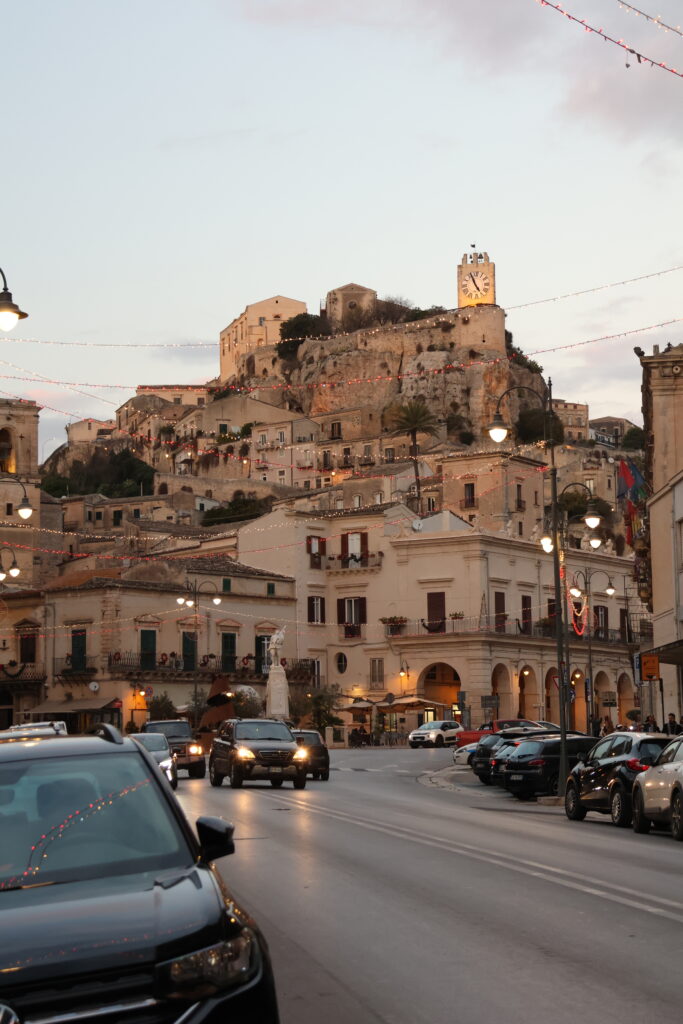
Before heading home, we stopped off in the town of Modica, just 20 minutes away. This is also one of the late baroque towns. Modica is also known for its chocolate. The special thing is that the chocolate is processed without cocoa butter. It is very chunky, but tastes good. We visited the Cathedral of San Pietro and walked a little way through the town. The main shopping street is home to various chocolate shops, including the oldest chocolate factory in Sicily. Dolceria Bonajuto has been producing chocolate since 1880.
Ragusa
The Bottega Cinabrowith a typical carretto siciliano
Modica
Duomo di San Giorgio in Modica
Caltagirone
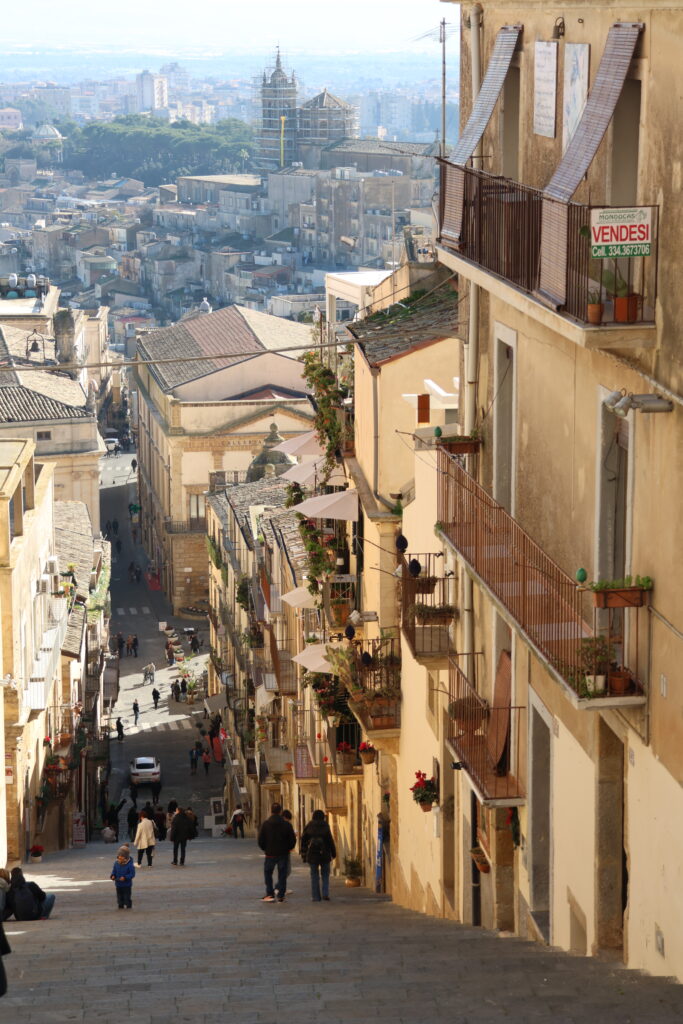
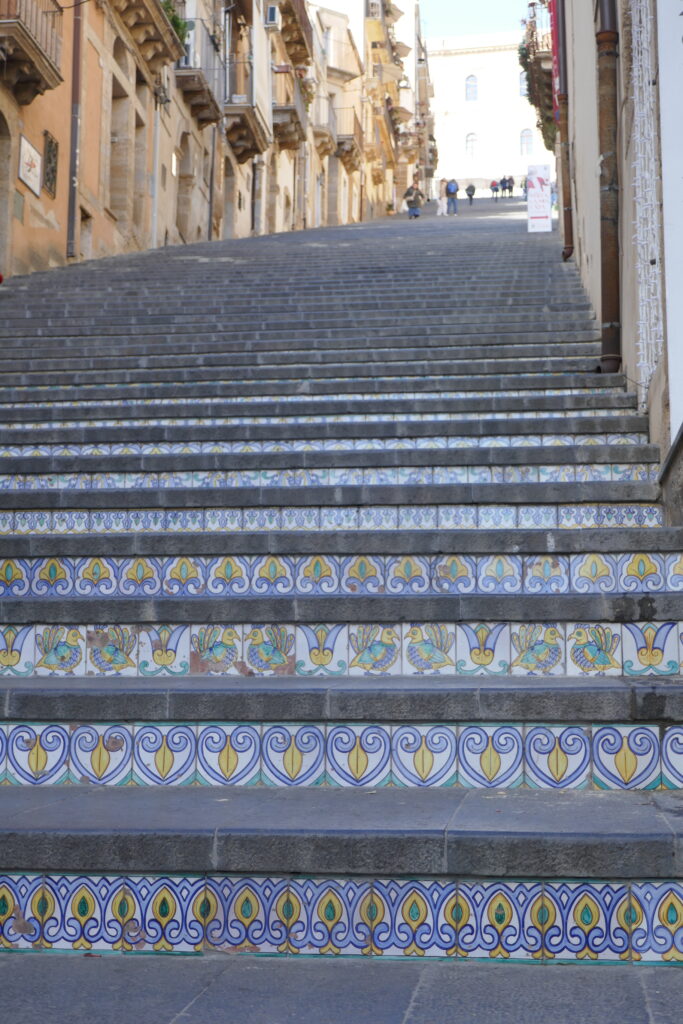
Another day trip took us to Caltagirone. The small town is best known for its ceramics and is still regarded today as the ‘ceramics capital’ of Sicily. The art of pottery has been flourishing in Caltagirone since the 15th century. At that time, some 200,000 people lived in the town, and around 1,000 of them worked as potters. The 1693 earthquake in Sicily’s Val di Noto destroyed the entire town, and it lost its medieval townscape. Over the following 10 years, the town was rebuilt on the same site in the Sicilian countryside. The tourist streets are lined with pottery workshops, each with its own shop. We popped into a few, but somehow the range of goods on offer was very similar everywhere. Neither of us really felt that spark. After a stroll, we looked for a small restaurant for lunch. Much to Marco’s delight, we ended up in a very tasty little fish restaurant. On the way home, we took a different road that led us through beautiful countryside. As the sun set, the landscape was bathed in a truly wonderful light.
Catania & Etna
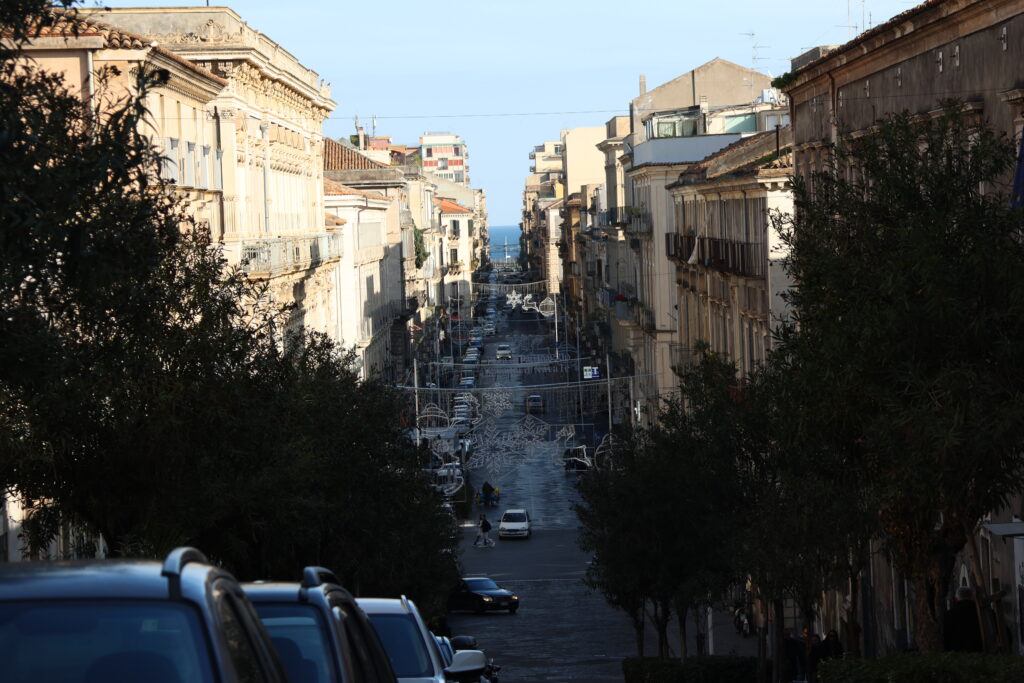
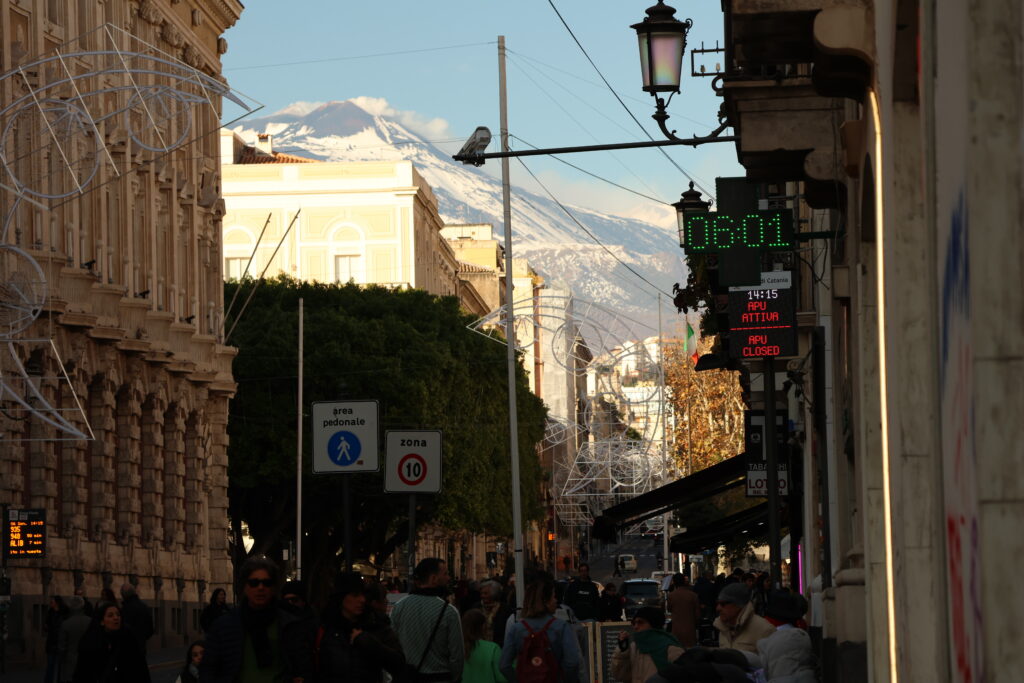
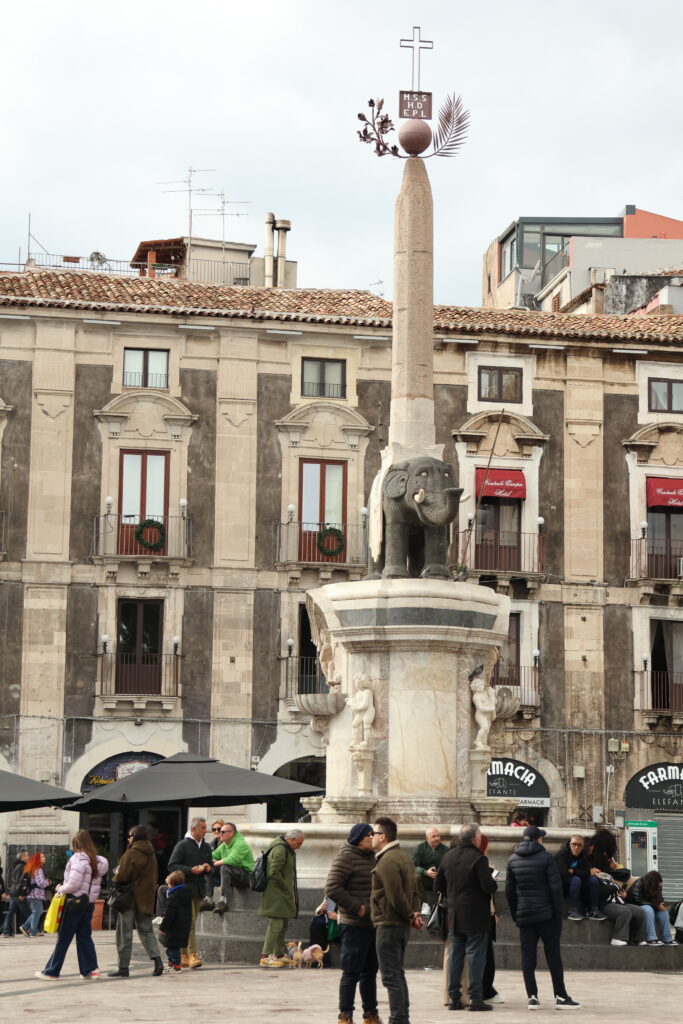
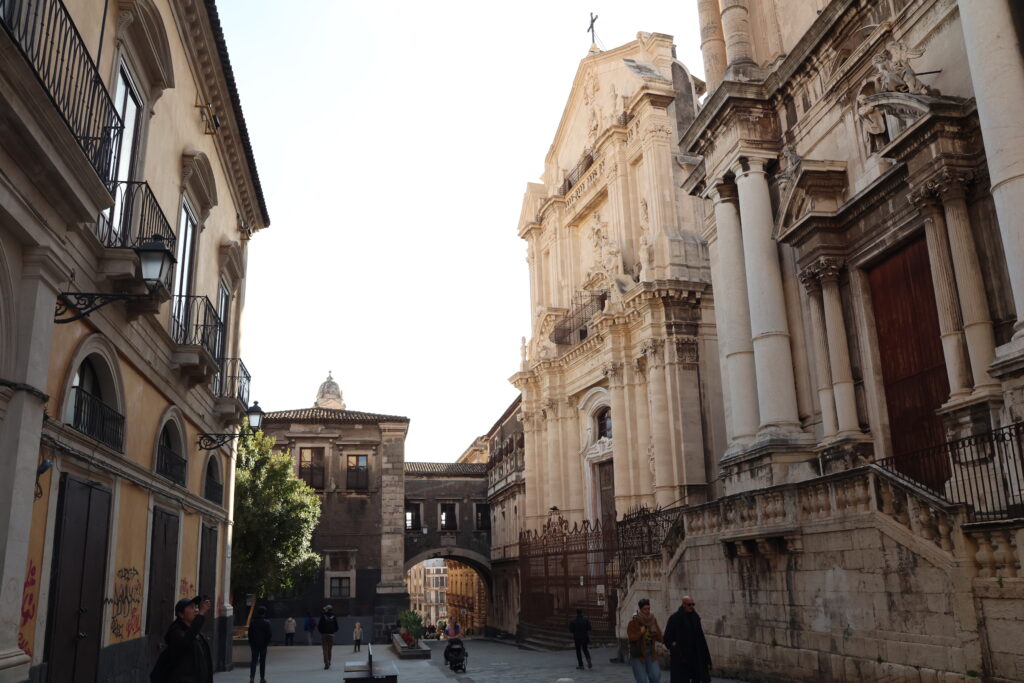
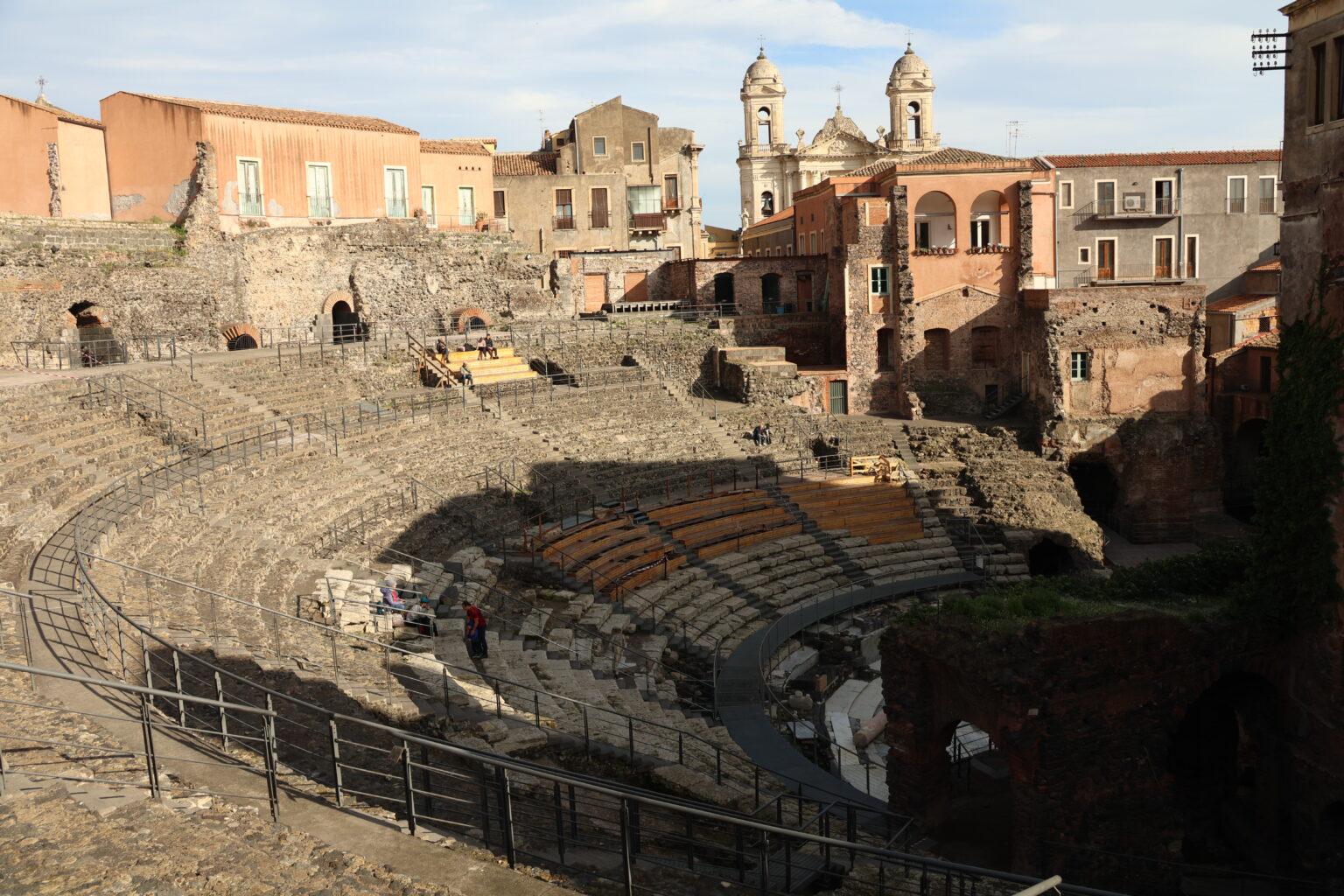
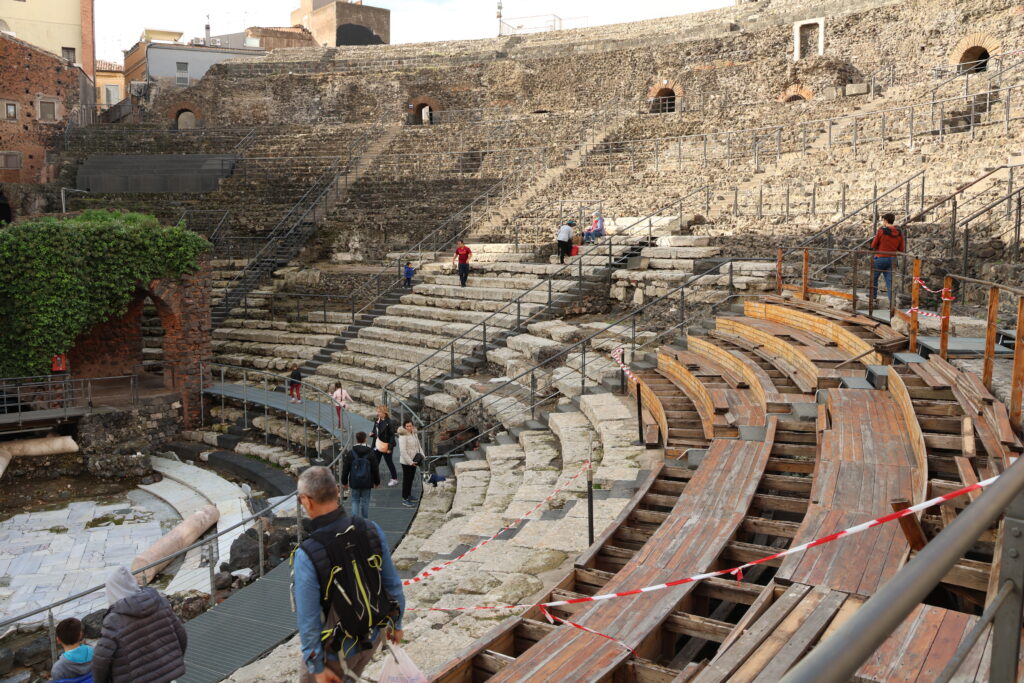
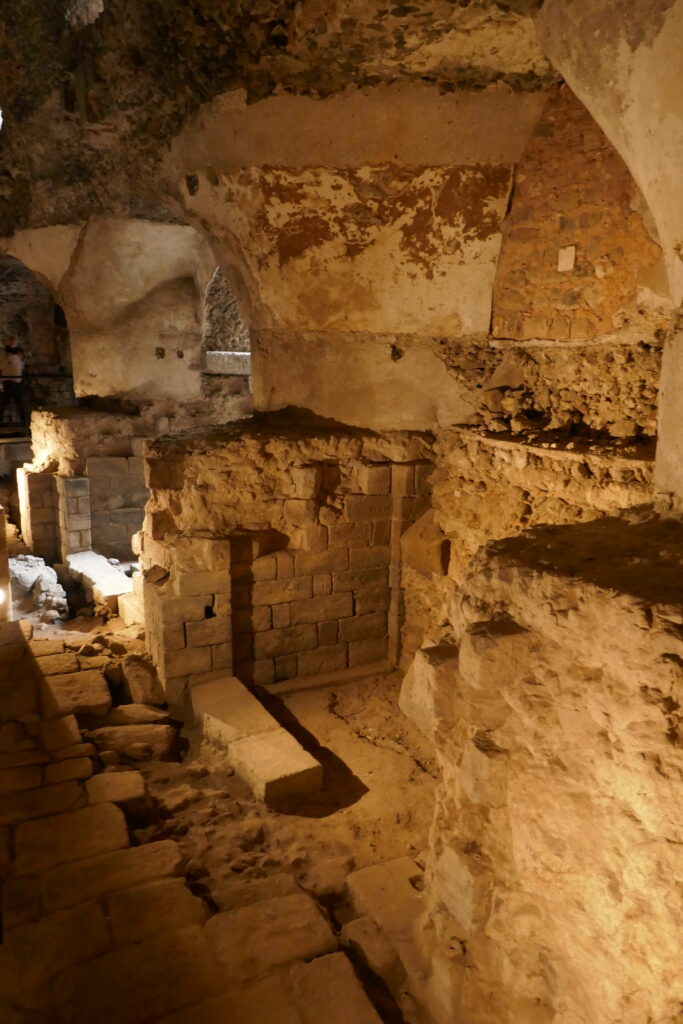
On our way to our agriturismo on Mount Etna, we stopped off in Catania. We found a small secure car park where we could safely leave our fully loaded car. Catania is Sicily’s second-largest city after Palermo. It is one of the late Baroque towns of the Val di Noto and a UNESCO World Heritage Site. After being almost completely destroyed in 1669 by a volcanic eruption and in 1693 by an earthquake, Catania was rebuilt mainly in the Roman Baroque style by the architect Giovanni Battista Vaccarini. Strolling through the streets, this uniform style is striking, and we really liked it. We took a look at the Elephant Fountain, the symbol of Catania. The elephant is made of black lava rock and supports an ancient Egyptian obelisk. By chance, we happened to pass by the Greco-Roman Theatre in Catania. It was built at the foot of a hill where the Acropolis of the Greek city of Katane once stood. It is believed that the Roman theatre was built on the foundations of a Greek theatre. It could seat around 7,000 spectators and is built from marble and lava stone. I find it incredible how well it has been preserved. It is now partially overbuilt by Baroque buildings, which creates a very interesting contrast. Of course, we also walked a short distance along Via Etna, Catania’s main street with its many shops. The road runs dead straight from Piazza del Duomo towards Mount Etna. A fantastic view of the snow-capped and smoking Mount Etna.
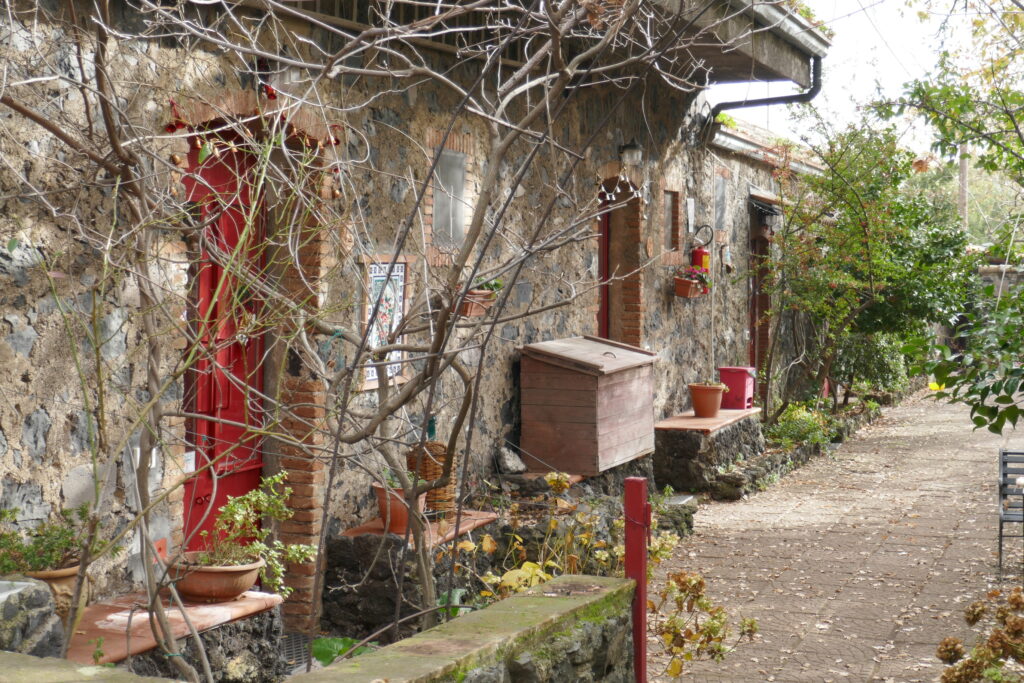
After this stop, we wound our way up the mountain along winding, narrow roads until we arrived at our agriturismo in Cirasella. Even on arrival, the clouds were hanging really low and it was quite chilly.
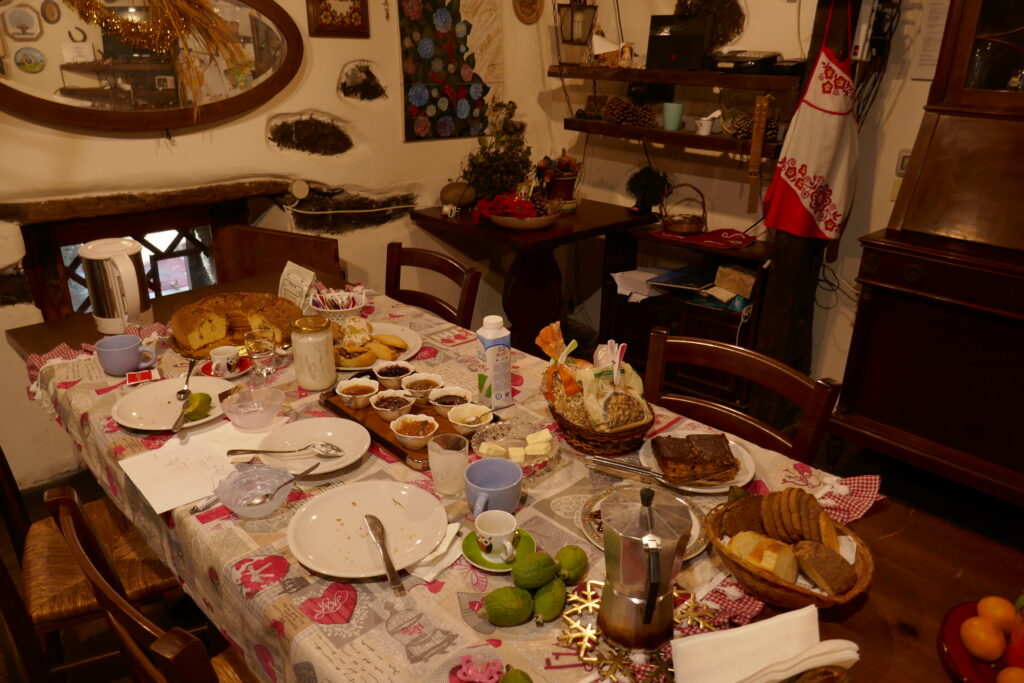
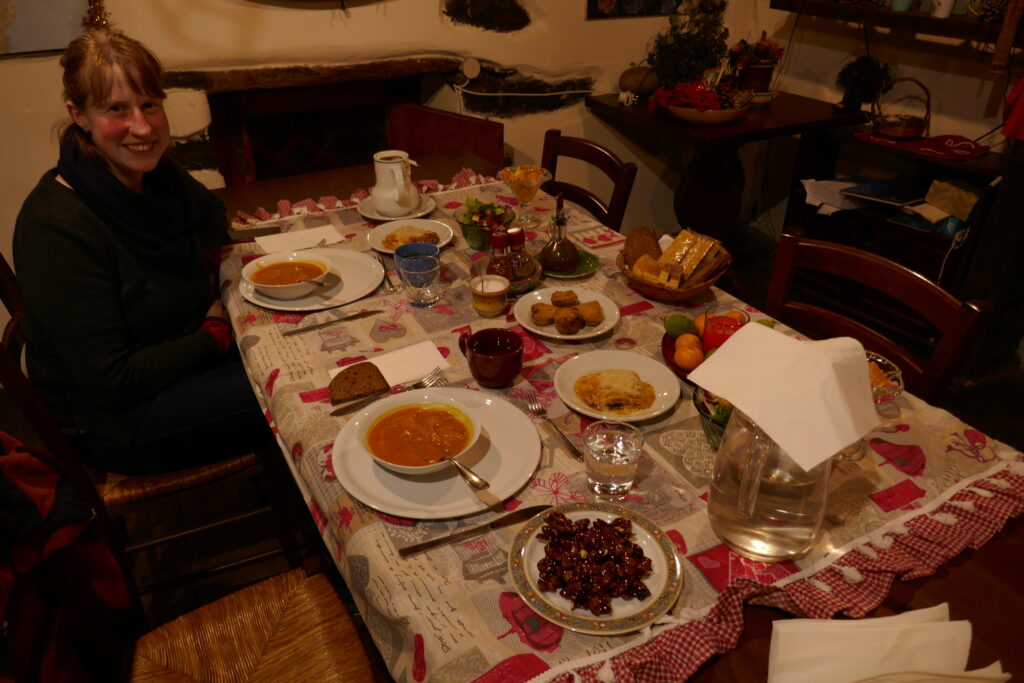
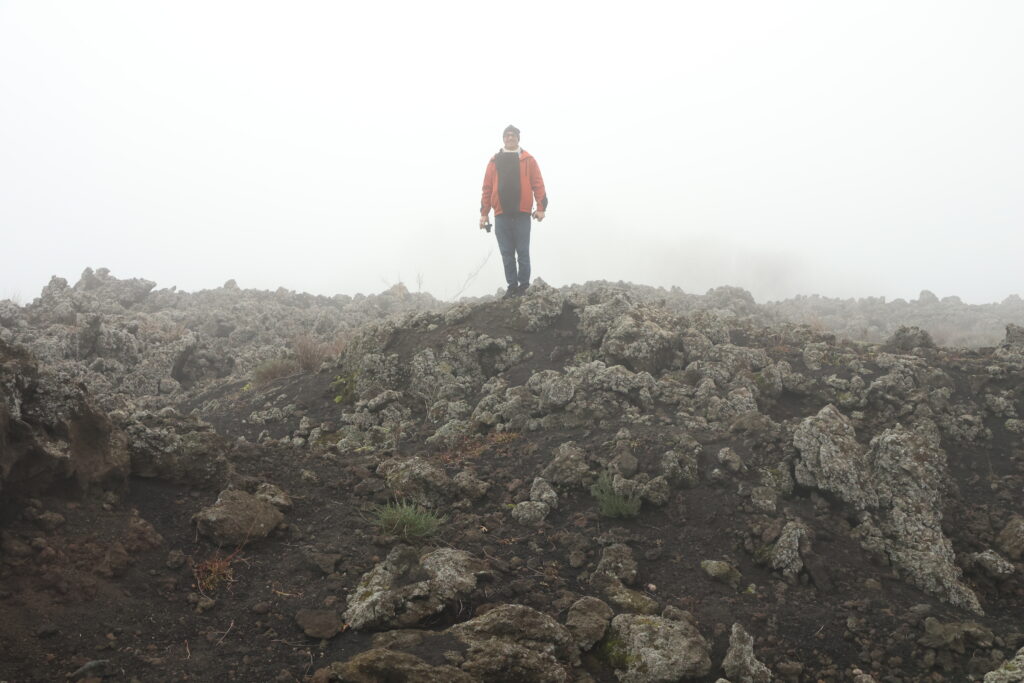
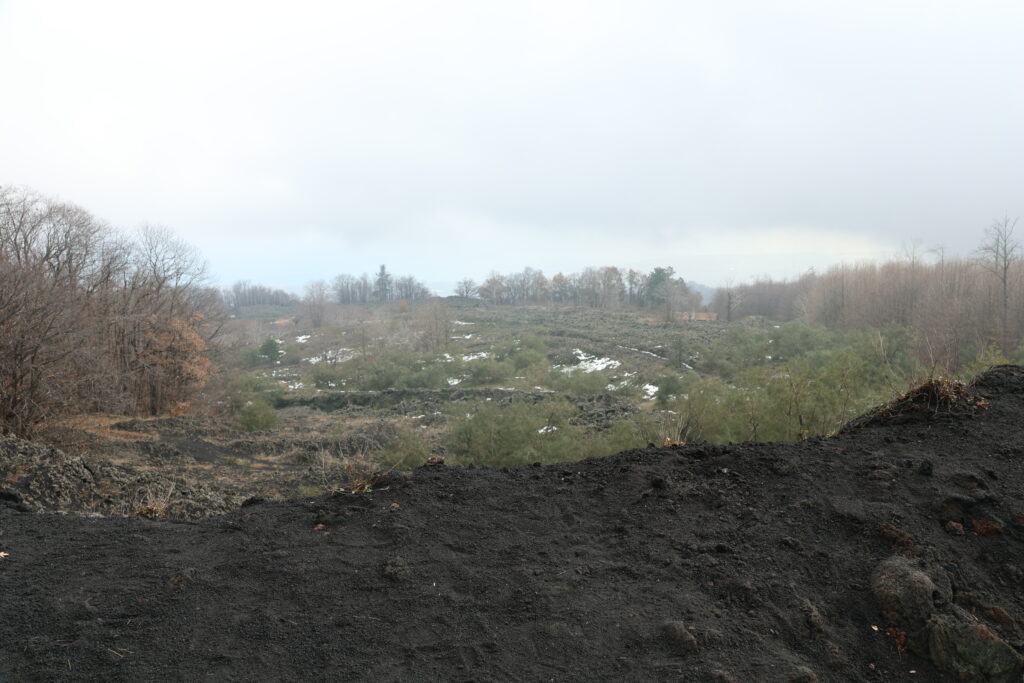
Unfortunately, the weather wasn’t any better during the days we spent on Mount Etna. One day, we decided to head back down to the coast, as neither of us fancied hiking in the fog. On the second day, despite the fog rolling in, we went for a short hike to a lava field from 2002. Nature is slowly coming back to life. Through the wisps of fog, we could repeatedly make out the size and expanse of the lava field and see all the way to the sea. We were wonderfully looked after in Cirasella. Laura cooked a delicious meal for us in the evening. We even had fish once, at our request. For breakfast, there were homemade jams and freshly baked cake.
Cefalu
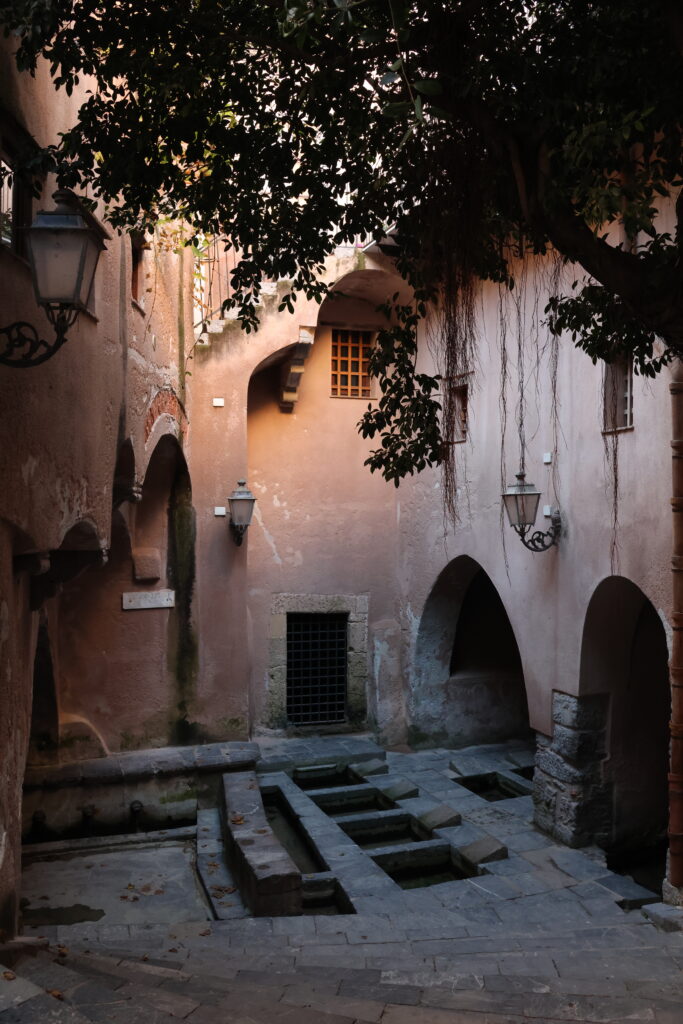
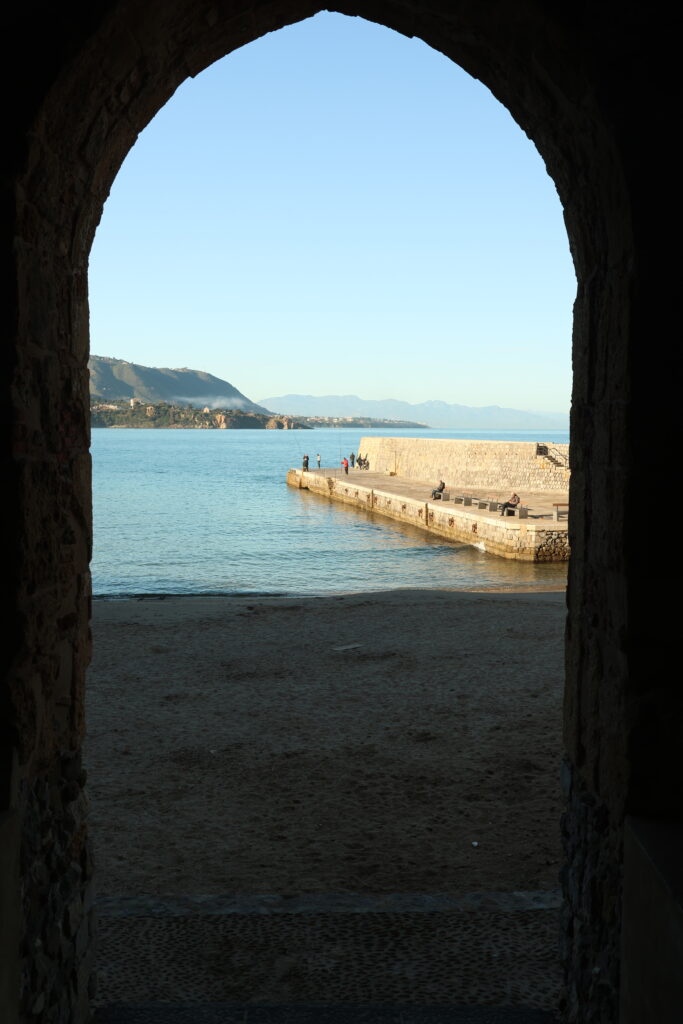
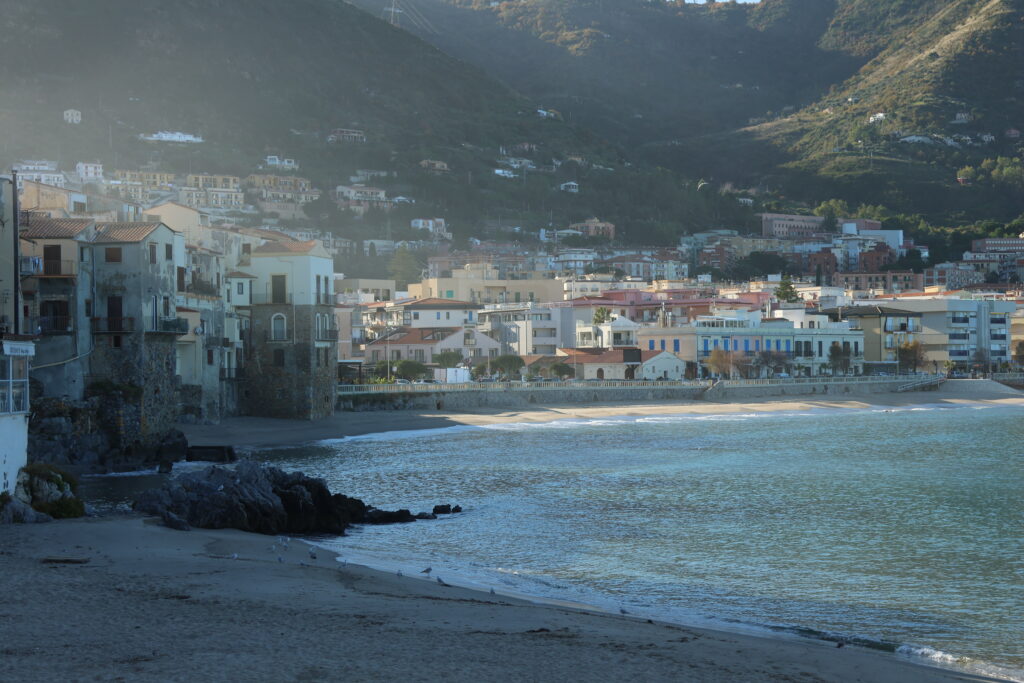
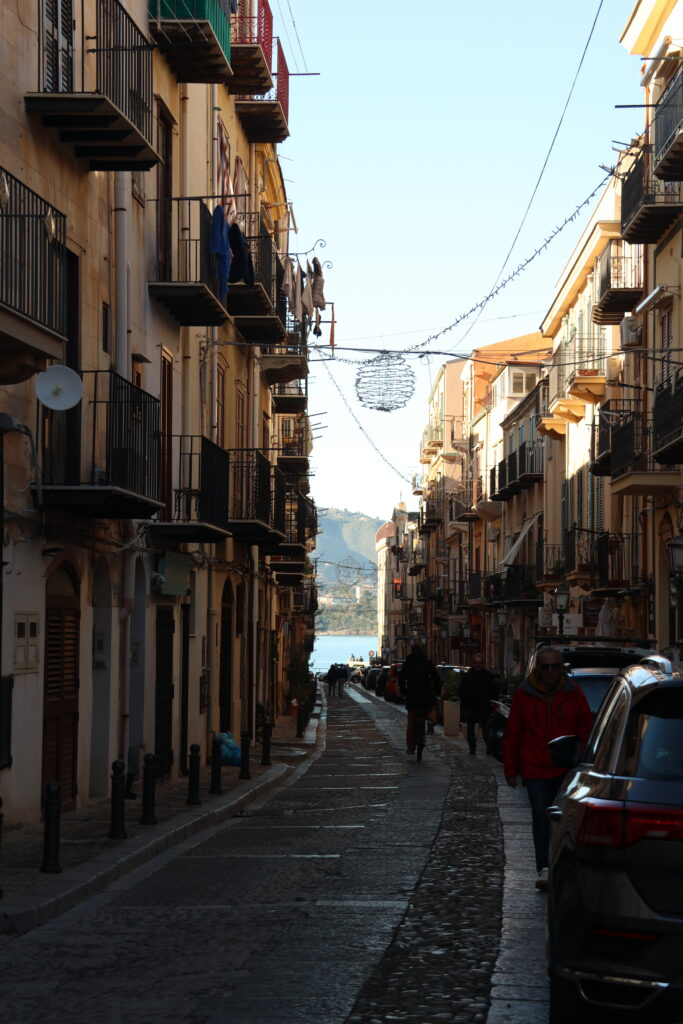
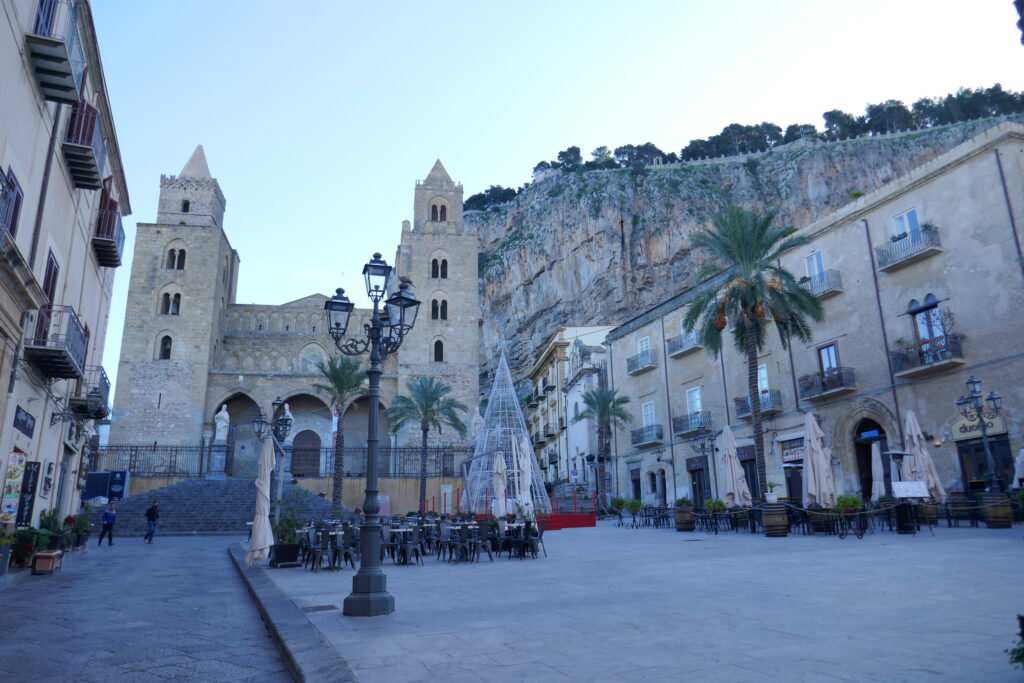
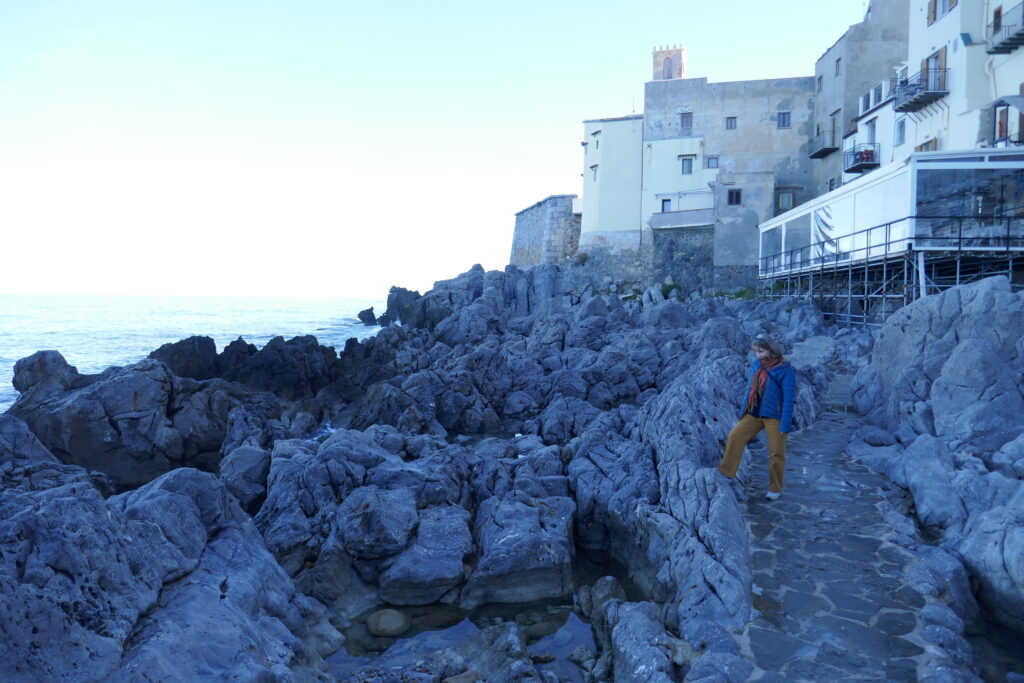
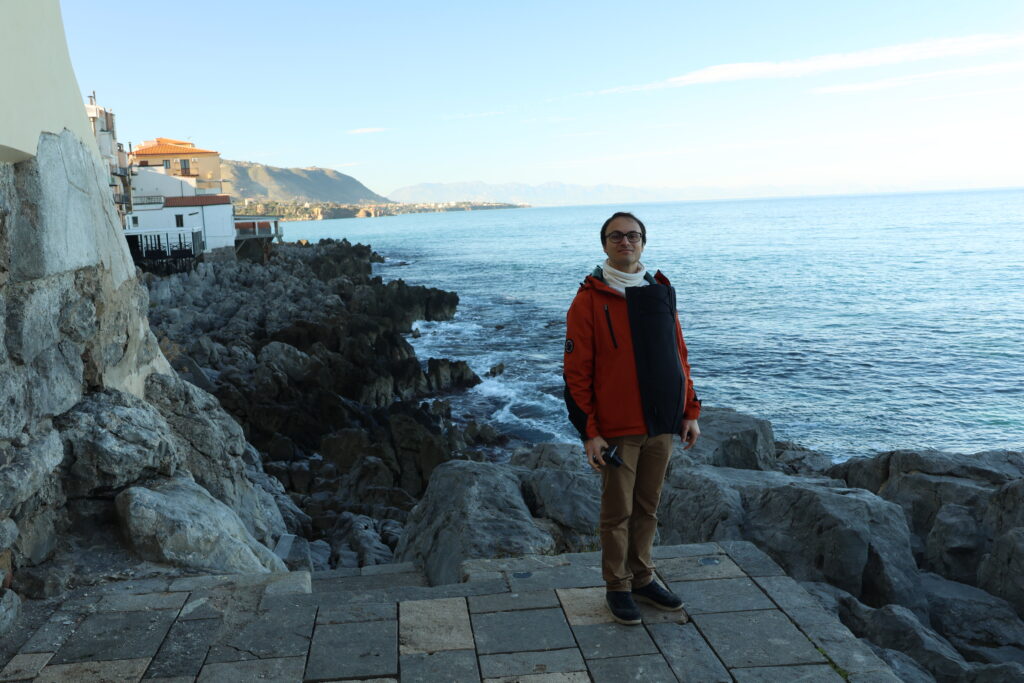
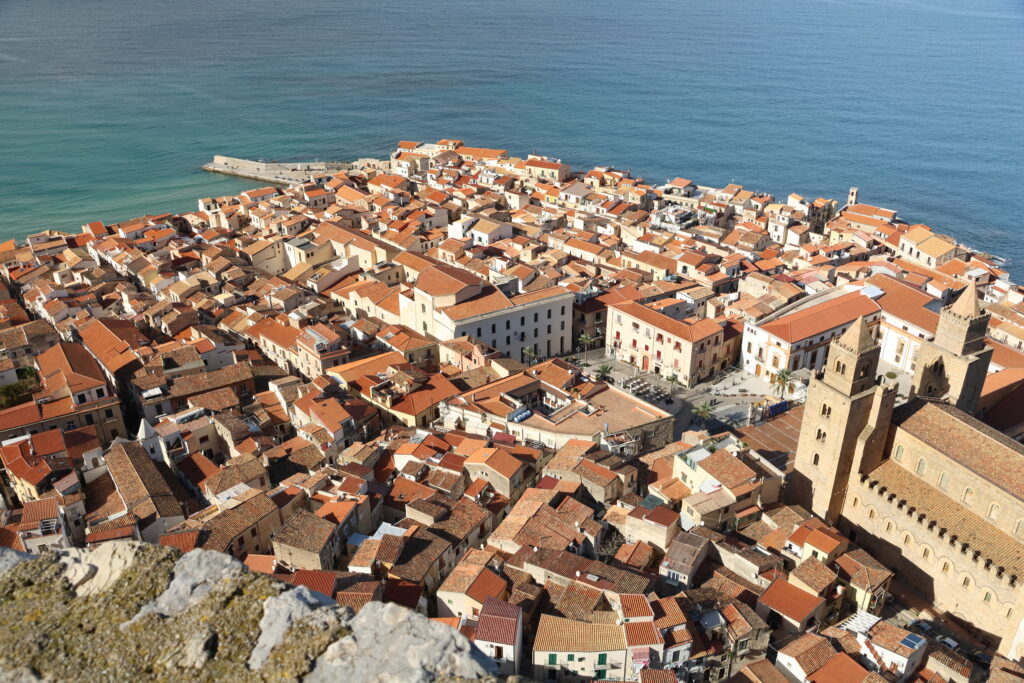
After the foggy days on Mount Etna, we headed to our final accommodation before setting off on our return journey. Our last destination was the coastal town of Cefalù. We had a small flat just a few minutes’ walk from the centre. After arriving, we immediately set off for the town centre. The layout of the old town dates back to the 12th century, with the Norman church at its heart. However, the majority of the houses in the old town date from the 16th century. The Porta Marina (Porta Pescara) is the only city gate still standing today. Nearby lies the Lavatoio Medievale, a public washhouse that probably dates from the Arab period. The town’s inhabitants used this until the mid-20th century.
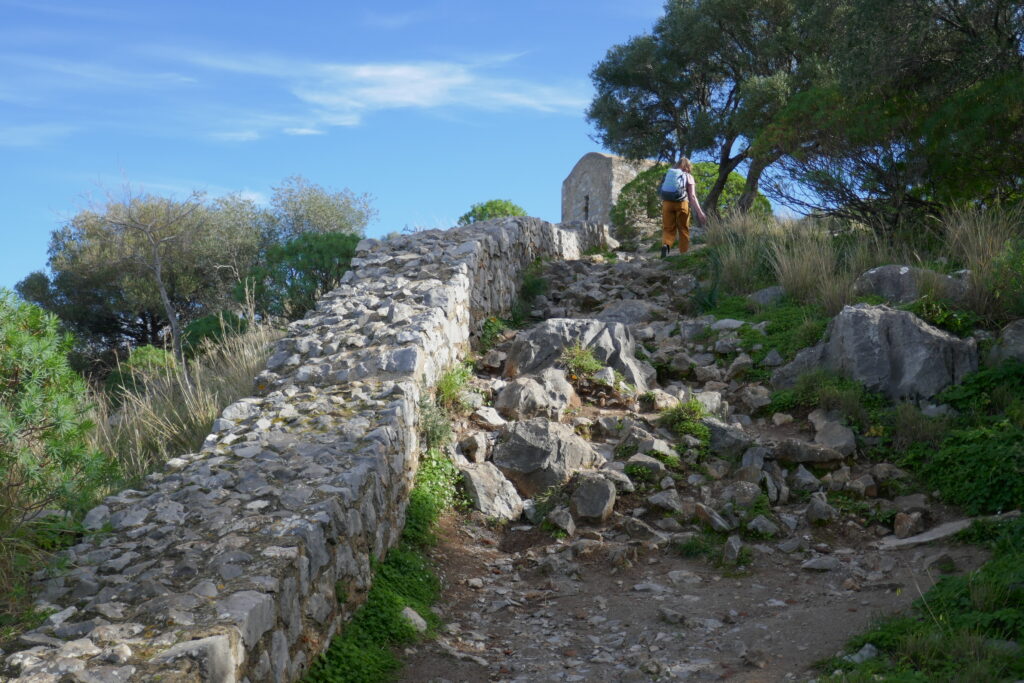
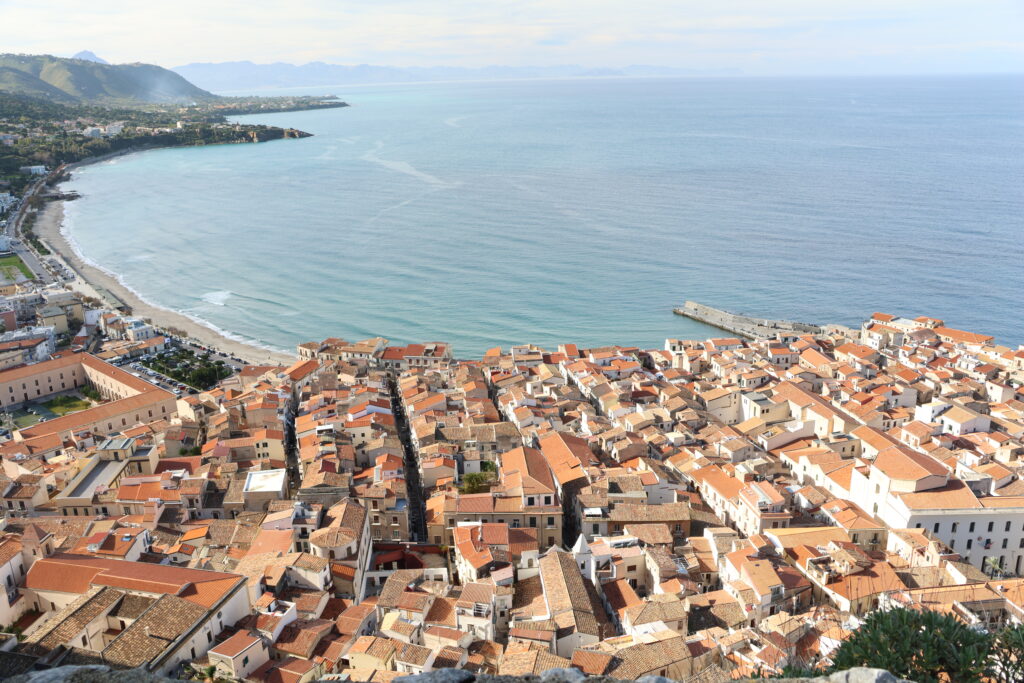
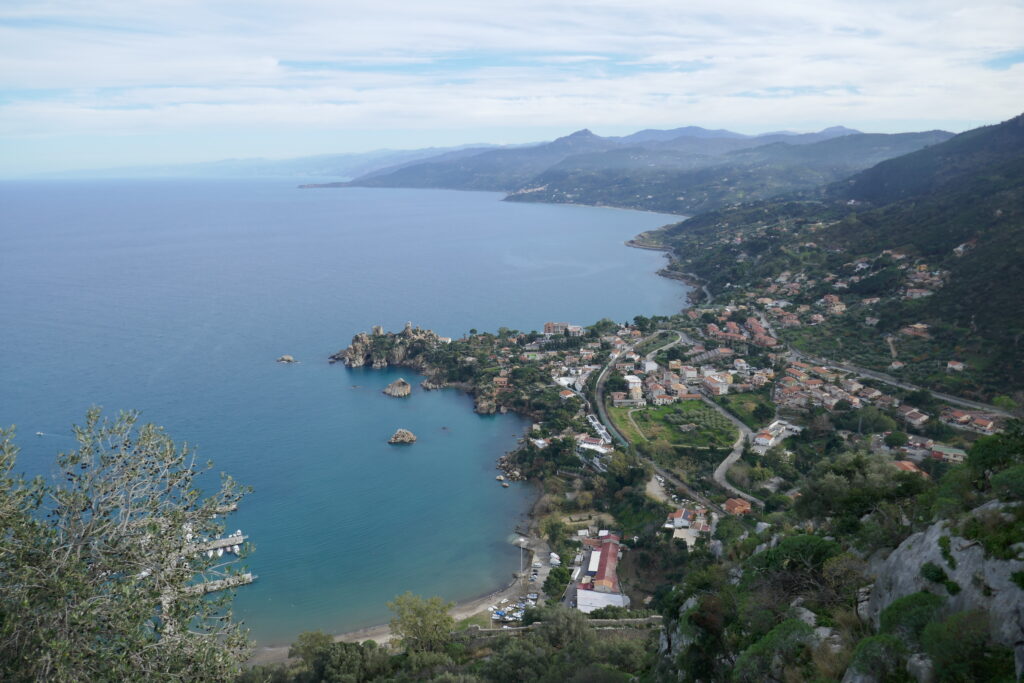
On the 270-metre-high limestone cliff, Rocca di Cefalù, there are traces from prehistoric and ancient times. We climbed the many steps and, alongside the ruins from times long past, enjoyed the wonderful view of the old town below us and the sea. During our walk around the Rocca di Cefalù, we came across a temple to Diana dating from the 9th century BC, a Byzantine chapel from the 7th century, a cistern from the Arab period and the ruins of a castle from the Norman and Staufer periods. It never ceases to amaze me what early civilisations have already built.
Lavatoio medivale
Porta Marina
We walked along a path along the Rocks until the Bastione of Capo Marchiafava
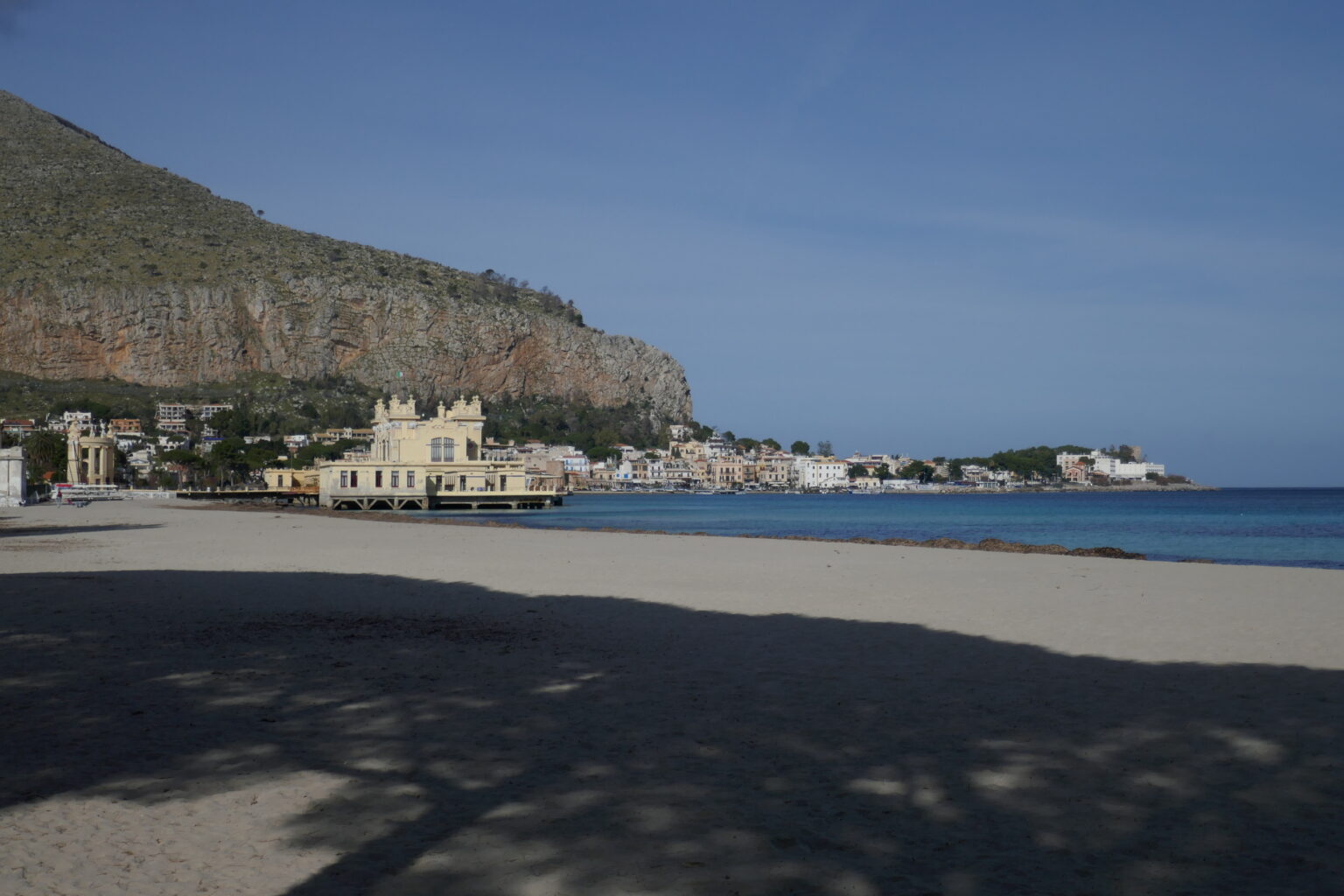
Before heading back to the ferry to Genoa late in the evening, we made a quick detour to Palermo’s city beach in Mondello. We strolled along the beach for a while and had a bite to eat at one of the few beach cafés that were still open. Judging by the number of secure car parks and cafés, it must be very busy here in the summer. Now it felt very sleepy and relaxed.